Portuguese Podengo Pequeno size: a practical guide
See Portuguese Podengo Pequeno size ranges and learn what to measure for harnesses, carriers and home arrangements without guessing from a breed label.
Explore the
Portuguese Podengo Pequeno
Background, care, and everyday considerations.
View breed profile →Portuguese Podengo Pequeno size is genuinely small, but the useful details go beyond choosing the smallest item in a pet shop. The AKC standard gives a height of 8–12 inches and a weight of 9–13 pounds. Those reference figures are a starting point for planning, not a promise about a puppy or a complete equipment specification. To prepare well, match each decision to the measurement it actually requires and the dog that will use it.
Portuguese Podengo Pequeno size: what the numbers describe
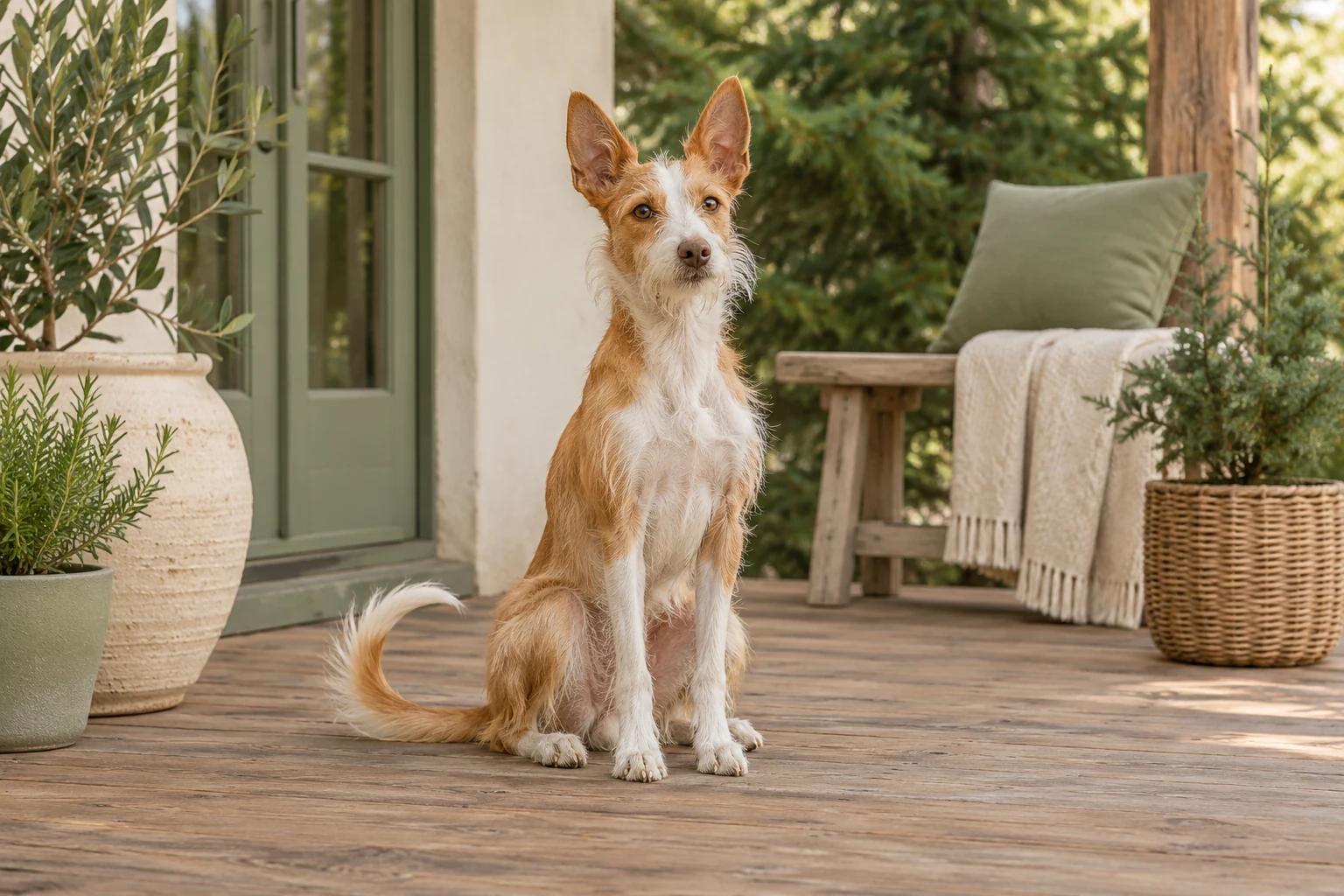
Portuguese Podengo Pequeno height is measured at the withers, the shoulder area, rather than the tips of its upright ears. A photograph can make those ears dominate your impression of size. For practical measuring, have the dog stand naturally on a level surface and use a calm helper if needed.
Portuguese Podengo Pequeno weight is a separate measurement. It does not reveal chest circumference, the length needed inside a carrier or whether a harness opening will fit. Keep those dimensions in distinct fields in your notes. Writing “small” beside all of them is convenient but not informative when a product uses precise limits.
The VCA breed page also lists the 8–12-inch and 9–13-pound ranges. Use them to understand the general scale, then obtain current measurements before committing to fitted equipment. If the dog is still growing, add the measurement date so an old note does not silently become the basis for a new purchase.
Check the name before comparing a listing
A reference to Portuguese Podengo does not always identify the small dog you have in mind. My Breed Atlas separates the Portuguese Podengo Pequeno from the medium and large Podengos. Ask for the stated variety when a listing uses only the broader name.
Coat appearance can add confusion. A rougher outline may look larger in a photograph than a close smooth coat, especially without a familiar object for scale. Do not estimate body dimensions from the length of the visible hair. If you are interested in the wire appearance, the natural wire-coat article explains that topic separately.
For a puppy, ask about the parents and mature relatives without turning their measurements into a guarantee. The practical response to uncertainty is a flexible purchasing plan, not a more confident prediction. Decide which items can adjust, which are inexpensive to replace and which should wait until you can measure the dog accurately.
A harness needs a fitting check
Read the maker’s instructions before taking measurements. Different harness designs can ask for different landmarks and have different adjustment ranges. Compare your recorded dimensions with that product’s chart instead of assuming that a size used in another brand will carry over.
When trying the harness, check its position while the dog stands and moves. Follow the fitting instructions and ask for qualified help if you are unsure whether it sits properly or could slip off. Try the setup indoors or in a secure area before relying on it during a distracting outdoor outing.
Do not choose an oversized harness solely to save buying another during growth. A product that fits later may not provide an appropriate fit now. Put a reminder into your ordinary care routine to reassess equipment, especially after noticeable growth or a change in body condition.
The same approach applies to clothing if you need it: use actual dimensions and observe movement. A breed name on the product page is not enough to establish comfort or suitability for your dog.
Carrier decisions need more than a weight allowance
A carrier’s advertised weight limit is only one requirement. Read its internal dimensions and the manufacturer’s instructions for the dog’s posture and space. Measure the usable interior, not simply the outer shell, where the distinction matters.
If you intend to travel with a carrier, check the operator’s rules for that particular service before booking. A dog within a typical small-breed weight range is not automatically accepted. Rules may concern the carrier, combined weight, route or where the dog can travel. Keep a copy of the applicable requirements alongside your measurements.
Introduce the carrier at home without making every approach predict a journey. Leave it in a suitable place, allow investigation and practise short, comfortable periods according to the dog’s response. The first long trip is a poor time to discover that the entrance or closure makes the dog reluctant to use it.
Plan the transfer between carrier and lead as well. Work out where the dog will remain contained while a vehicle door or station entrance is open. Small size makes a dog easier to overlook in a busy transition, not exempt from needing an orderly routine.
Look at the home from a lower level
Walk through the house and inspect gaps at floor level. Check beneath gates, around temporary barriers and behind furniture where something might be dropped. A barrier selected for another household dog may leave openings unsuitable for this individual.
Put the bed somewhere that allows rest without creating a trip hazard. A tiny bed in the middle of a walkway is not an efficient use of space. Choose a usable sleeping area based on how the dog rests, and make sure people can move around it without stepping over the dog.
Agree on handling rules before the dog arrives. Do not let different people repeatedly scoop it up as a substitute for teaching it where to go. Ask a professional to demonstrate appropriate lifting if you need it, and ensure children are not given responsibility for carrying or restraining the dog.
Growth and body condition are veterinary questions
If you are asking how big do Portuguese Podengo Pequenos get because your puppy differs from an online chart, bring the growth record to your veterinarian. One measurement does not diagnose a problem, and a published range is not a feeding target. Your veterinarian can consider condition, development and the individual’s history together.
Avoid buying food quantities, supplements or exercise plans solely from the size category. Those choices need context beyond this article. The useful ownership question is whether your home, schedule and resources fit this particular dog. The dog match quiz can help put size beside the other commitments instead of allowing a compact body to stand in for an easy routine.
FAQ
How big is an adult Portuguese Podengo Pequeno?
The standard describes 8–12 inches at the shoulder and 9–13 pounds. Use those figures for initial planning, then measure the individual for equipment. They are reference ranges, not a guarantee of a puppy’s eventual dimensions.
Does Pequeno mean the same size as every Portuguese Podengo?
No. Confirm the variety when reading a listing or product description. My Breed Atlas has a separate Pequeno profile from the medium and large Podengos, so a broad name alone may not identify the dog being discussed.
Can a Pequeno automatically travel in an airline cabin?
No. Check the airline’s current rules for the specific journey, carrier and individual dog before booking. Breed size alone does not establish eligibility, and a carrier’s external dimensions do not necessarily describe the space available inside it.
Sources behind this article
- American Kennel Club: Portuguese Podengo Pequeno standard ↗
- VCA Animal Hospitals: Portuguese Podengo Pequeno ↗
Article source checked: November 15, 2026. Source checked 2026-11-15
Keep reading
Portuguese Podengo Pequeno temperament at home
Read article →