Porcelaine dog temperament in everyday life
Understand Porcelaine temperament through walks, visitors, company and household routines, with practical questions to ask before choosing a dog.
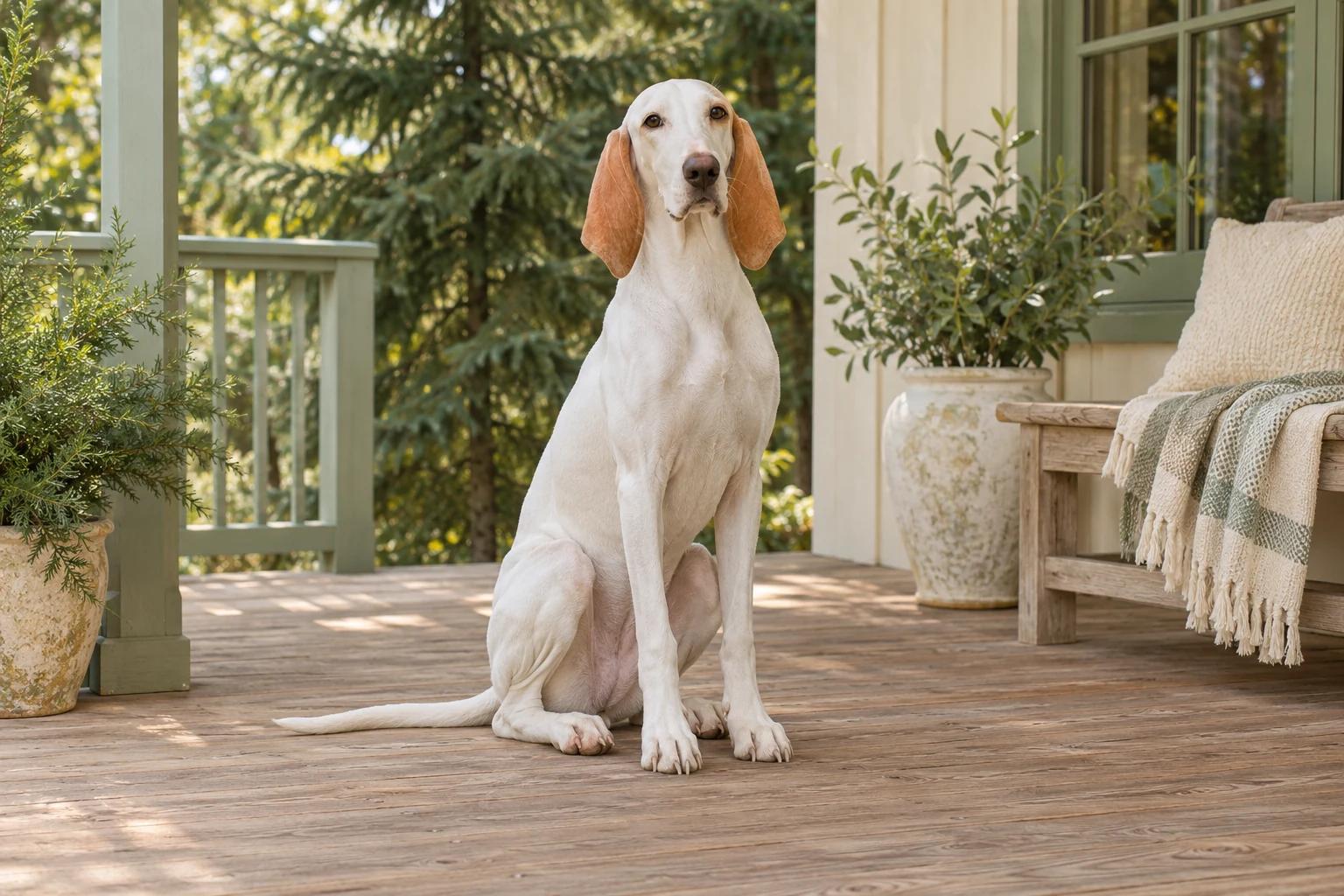
Porcelaine dog temperament makes more sense when you picture a normal weekday than when you read a list of flattering adjectives. Can you offer an absorbing outdoor outing, teach useful household manners and share time with a dog without expecting attention on demand? Those questions matter more than whether a breed description says friendly. The Porcelaine is a French scenthound, and its hunting background belongs in your plans even if your dog will never hunt. Dogs Australia’s standard identifies that working purpose.
Porcelaine dog temperament: start with the nose
DOGS NSW describes hunting drive alongside a need for exercise, stimulation and human contact. Put that short description into a practical scene: you want to walk home, but your dog has found a fascinating scent beside a hedge. The task is not to establish who is more determined. It is to make responding to you worthwhile while keeping the dog contained.
Choose routes where you can stop without blocking traffic or standing beside an open road. A walk with planned sniffing breaks gives you an opportunity to practise moving on from an interesting place. Reward a glance back before asking for something harder. Keep a lead attached where containment is uncertain, rather than using a successful recall in your kitchen as evidence of outdoor reliability.
A useful first meeting includes a walk, not just a greeting in a sitting room. Ask the handler to show how the dog responds when leaving a scent, passing another dog and returning through a gate. You are looking for the current starting point, not demanding a flawless demonstration.
Friendly does not mean available for everything
Porcelaine dog personality should be assessed through actual interactions. A dog may enjoy being in the same room while declining a hug, or greet a familiar person differently from a visitor. Let the dog approach, provide an unobstructed retreat and watch what happens when the initial excitement passes.
When visitors arrive, give them a simple instruction: wait while the dog settles rather than immediately calling, touching and leaning over it. Arrange the room so you can separate greetings from the front door opening. A barrier and a prepared resting place make it easier to manage the arrival without everyone negotiating the rules in the doorway.
For households with children, decide who manages those boundaries. Children should not have responsibility for handling greetings or interrupting a resting dog. Supervise their interactions and give the dog a quiet space that remains off limits to play. Breed affection is not a substitute for this arrangement.
What an ordinary day needs to contain
The Porcelaine breed profile describes an active dog for whom a substantial outing and daily learning are part of the ownership picture. Build your proposed schedule around the least convenient weekday, not your most adventurous weekend.
Write down when someone can provide the main outing, when the dog will have company, and what happens if that person is delayed. Include the unglamorous parts: drying wet feet, putting equipment away and allowing a quiet transition after returning home. A plan that only works in good weather is not yet a daily routine.
Mental activity need not become a large collection of gadgets. You might set aside a few minutes to practise finding a toy in one room, following a hand signal or waiting while a gate opens. Choose one task, keep the setup understandable and stop while the dog is still engaged. The point is shared attention and a manageable challenge, not constant entertainment.
Read behavior as information
When considering Porcelaine dog behavior, record the situation as well as the action. “Barked twice when the delivery arrived” gives you more to work with than “noisy.” “Could eat a reward across the street from another dog” is more useful than “fine with dogs.” Context helps you change the setup instead of repeatedly testing a label.
The live breed profile places vocal tendency toward the lower end, but that does not make silence a reasonable condition of ownership. Think about the sounds a dog will hear from your hallway, garden or window. If a resting place overlooks a busy entrance, moving it may be a more useful first step than repeatedly asking for quiet.
Likewise, being interested in people does not tell you how a particular dog handles solitude. Ask what time apart currently looks like, how it was introduced and whether there are recordings or specific observations. Plan the transition from that routine to yours gradually. If the dog shows persistent distress, seek qualified help rather than trying to exhaust it into accepting a difficult situation.
Questions worth asking before you commit
Translate broad Porcelaine dog characteristics into questions with concrete answers. What does the dog do after its morning outing? How does it respond when a familiar person leaves the room? Which situations make it difficult to regain attention? What training rewards have been useful so far?
Ask about the household in which the dog has lived. Experience with several dogs in a familiar setting is not the same as experience meeting unfamiliar dogs on a pavement. Similarly, seeing a cat through a barrier does not establish compatibility with a resident cat. Describe your own animals and layout honestly, and discuss a managed introduction plan rather than requesting a simple yes or no.
Try to meet the dog more than once if practical. A quiet visit and an outing can reveal different parts of the picture. Keep notes separately from appearance preferences; the existing article on Porcelaine coat and skin markings can answer those visual questions without letting them dominate the choice. Use the dog match quiz to organize your priorities, then compare its prompts with the individual you have met.
FAQ
Is a Porcelaine a quiet household dog?
The My Breed Atlas profile describes relatively occasional barking, not a silent dog. Ask about the individual’s response to visitors, outdoor activity and time alone. Your building’s sound transmission and the position of windows also belong in the decision.
Can a Porcelaine live with other pets?
Compatibility needs an individual assessment. Describe the other animals, ask about relevant experience and plan secure separation before introductions. Do not turn a successful meeting or a general social rating into permission for unsupervised access.
How do I decide whether this temperament suits me?
Compare your actual weekday with the dog’s current routine. Meet the dog during an outing and a quieter period, ask for examples of difficult situations, and decide whether you can support the training and management that those examples reveal.
Sources behind this article
Article source checked: November 15, 2026. Source checked 2026-11-15
Keep reading
Porcelaine dog size: planning space and equipment
Read article →