Porcelaine dog size: planning space and equipment
Make sense of Porcelaine size when choosing walking gear, transport and home space, without treating breed averages as a puppy’s guaranteed adult size.
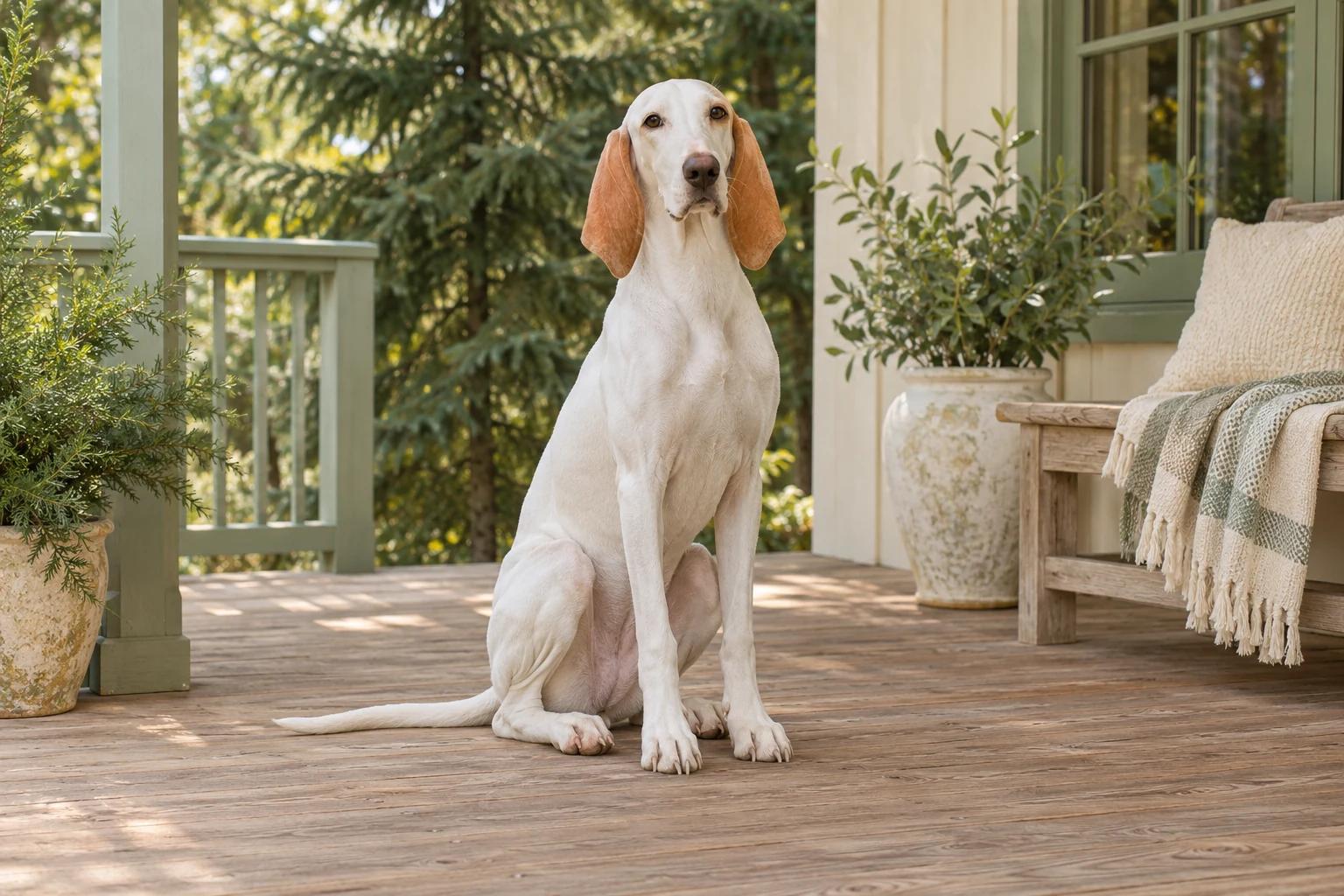
Porcelaine dog size matters most when it becomes a practical question: can the dog turn comfortably in your car setup, can you manage the lead at a narrow doorway, and does its resting place leave room for people to pass? A label such as medium-sized cannot answer those questions. Start with the Porcelaine profile, then measure the individual dog before buying fitted equipment. A photograph, even beside a person, is a poor substitute for actual dimensions.
Porcelaine dog size is more than a weight figure
My Breed Atlas lists adult Porcelaine dog weight at approximately 55–62 pounds and shoulder height at 22–23 inches. Treat that as an initial planning reference, not a target you should feed a dog toward. It cannot tell you chest circumference, back length or how a particular dog occupies a curled-up bed versus a stretched-out sleeping position.
The Dogs Australia standard describes a deep chest and muscular structure without heaviness. That is useful background for understanding why shape deserves attention alongside the number on a scale. Two pieces of equipment labeled for the same weight category may have very different proportions.
If you are asking how big do Porcelaine dogs get because you are considering a puppy, separate the forecast from the purchases. Ask for the parents’ actual measurements and information about mature relatives, while recognizing that this does not produce an exact adult prediction. Buy items that fit the puppy now and identify which will need checking or replacing as it grows.
Measure the dimension your decision needs
For Porcelaine dog height, the practical measurement is at the shoulder, not the top of the ears or head. Have the dog stand naturally on a level surface and ask another person to help if needed. Avoid making the dog hold an awkward position merely to obtain a number. If accurate measurement matters for a formal requirement, have someone experienced demonstrate it.
A harness usually requires a different measurement, such as chest girth, according to the manufacturer’s instructions. Read those instructions before measuring rather than assuming every brand uses the same landmarks. Record the date and the measurement together, especially for a growing dog. Check the return policy before ordering if the measurement falls between sizes.
For a bed, observe the dog sleeping rather than only standing. Measure the usable sleeping surface, not just the outer edge of a thick bolster. A roomy-looking product photograph may conceal a much smaller interior. Mark the proposed footprint on your floor with removable tape and see whether doors and walkways still work.
Try the home layout before the dog arrives
Stand where you would remove a wet lead and picture another person trying to pass. Is there room to close the external door before releasing the dog into the house? Can you reach the towel without stepping over a bowl? These small arrangements matter when an adult dog and shopping bags arrive together.
Choose a resting area away from the busiest route between rooms. It should not depend on everyone stepping over the dog to reach the kitchen. If you plan to use a gate, check the opening width, mounting instructions and whether household members can operate it consistently. Equipment should be appropriate to the actual dog and setting, not selected only because its packaging says medium breed.
Make a separate plan for temporary separation. You may need to keep the dog away from a repair visit, an open exterior door or another animal during introductions. Being able to close one suitable room can be more useful than owning a large bed in an otherwise completely open space.
Transport requires a trial, not a guess
Before choosing a travel crate or restraint, measure the vehicle space and consult the product’s sizing and installation directions. Consider the entrance as well as the area inside. A crate that fits once positioned may be awkward to load through the car opening, and its door still needs usable clearance.
If possible, test the setup with the dog before a long journey. Practise getting in, settling and getting out in a quiet place. Keep the first session focused on the setup rather than combining it with an exciting destination. Work out where the lead will be attached before opening the car door at the other end.
For public transport or accommodation, read the operator’s rules directly. A breed’s ordinary weight range is not a booking confirmation. Some restrictions concern dimensions, carriers or individual weight; others concern where dogs may stay. Record the relevant rule alongside the dog’s current measurements so you are comparing like with like.
Physical manageability is a separate question
A number on a scale does not describe how easy a dog is to walk. DOGS NSW identifies the Porcelaine as an active scenthound with hunting drive. When evaluating manageability, ask to see the dog on lead in an appropriate everyday setting rather than assuming its size tells the whole story.
Notice where you would need assistance: stairs, loading into a vehicle, or handling an unexpected equipment problem. Discuss suitable access arrangements with your veterinarian if mobility or lifting is a concern. Do not rely on being able to carry an adult dog simply because you can currently lift the puppy.
Training and thoughtful positioning should be part of the plan from the beginning. Practising a pause at doors and a comfortable lead routine is easier to organize before a difficult daily pattern becomes established. Choose equipment with professional fitting help if necessary; a stronger-looking tool is not a replacement for teaching or an appropriate environment.
Keep body condition separate from breed averages
Record weight changes for your veterinarian rather than diagnosing them against a breed chart. An individual may fall outside a reference range for reasons that require context. Your veterinarian can assess body condition, growth and feeding needs together. Do not change meals simply to move the dog toward the middle of a published range.
Appearance can mislead in other ways too. Camera angle and stance alter the impression of height, while markings draw attention to particular body areas. The article on Porcelaine markings addresses coat appearance separately. For a broader ownership decision, the dog match quiz helps put size beside schedule, training and care rather than allowing one measurement to decide everything.
FAQ
What is the typical Porcelaine dog weight?
The My Breed Atlas profile uses approximately 55–62 pounds as its adult reference. That is useful for early planning, but an individual’s suitable weight and body condition should be assessed with a veterinarian rather than chosen from a breed average.
Can I buy an adult harness for a Porcelaine puppy?
Buy a harness that fits the puppy’s current measurements and check it as the puppy grows. An adult-size product may not adjust securely enough now. Follow the maker’s fit instructions instead of relying on a weight label alone.
Does a Porcelaine need a large house?
Floor area is only one part of the arrangement. Check resting space, door management, separation options and access to suitable outings. A larger house does not resolve a crowded entrance or replace an achievable daily activity routine.
Sources behind this article
Article source checked: November 15, 2026. Source checked 2026-11-15
Keep reading
Porcelaine dog temperament in everyday life
Read article →