Poodle toy grooming: gentle care at a small scale
Understand Toy Poodle grooming through careful setup, brush and comb checks, handling choices and knowing when to ask for help.
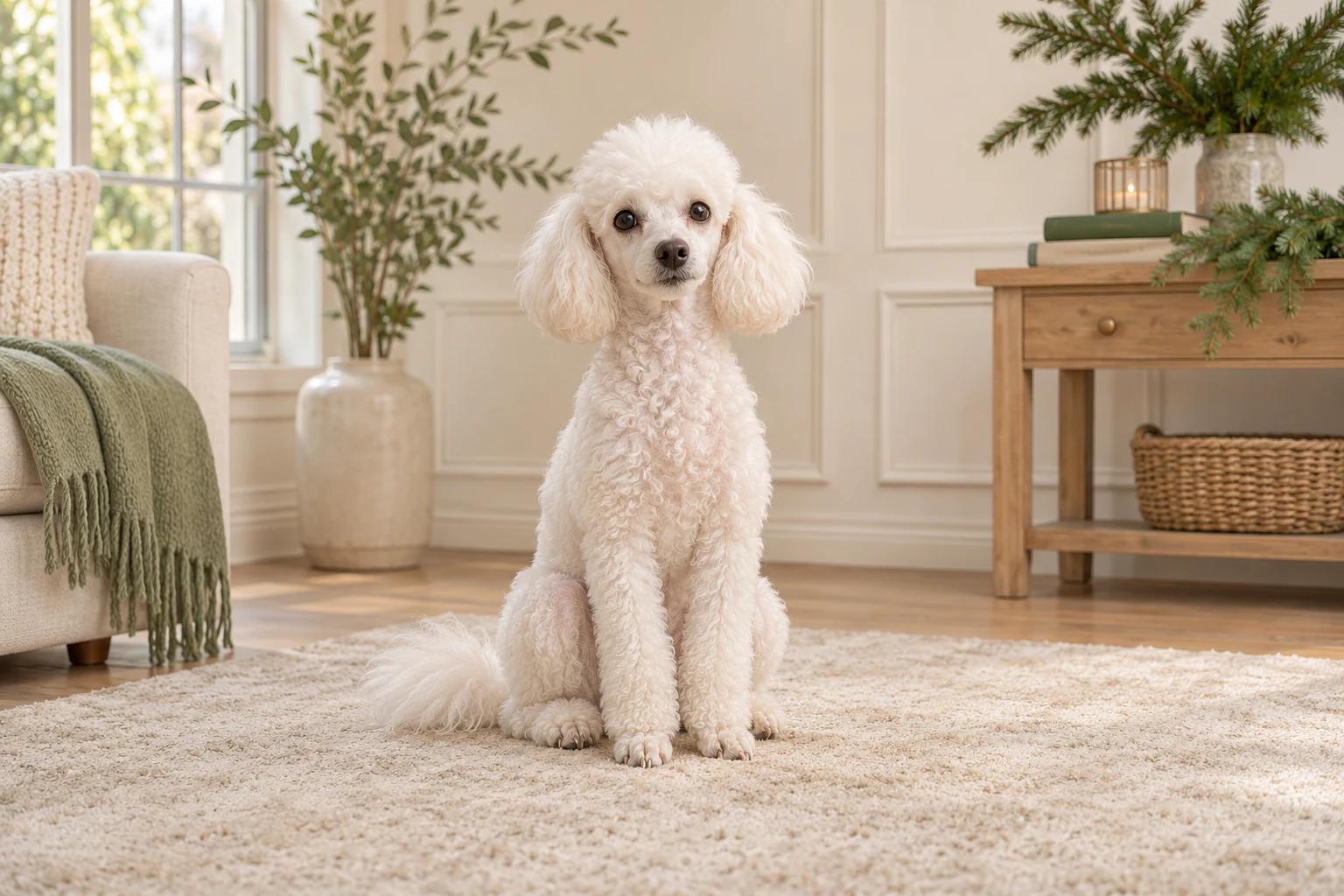
Poodle toy grooming calls for attention rather than force. When the dog is small, a person's hand can cover a large part of the body, and an apparently minor movement can change the whole handling position. A useful home routine gives you a clear view of the coat while leaving the dog room to be comfortable.
The goal here is not to reproduce a photograph. It is to understand the work you can do gently, the skills you still need to learn, and the points at which a groomer or veterinarian should take over.
Poodle toy grooming: see the coat, not just the outline
The Canadian Kennel Club's Toy Poodle guide describes a dense, curly coat needing frequent brushing and combing. VCA's Toy Poodle guide notes below-average shedding. Poodle toy shedding is therefore a separate question from whether the coat needs attention.
Use the Toy Poodle profile as the wider care reference, with daily brushing included in the routine. Ask a groomer to demonstrate what a completed check looks and feels like on your dog. A fluffy outer surface does not tell you whether you have understood the coat beneath it.
Rather than asking for a universal tool kit, bring a specific question: “Which brush and comb should I use for this coat, and can you watch me try them?” That keeps the advice tied to the dog instead of to an appealing product display.
Bring your working position down to the dog
Before touching the coat, inspect your setup. Can you see clearly? Are you balancing on the edge of a chair? Does the dog have secure footing? A floor-level nonslip area may be easier to manage than an improvised raised surface. Ask the groomer to help you choose an arrangement suited to your reach and the dog's handling experience.
Keep your tools ready so that you are not holding the dog in position while searching through a bag. Remove loose objects from the working area. If another person is present, agree whether they are helping or simply observing; too many simultaneous movements can make a small space feel crowded.
Do not leave a dog unattended on a table or other elevated surface. Being light enough to lift does not make a fall acceptable. Likewise, do not assume your lap is the best location merely because the dog fits there. You still need stability, visibility, and a way to stop comfortably.
Learn one small section thoroughly
Poodle toy coat care becomes less mysterious when you can recognize the difference between smooth progress and resistance. Ask the groomer to demonstrate on an easy section, then supervise your attempt. Watch the hand supporting the hair as carefully as the hand holding the tool.
Notice whether you can maintain gentle pressure without twisting your wrist. If the tool catches, stop rather than pulling through or making repeated fast strokes. Ask what the resistance means and whether that area is appropriate for home work.
Keep the question of coverage separate from appearance. You may have tidied the visible top of the coat without checking other areas. Ask for a simple list of places to inspect and how to reach them without uncomfortable handling. The list should guide your attention, not become a demand to finish despite difficulty.
At home, write down a question when you encounter something unfamiliar. A useful note might say which section stopped you and whether the dog moved away before or after the tool touched it. That gives the professional something specific to assess at the next contact.
Let handling be a skill in its own right
People asking how to groom a poodle toy often need help with two separate things: maintaining the coat and helping the dog understand the interaction. If handling is difficult, buying a new brush may not address the real obstacle.
Start with what is already comfortable. A quiet invitation onto a familiar mat, a brief touch in an accepted area, or simply inspecting a tool nearby may be a useful part of practice. Ask a reward-based professional to help you choose appropriate steps rather than trying to complete a full grooming session during every attempt.
Respect pauses. If the dog repeatedly turns away, stiffens, or tries to leave, stop and reconsider rather than assuming its size makes restraint the easiest solution. Explain the pattern to your groomer or trainer. If sensitivity is new or seems connected with discomfort, consult your veterinarian.
The household should follow the same approach. One person cannot build a predictable experience if another regularly catches the dog for surprise grooming. Agree on a place, a calm beginning, and the fact that breaks are allowed.
Keep delicate tasks with qualified hands
Do not use scissors to cut out close mats or force a comb through a tight section. Leave that assessment to a groomer. The smaller working area makes clear visibility especially important; guessing where the skin lies is not an acceptable shortcut.
Work around the eyes, inside the ears, and other delicate regions deserves professional guidance. Do not copy a procedure simply because a video presents it as routine. Tell the professional what you hoped to achieve and ask which tasks you can safely learn at home.
Changes in skin appearance, unusual odor, apparent pain, or persistent irritation need veterinary advice. Describe the change and when you noticed it. Avoid trying several products in succession while waiting to see whether one happens to solve the problem.
Make handovers useful rather than elaborate
If someone else shares grooming, leave a short factual handover: what was checked, where you stopped, and what needs help. Avoid vague messages such as all done if you only worked on the easiest visible section. Equally, do not turn a missed area into blame; identify the gap and agree who will seek guidance.
Review the routine when your tools, working area, or the dog's comfort changes. The right question is whether the arrangement still works, not whether you have followed an old plan perfectly. A professional demonstration can be worth repeating when you are unsure.
For physical planning beyond coat care, see Toy Poodle measurements and size labels. The dog match quiz helps prospective owners consider grooming alongside other commitments. Small scale should make your planning more precise, not make the work invisible.
FAQ
Does a Toy Poodle's small size make grooming effortless?
No. You still need suitable tools, good visibility, secure footing, and gentle handling. Ask a groomer to demonstrate on the individual dog and watch you practice. The amount of coat is only one part of the task; understanding the technique matters too.
Should I keep brushing when I find resistance?
Stop rather than pulling through it. Ask a groomer to assess the section and show you what is appropriate for home care. Do not cut close mats with scissors, especially when the skin is difficult to see beneath the hair.
How should I prepare for a grooming lesson?
Bring your current tools and two or three specific questions about the areas you find difficult. Explain your home setup and handling experience. Ask to practice under supervision so that you leave understanding the movement, not merely remembering the name of a brush.
Sources behind this article
Article source checked: November 15, 2026. Source checked 2026-11-15
Keep reading

Affenpinscher Grooming: A Practical Coat-Care Routine
Read article →