Poodle standard temperament: life between the outings
Explore Standard Poodle temperament through greetings, household routines, learning and downtime, with practical questions for meeting a dog.
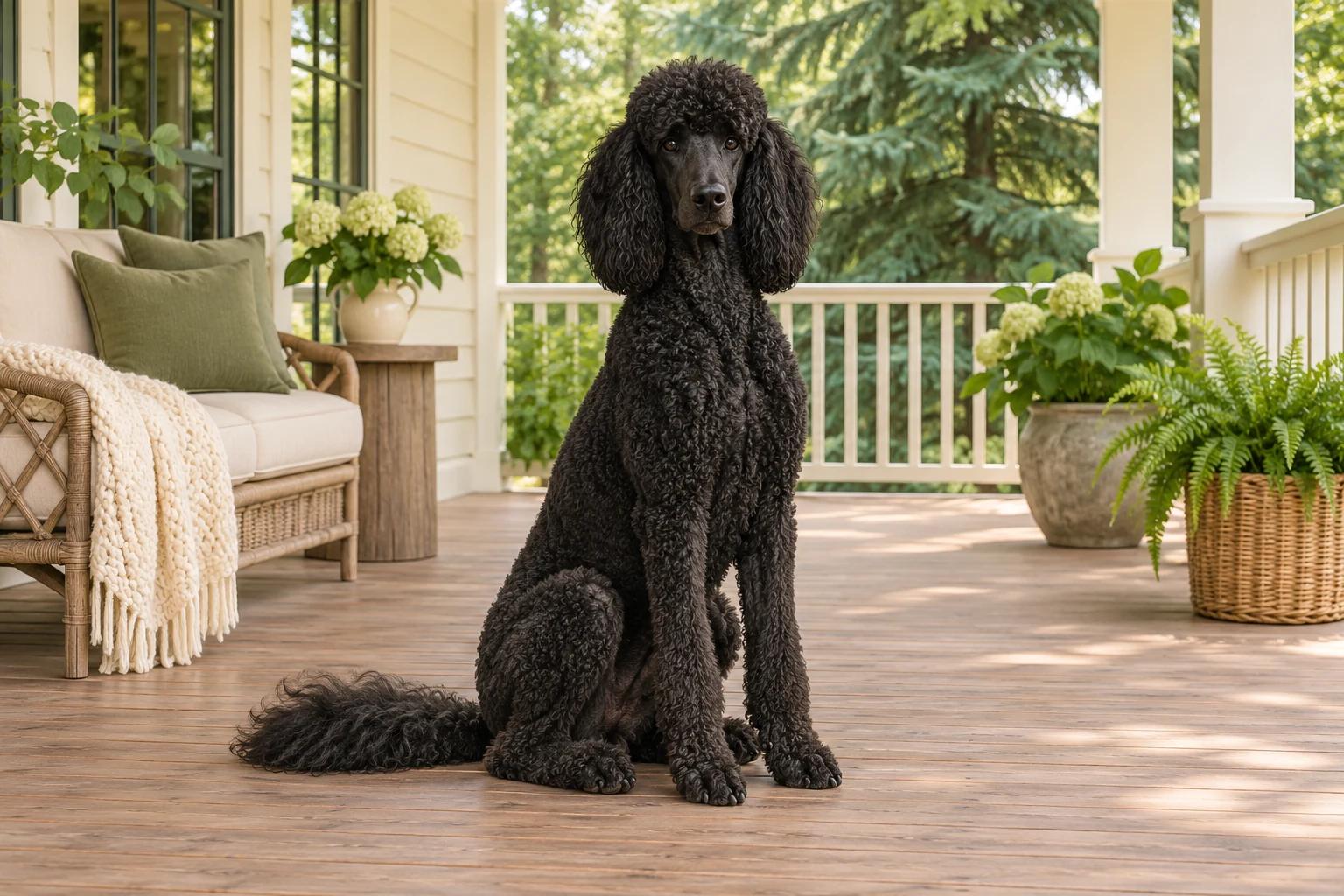
Poodle standard temperament is easiest to understand when you look beyond the dramatic haircut and the impressive training video. What does the dog do while dinner is prepared? How does it greet someone carrying bags? Can everyone in the household explain the same everyday rules?
Those details matter because living with a Standard means sharing ordinary space as well as enjoying outings. The Standard Poodle profile describes a dog whose daily life includes substantial activity, learning, and close involvement with people. Here is how to examine that fit without expecting a breed label to predict every response.
Poodle standard temperament is not preinstalled manners
The Poodle Club of America's standard describes an active, intelligent dog. Intelligence is useful context, but it is not an agreement to understand human rules without teaching. A dog may learn an unwanted routine just as readily as the one you intended.
Imagine the kitchen. One person feeds the dog beside the counter, another wants it outside the room, and a third invites it onto a mat. From the owner's perspective, the goal may seem obvious. From the dog's perspective, the same location has produced three different outcomes.
Choose a clear arrangement that everyone can follow. Decide where the dog can wait, what happens during food preparation, and how you will manage busy moments before that behavior is reliable. Practical agreement beats repeatedly asking why a clever dog has not worked it out.
Enjoy the learning process rather than the label
VCA's Standard Poodle guide recommends reward-based teaching with food, games, or praise and identifies games and tricks as mental activity. Think of those as ways to collaborate, not as a demand to turn every spare minute into a lesson.
Pick one useful project. It might be moving to a resting place while you open a cupboard, turning back toward you on a familiar walk, or waiting while a lead is attached. Describe success in observable terms so that different household members know what they are rewarding.
Poodle standard personality can appeal strongly to someone who enjoys this sort of small, shared problem-solving. If you mainly want a dog that asks very little of your attention, be honest about that preference. Admiring responsiveness in someone else's dog is different from enjoying the repetitions that support it.
Do not compare a new dog with an edited demonstration. Ask what stage of learning you are actually seeing and what setup made it possible. A quiet room, familiar handler, and well-practiced task are not the same conditions as a busy entrance during a visitor's arrival.
Make greetings manageable for a tall companion
A Standard Poodle occupies meaningful space when enthusiastic. Before visitors arrive, decide where bags will go, who opens the door, and where the dog can wait. Do not leave the whole greeting plan to the person juggling keys and a parcel.
Ask visitors to follow the arrangement you have chosen rather than invent their own greeting test. There is no need to encourage jumping to prove friendliness or insist on immediate physical contact. Let the dog approach at a comfortable pace and provide room to disengage.
If you are meeting a prospective dog, observe a normal greeting with the caregiver's guidance. Ask whether that response is typical and how it changes with familiar people. A single unusually lively or quiet moment does not provide a complete picture.
Keep poodle standard characteristics separate from guarantees about particular relationships. Compatibility with another dog, a child, or a visitor needs its own management and observation. Arrange introductions thoughtfully rather than assuming a favorable general description settles the question.
Look at what happens when activity ends
An outing is only one part of the day. Ask how the dog transitions afterward. Does the caregiver have a familiar place for rest? What interrupts that rest? Is the household continuously inviting interaction even while saying it wants a quieter dog?
Try an audit of your own habits. If every movement toward you starts a game, your day may become busier than intended. You can enjoy companionship without responding to every glance with a new activity. Make a comfortable resting area available and avoid repeatedly disturbing a dog that has settled.
Time apart deserves a separate conversation. Ask about the individual's actual experience, including the setting and duration, rather than accepting “fine alone” without detail. Plan care coverage for your real working hours. If the dog struggles, seek suitable professional help instead of assuming the problem will disappear because the breed is intelligent.
Hear barking as a situation to understand
The breed profile flags a relatively high vocal tendency. When considering poodle standard behavior, ask what prompts noise in the particular dog's current home. An alert at a passing vehicle, excitement around an outing, and distress during absence are not interchangeable descriptions.
Write down circumstances if you need help: where the dog was, what changed, and what followed. Avoid conclusions such as dominant or dramatic when an observable account would be more useful. A qualified reward-based trainer can work with specific situations more effectively than with an adjective.
Check the environment as well. A resting place directly beside a busy window may not be the quietest choice. Visitors repeatedly entering the dog's space may make an afternoon harder than it needs to be. Adjusting the layout can be part of a plan, but persistent concerns need individual assessment.
Ask for a handover you can use
Before bringing a Standard home, request a description of an ordinary day, familiar cues, preferred activities, and situations that still need support. Ask the caregiver to show you a routine and explain it while you watch. Keep the useful words consistent at first rather than immediately replacing everything with your own vocabulary.
For a different view of shared activity, read Standard Poodle retrieving beyond fetch. Use the dog match quiz to compare your available time and preferences. If behavior changes suddenly or seems connected with discomfort, consult your veterinarian rather than treating it as a personality quirk.
FAQ
Does intelligence make a Standard Poodle automatically obedient?
No. Clear teaching and consistent household expectations still matter. Decide what you want the dog to do in a specific situation, then make that arrangement understandable. Intelligence does not resolve contradictory rules or replace the time spent practicing ordinary manners.
What is a useful temperament question for a caregiver?
Ask what happens when a familiar activity ends. Request a recent example, including the setting and what the caregiver did next. This helps you understand transitions and routines, rather than relying only on a description of the dog at its most excited or affectionate.
Should a Standard Poodle have something to do all day?
A workable day includes activity and opportunities for undisturbed rest. Do not mistake companionship for continuous entertainment. Ask about the individual's existing routine, plan reliable care coverage, and leave quiet space between shared activities instead of trying to fill every moment.
Sources behind this article
Article source checked: November 15, 2026. Source checked 2026-11-15
Keep reading
Poodle standard size: planning for the whole dog
Read article →