Poodle miniature temperament: sharing an ordinary day
Meet the Miniature Poodle through everyday situations: visitors, learning, noise and downtime. Find out what to ask before choosing a dog.
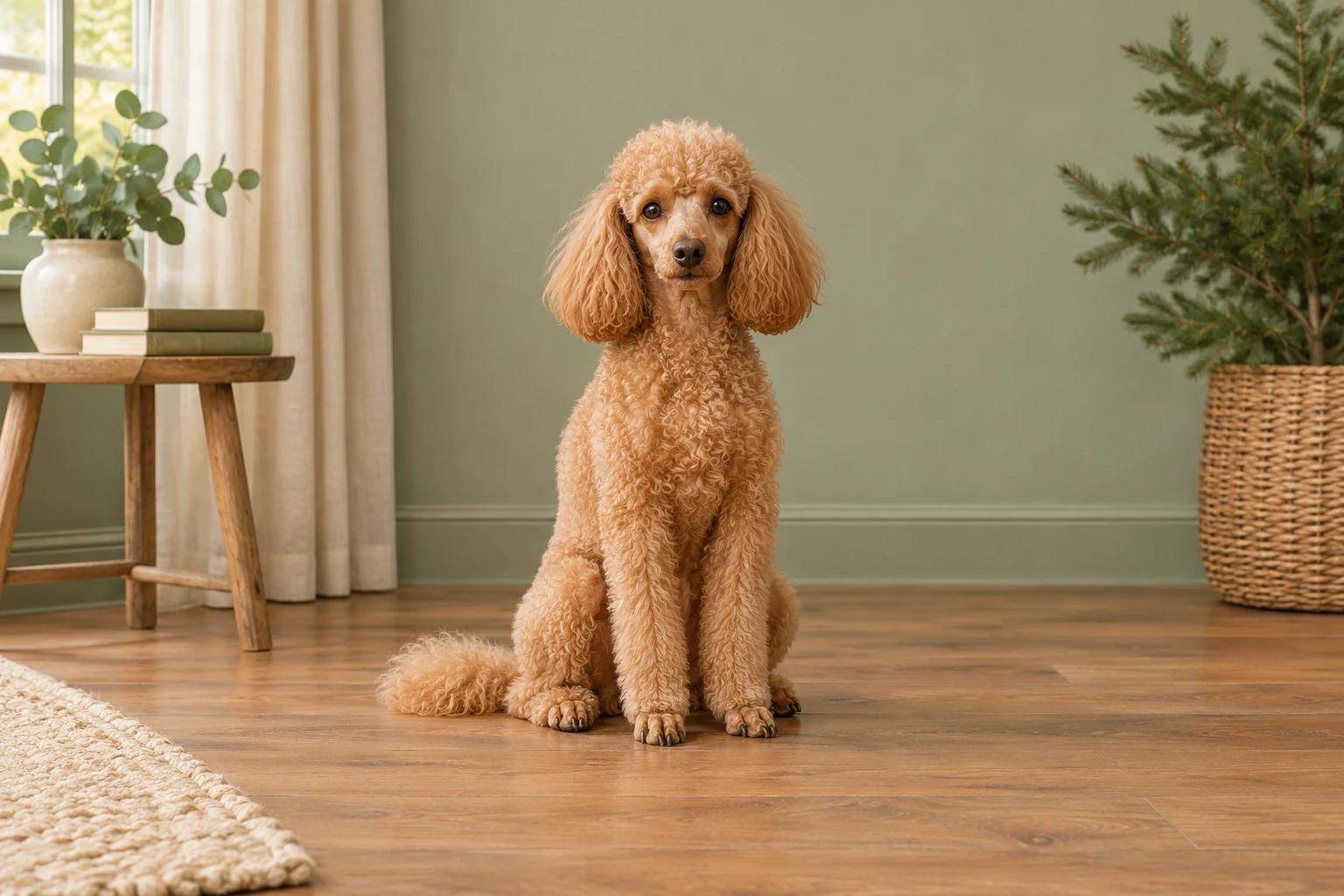
Poodle miniature temperament makes more sense beside a kitchen table than in a photograph. What happens when you start work, someone knocks, or an afternoon plan changes? Those ordinary moments reveal whether a compact companion fits your life better than a list of flattering adjectives does.
The Miniature Poodle profile provides the broader care picture. Here, the focus is personality in practice: what to notice, which expectations to examine, and how to arrange a home that leaves room for both companionship and quiet.
Poodle miniature temperament in everyday company
The AKC's Poodle overview describes an active, people-oriented breed. Treat that as a starting point, not a script that every Miniature follows. One dog may welcome a visitor immediately; another may watch from a comfortable distance before approaching.
If you work from home, imagine the actual arrangement. Can the dog rest nearby without sitting on your lap throughout every call? Where would you place a bed so that moving your chair does not repeatedly disturb it? Who handles an outdoor break when a meeting runs late? These questions test your setup rather than the dog's ability to adapt to anything.
Company can include unremarkable time together. Reading while the dog rests, putting laundry away, and sitting outdoors need not become entertainment sessions. It helps to decide which parts of your day are shared activity and which are simply shared space. Otherwise, an owner who enjoys a responsive dog may accidentally make every glance an invitation to begin another game.
A clever partner still needs clear instructions
VCA's Miniature Poodle guide highlights reward-based learning with food or games and the value of tricks as mental activity. The practical implication is to enjoy teaching, not to assume intelligence delivers finished manners.
Choose a household example. Perhaps you want the dog to stand on a mat while you put on shoes. Decide where the mat belongs, what word you will use, and what counts as success. Ask everyone to follow the same arrangement. If one person welcomes jumping during shoe time and another objects, the problem is not solved by calling the dog stubborn.
Poodle miniature personality can feel especially engaging when the owner likes noticing small changes. A dog looks toward the mat, places one paw on it, then eventually settles there. Those details are worth enjoying. You do not need an impressive trick collection to make learning part of ordinary life.
Keep a little room for choice, too. Offer two suitable toys and notice which one the dog selects. Let a quiet walk include time to investigate rather than turning every outing into a performance. A dog can be responsive without needing constant directions.
Listen to the circumstances around barking
The breed profile flags a relatively vocal tendency. Before choosing a Miniature, consider the sounds your home supplies: a shared corridor, delivery buzzer, neighbors passing a window, or a lift door beside your entrance. Small size will not make those arrangements irrelevant.
When evaluating poodle miniature behavior, ask what happened immediately before a barking episode and what happened afterward. A note such as “barked when a trolley passed the window, then watched it leave” is more informative than “always noisy.” It gives a trainer something concrete to discuss if you need help.
Try a practical layout review before assuming you need a complicated solution. Does the resting bed face the busiest window? Must every visitor step directly toward the dog? Could deliveries be received while the dog stays in another comfortable area? These are questions about reducing unnecessary bustle, not promises that changing furniture will resolve a behavior problem.
Meet the dog without staging an audition
A first meeting is a chance to observe, not to demand affection. Ask the breeder or caregiver how the dog normally spends the part of the day you are seeing. A sleepy afternoon visit and a lively pre-walk greeting are different slices of the same life.
Useful questions include what the dog enjoys doing with people, how it responds when an activity ends, and what happens when familiar people leave. Ask for examples from recent days. “Likes everyone” is less helpful than an account of how the dog met a new visitor last week.
Notice the caregiver's role. Are they explaining the dog's preferences, allowing space, and describing skills still being learned? You need a realistic handover, not a demonstration of flawless poodle miniature characteristics. For an adult dog, ask which routines are already familiar. For a puppy, ask what experiences have actually occurred rather than what the seller expects its adult personality to become.
Build a day you would willingly repeat
Write down a normal weekday, not your ideal weekend. Include outdoor time, a little learning, meals, rest, and the periods when you cannot participate. Then assign responsibility for each transition. “We will all help” becomes useful only when someone knows they are handling the break before dinner.
Consider a rainy day and a workday that runs late. What stays possible? A covered outdoor route, a short indoor lesson, and a reliable helper may matter more than access to a spectacular park you rarely visit. You are looking for a repeatable arrangement, not a promise of constant adventure.
Coat handling also belongs in daily life, although it should not take over your assessment of personality. Our Miniature Poodle grooming planning article covers that separate commitment. Use the dog match quiz to compare your available time with other ownership needs, then return to questions about the individual dog.
If a behavior changes abruptly or the dog seems uncomfortable, discuss it with your veterinarian rather than assuming it expresses the breed's personality. For persistent everyday training difficulties, seek a qualified reward-based professional who can observe the situation.
FAQ
Does a Miniature Poodle need constant entertainment?
No owner should plan to entertain a dog continuously. Arrange a day with purposeful activity and opportunities to rest, and ask the current caregiver how the individual dog settles. Shared quiet time can be part of companionship rather than a gap you must fill with another game.
What should I ask about a Miniature Poodle's personality?
Ask for recent examples involving visitors, the end of play, time apart, and ordinary household sounds. Find out what the dog already knows and which routines are still developing. Specific observations tell you more than broad labels such as friendly, clever, or easy.
Can a Miniature Poodle suit an apartment?
Assess the actual apartment: corridor noise, outdoor access, neighbors, and your care arrangements. The dog's physical footprint is only one consideration. Ask about its known responses to comparable surroundings and decide whether you can provide activity, teaching, and an undisturbed resting place.
Sources behind this article
Article source checked: November 15, 2026. Source checked 2026-11-15
Keep reading
Poodle miniature size: height, weight and everyday fit
Read article →