Poodle miniature size: height, weight and everyday fit
Understand Miniature Poodle height and weight, then use real measurements to choose equipment and plan comfortable daily spaces.
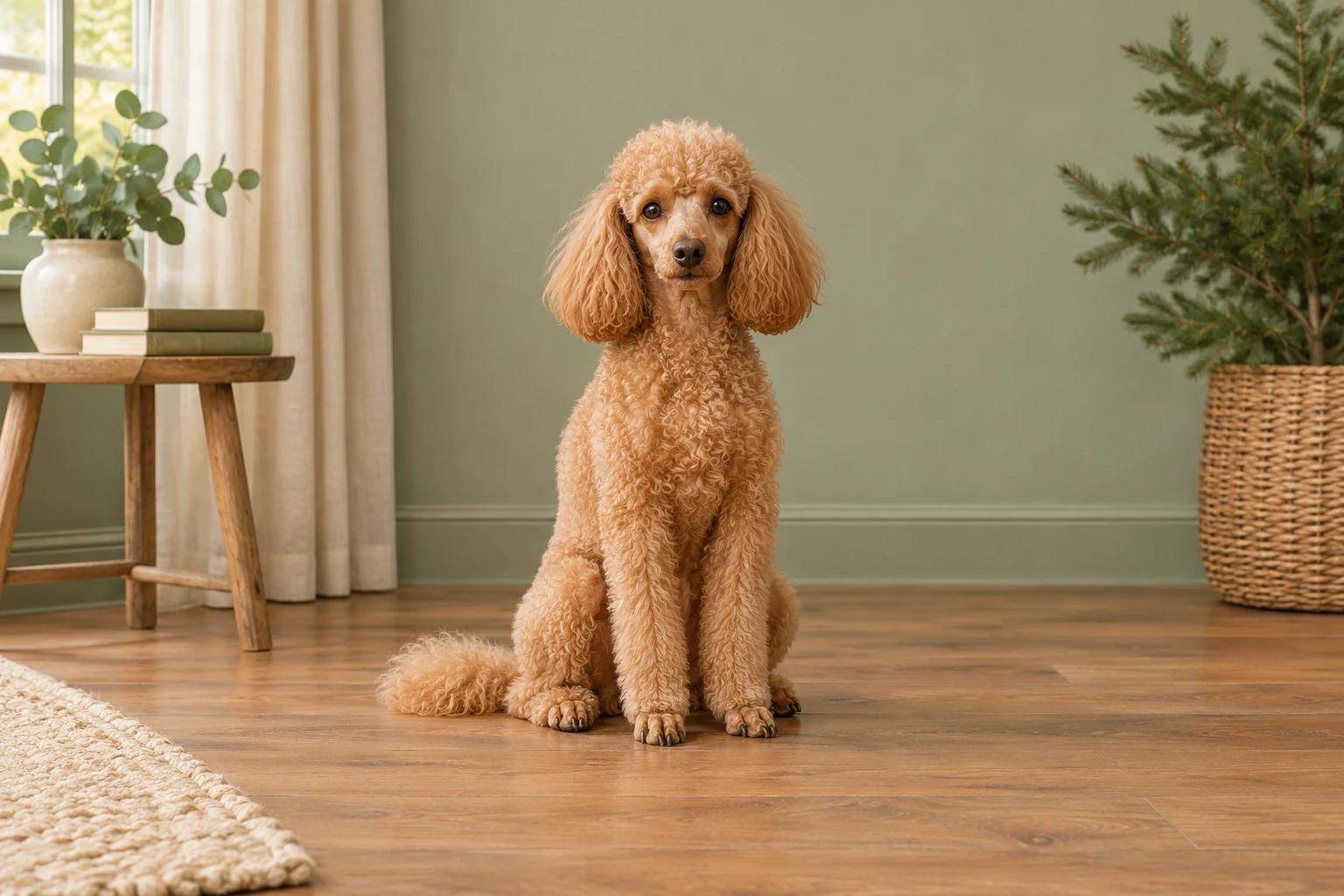
Poodle miniature size is useful information when you are planning a home, a journey, or a purchase. It is less useful when a single number becomes a promise about a puppy. Separate the formal height category from an indicative weight range, then look at the dog and equipment in front of you.
The Miniature Poodle breed profile lists adult reference figures of 10–15 inches and 10–15 pounds. The height boundary needs a little more precision, while the weight range needs context rather than a rigid target.
Poodle miniature size: what the category means
The Poodle Club of America's AKC standard defines the Miniature variety as over 10 inches and no more than 15 inches at the highest point of the shoulders. Height is measured to that shoulder point, not to the ears or the top of a decorative hairstyle.
For owners, this distinction prevents two common mix-ups. A picture of an upright, fluffy dog is not a measurement, and a person's description of something as miniature is not necessarily a statement about this formal variety. Ask which registry or standard a description refers to when that matters to your decision.
The AKC's Poodle overview gives an indicative Miniature weight of 10–15 pounds. Poodle miniature weight is not the rule that defines the variety. Nor is the middle of that range a feeding goal. Your veterinarian can interpret an individual dog's weight and body condition.
Record a measurement that answers your question
Before reaching for a tape, decide why you need the information. A harness maker may request chest and neck measurements. A carrier maker may ask for length and standing height. A breed-height measurement answers a different question from either of those.
Follow the equipment manufacturer's measuring directions rather than substituting the breed average. Write the measurement beside the date, the dog's age, and the product you are considering. “Chest measurement for this harness” is a much better note than a bare number you cannot interpret a month later.
For poodle miniature height, ask an experienced breeder, groomer, or veterinary team member to show you the relevant shoulder landmark if you are uncertain. Do not hold a dog in an uncomfortable position to obtain a perfect-looking number. A calm, repeatable method is more helpful than comparing several hurried readings taken differently.
Also keep units visible. If a product chart uses centimeters and your notes use inches, convert deliberately and retain the original measurement. An otherwise sensible purchase can fail because someone compares numbers without noticing that the units differ.
Adult size and puppy estimates belong in different boxes
People asking “how big do poodle miniatures get” often mean “will this puppy fit my plans?” A breed description cannot answer that precisely. Ask for the puppy's current measurements and what any adult estimate is based on. Keep the estimate clearly labeled as such.
An adult dog offers a different kind of information: you can inspect its current fit in a bed or harness instead of planning entirely around a forecast. That does not mean buying everything at once. Let the dog use a simple resting arrangement before investing in a custom piece that cannot be returned.
For a puppy, favor equipment choices that can be reassessed. Check adjustment limits and the manufacturer's fitting instructions. An adjustable product still has a minimum and maximum usable size; the word adjustable is not a guarantee that it covers the whole growth period.
Avoid turning repeated weighing into a home growth competition. A record can help your veterinarian understand changes, but trying to keep a puppy beneath an advertised adult number is not an ownership goal. Questions about growth, feeding, or unexpected weight changes belong with the veterinary team.
Check the places where dimensions actually matter
Start with the sleeping area. A bed should work for the way your dog rests, not just match a catalog's breed list. Watch whether the dog stretches out or curls up, and leave access that does not require stepping over stored bags. Put the resting place outside the busiest route between rooms.
Next consider transport. Measure the usable interior of a carrier rather than its outer packaging dimensions. Check the transport provider's current rules separately if you intend to travel. A dog being small does not itself establish that a particular carrier, vehicle setup, or journey is suitable.
Harnesses deserve their own check because coat volume can make visual fit misleading. Follow the maker's instructions, then ask a knowledgeable professional to check the fit if needed. Reassess after a change in coat presentation instead of assuming yesterday's strap position is automatically correct.
Finally, consider the human part of the arrangement. Can the person providing care manage the dog and equipment comfortably? Is the outdoor route practical when carrying groceries? A compact dog can still require you to reorganize a narrow entrance so that leads, shoes, and opening doors do not collide.
Do not let small size hide the rest of ownership
A size article cannot tell you whether you will enjoy the dog's daily routine. Put measurements beside time commitments, not above them. Ask who will provide outdoor breaks, teaching, coat care, and company. If those arrangements do not work, a smaller bed will not fix the mismatch.
When comparing possible dogs, use a short worksheet with four headings: known measurements, estimated measurements, equipment still to check, and care responsibilities. Leave a blank where information is missing. It is better to ask a follow-up question than to fill the space with an assumption from a photograph.
For the maintenance side of the decision, read Miniature Poodle grooming planning. If you are still considering breeds, the dog match quiz can help you examine your routine alongside size. Return to the individual dog's information before making a final choice.
FAQ
What height defines a Miniature Poodle?
Under the AKC standard, a Miniature Poodle stands over 10 inches and no more than 15 inches at the highest point of the shoulders. That is a height classification. Measure the dog itself rather than including its head position or hairstyle.
Is a Miniature Poodle's listed weight a target?
No. A reference range describes typical adult size, not the correct weight for every individual. Ask your veterinarian about your dog's body condition and growth. Do not change feeding simply to make a dog match a number in a breed description.
Can I buy a harness from the breed name alone?
Use the manufacturer's required measurements and fitting instructions instead. Check the actual dog, the adjustment range, and the fit during use. A breed label on a product page is a starting suggestion, not evidence that the product fits your Miniature Poodle.
Sources behind this article
- Poodle Club of America: AKC Breed Standard ↗
- American Kennel Club: Is the Poodle a Good Fit for You? ↗
Article source checked: November 15, 2026. Source checked 2026-11-15
Keep reading
Poodle miniature temperament: sharing an ordinary day
Read article →