Pont Audemer Spaniel temperament: life beyond the curls
Explore Pont Audemer Spaniel temperament through companionship, learning, working background and questions about an individual dog.
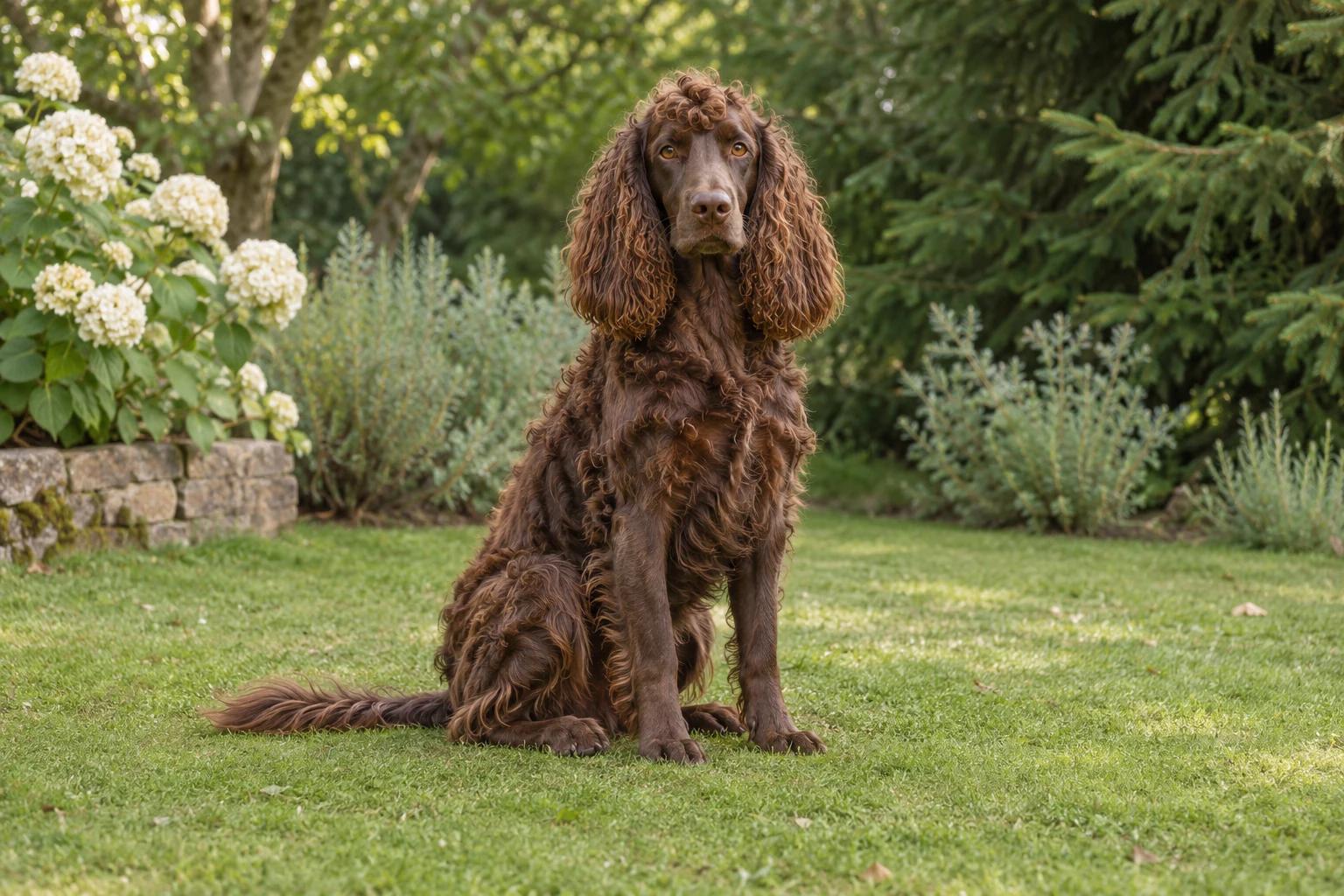
Pont Audemer Spaniel temperament deserves more attention than the breed's memorable hairstyle. The useful picture is of a companion with a working background, not simply a curly dog with an appealing expression. If you are considering one, look for opportunities to understand how it interacts, learns and spends an ordinary day.
The Pont-Audemer Spaniel profile introduces the breed's affectionate, gentle and playful reputation. Those descriptions can guide a conversation, but the conversation needs to reach beyond adjectives. Ask what they look like in the particular dog you might bring home.
Pont Audemer Spaniel temperament: a starting portrait
AKC's temperament guide summarizes the breed as affectionate, gentle and fun-loving. These are descriptions of the breed's intended character, not guarantees about every individual or every situation. AKC temperament guide, page 12.
UKC pairs an affectionate, gentle temperament with a hardworking background, describing a dog used for water work, pointing and flushing. That combination is worth remembering when an attractive portrait makes the breed look like an exclusively decorative companion. UKC breed standard.
For prospective owners, the practical question is whether you want to provide both company and meaningful engagement. Enjoying a dog beside you in the evening is one part of the relationship. Arranging outings, teaching household skills and supporting a manageable routine are other parts.
Affection does not define a single style of contact
Ask the caregiver how the dog chooses to spend time with familiar people. Does it approach for interaction, settle nearby or bring a toy? Does it remain comfortable when someone moves to another room? Those examples are more useful than asking whether it is “loving.”
Notice the difference between what the dog offers and what people request. A dog that chooses to rest nearby is participating in family life even if it is not seeking continuous handling. Give it space to disengage rather than making affection into a performance for visitors.
A learning partner still needs teaching
A favorable reputation for trainability is encouraging, but it does not install household rules. Before the dog arrives, decide what you want it to do at the entrance, around food preparation and during quiet evenings. Use clear, consistent cues and arrange reward-based teaching that everyone can follow.
For a Pont Audemer Spaniel personality assessment, ask about learning already completed. “Knows recall” is less informative than “returns from the garden when called, but still needs help around birds.” The second answer tells you where the next steps and management needs may be.
Make a small handover sheet with the words used, familiar rewards and current equipment. If the breeder or rescue demonstrates a skill, watch how the person sets it up, not only the final response. You may discover that the cue works in a particular setting that you will need to recreate initially.
Consider the working background without inventing a job
You do not have to improvise field training because a dog has a gundog background. You do need to consider how your daily life will offer movement, investigation and cooperation. Ask experienced breed owners which activities their individual dogs enjoy and what preparation those activities require.
A suitable class can be a way to learn together rather than a competition goal. Describe your dog's experience to the instructor before attending. Ask how the class manages space, distractions and breaks, especially if you are new to organized dog activities.
Keep expectations modest at first. The aim is not to prove that your dog embodies all the familiar Pont Audemer Spaniel characteristics. It is to find activities that both of you can sustain. A dog that enjoys one kind of game does not have to become enthusiastic about every activity associated with its ancestry.
Make introductions ordinary and unhurried
When meeting a prospective dog, allow time for it to observe you without pressure. Ask the caregiver to lead the visit and explain any boundaries. Do not interpret a reserved first few minutes as the whole personality, or an enthusiastic greeting as proof that every future encounter will be easy.
Describe your household honestly. Frequent visitors, shift work, visiting children and other animals all change the setting in which behavior occurs. Ask about experience relevant to those details instead of asking for a blanket assurance of compatibility.
If children will be present, make supervision and a quiet retreat part of the plan. Do not assign children responsibility for resolving conflict or managing an unfamiliar dog's reactions. Similarly, do not assume that living successfully with one dog establishes compatibility with another. Discuss the actual animals and the introduction arrangements.
Observe behavior with context attached
When recording Pont Audemer Spaniel behavior, use descriptions you could show someone else. “Barked when a person appeared at the gate, then moved away with the caregiver” gives more information than “protective.” “Rested after a walk while we talked” is more precise than “calm.”
Ask what happened before and after the moment you saw. A lively arrival might follow a long period of waiting. A quiet visit might happen after a busy morning. Neither should be treated as a complete prediction of life in your home.
For an existing dog, the same method helps when something changes. Note the setting, people present and sequence of events. Share persistent concerns with a qualified behavior professional and discuss sudden changes or apparent discomfort with your veterinarian. Avoid turning a change into a fixed personality label before understanding it.
Choose for the relationship you can support
The breed's curls make a memorable introduction, but appearance and temperament are separate questions. Our article on the topknot and ear curls explains that visual feature without using it as evidence of behavior.
Use the dog match quiz to organize your priorities, then compare them with a real dog's history and current needs. Ask who will provide follow-up support and what information you can take home before deciding. A thoughtful match leaves you understanding the work as well as looking forward to the company.
FAQ
Is the Pont-Audemer Spaniel affectionate?
Affection is part of the breed's published temperament description. Learn how the individual dog seeks company and responds to handling rather than expecting one particular style of closeness. Give the dog a choice about contact.
Does a gentle reputation mean no training is needed?
No. Household skills still require teaching and practice. Ask which cues the dog already understands, in what settings they work and what management remains necessary. A temperament description is not a training record.
How can I assess a dog during a visit?
Observe with the caregiver present, ask about ordinary routines and describe behavior in context. Do not manufacture tests by startling the dog or forcing interaction. Combine what you see with its history and the support available after placement.
Sources behind this article
Article source checked: November 15, 2026. Source checked 2026-11-15
Keep reading
Pont Audemer Spaniel size: planning for an adult dog
Read article →