Petit Basset Griffon Vendéen Temperament at Home
Understand Petit Basset Griffon Vendéen temperament through scent, company, voice, and everyday expectations for life with a hound.
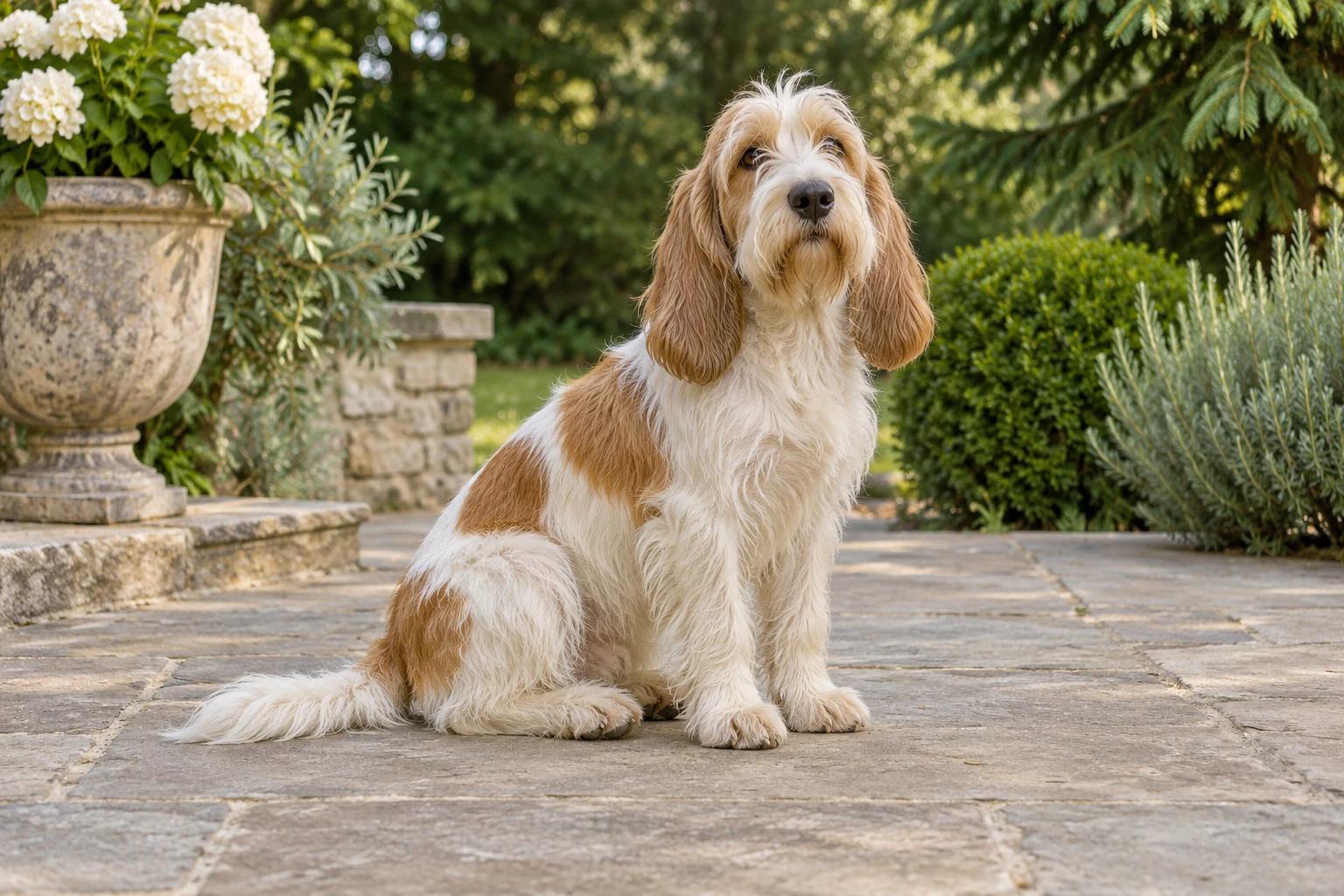
Explore the
Petit Basset Griffon Vendéen
Background, care, and everyday considerations.
View breed profile →Petit Basset Griffon Vendéen temperament is easy to like in a short encounter: an expressive, interested hound can make an immediate impression. Living together requires a longer view. You need to consider what happens when the dog finds something more interesting than your plan, when the house is quiet, and when its voice carries farther than you expected. The affectionate relationship and the practical arrangements belong in the same decision.
Petit Basset Griffon Vendéen temperament beyond cheerful
The American Kennel Club introduction describes a lively French hunting hound with a pack background. The breed club's common questions emphasize curiosity, independence, and the pull of scent. Its posted standard also makes voice part of the breed's character. Together, these points suggest an involved companion, not an ornamental dog whose demands end with a short toilet trip.
The PBGV profile highlights activity, mental engagement, and a high vocal tendency. Ask whether you enjoy participating in a dog's day and can accommodate communication without expecting silence. The breed's compact appearance should not distract from those questions.
Individual dogs differ, so use the description to guide observation. Ask what the particular dog does during an ordinary morning and which parts of daily life still need help. An honest account of unfinished learning is more useful than a cheerful adjective repeated until every practical question disappears.
The nose changes the conversation
A walk with a scent hound is not always about reaching your destination as efficiently as possible. Plan routes where you can allow suitable investigation without blocking a narrow pavement or being pulled toward a road. Think about what you want from the outing before leaving, then allow some flexibility within that plan.
The club cautions against unsecured off-leash freedom because a scent can draw the dog away. Use a lead outside appropriate secure areas, and inspect the places where you intend to allow free movement. Do not use a successful response in the kitchen as proof that the dog will respond the same way to a compelling outdoor distraction.
For a borrowed garden or holiday property, check boundaries yourself. A listing that says fenced is not a personal inspection. Look at gates, gaps, and the way people enter and leave. Explain the arrangement to anyone sharing the property so the containment plan does not depend on one person remembering everything.
Work with attention rather than arguing over it
Petit Basset Griffon Vendéen personality can make the word stubborn tempting when your plans diverge. Replace that label with a description of the task. Was the cue familiar? Was the setting new? Did you ask for too much while something interesting was happening nearby?
Choose a small teaching goal and a setting where the dog can engage. Keep the cue consistent and make the outcome worthwhile. A qualified reward-based trainer can help you design a progression that does not jump from a quiet room straight to the most distracting place you know.
If the dog stops participating, pause and review rather than repeating the instruction louder. Write down the circumstances so that the next attempt changes something useful. “Practiced near the gate while another dog passed” contains information; “ignored me again” contains mostly frustration.
Make room for activities that you both enjoy learning. You do not need to pursue a competition to take training seriously. A clear, achievable project can make shared time more satisfying than an evening spent reacting to whatever the dog invents.
Be realistic about sound
Among Petit Basset Griffon Vendéen characteristics, voice deserves an honest housing assessment. Listen to your building during the hours you normally work or rest. Note the sounds outside your door and the places where a dog could watch constant activity. Consider what a vocal dog would mean for neighbors, calls, and sleep.
Do not buy on the hope that this particular PBGV will never use its voice. Ask the caregiver for examples: when does barking occur, how long does it continue, and what arrangement helps? If you already have a dog, record the context before seeking a training plan.
Arrange a resting area that is not automatically the best lookout point in the house. That is a practical option to discuss with a trainer, not a promise that moving a bed will solve every noise problem. Sudden or distressing changes warrant veterinary advice rather than being dismissed as ordinary hound behavior.
Company needs a plan when you are occupied
Think about the hours between walks. Where will the dog be while you work, prepare food, or leave for an appointment? A sociable companion still needs practice with ordinary pauses in attention. Constant entertainment is not a sustainable substitute for a settled daily routine.
Ask how the dog has experienced time apart and what care arrangements are already familiar. If you are bringing home a puppy or adopting an adult, plan the transition before returning to your longest absence. Written instructions for a sitter should include familiar cues, equipment, and the rest of the day, not just feeding times.
If another dog lives in the home, assess the actual pair. Prepare separate resting and feeding arrangements and get advice on introductions. A pack background does not guarantee that every combination of animals will share space easily. Children likewise need adult supervision around the dog and a clear rule that its private retreat remains private.
A useful visit includes the unremarkable moments
When meeting a prospective PBGV, observe waiting as well as greeting. Ask to see a familiar routine rather than creating a challenge for the dog to pass. Notice how the caregiver responds when the dog becomes distracted and whether they can explain what works.
Petit Basset Griffon Vendéen behavior is better understood through context than through a performance. A few exciting minutes cannot tell you what a normal afternoon is like. Follow up on anything you could not observe, including grooming, travel, and the arrangement for time alone.
Our existing article on the PBGV's distinct proportions helps with appearance questions. For an ownership decision, put those beside temperament and your real timetable. The dog breed quiz can organize priorities, but the final choice should rest on a daily life you are prepared to provide.
FAQ
Are PBGVs stubborn?
They can have interests that compete with an owner's request. Describe the situation before applying a label: consider the task, surroundings, and previous learning. Clear reward-based teaching and manageable distractions are more useful than an argument over compliance.
Can I let a PBGV off leash on an unfenced walk?
Use a lead outside suitable secure areas, as the club recommends. Plan your route before setting out rather than testing recall in an unsecured place.
Is a PBGV suitable for a noise-sensitive home?
Treat that as a serious compatibility question. The breed profile records a high vocal tendency. Ask about the individual, assess the building, and discuss realistic management rather than relying on a promise that the dog will be quiet.
Sources behind this article
- American Kennel Club: Petit Basset Griffon Vendéen ↗
- Petit Basset Griffon Vendéen Club of America: Common Questions ↗
- Petit Basset Griffon Vendéen Club of America: Posted Breed Standard ↗
Article source checked: November 15, 2026. Source checked 2026-11-15
Keep reading
Petit Basset Griffon Vendéen Size: Adult Planning
Read article →