Peterbald vs Sphynx: Compare More Than a Hairless Appearance
Compare Peterbald vs Sphynx body type, coat variation and everyday responsibilities, then assess the individual cat and its established care.
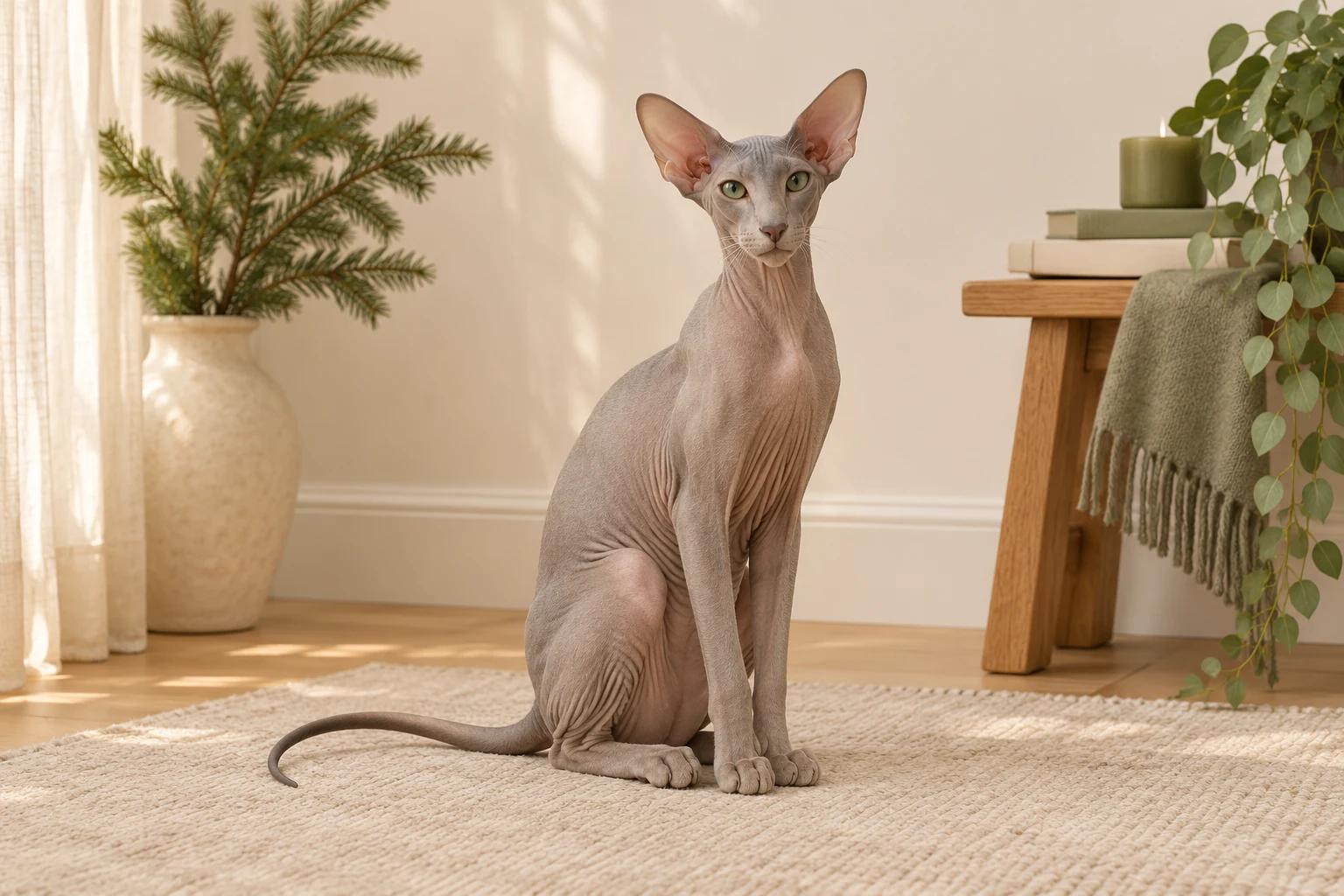
Peterbald vs sphynx is a comparison that should begin with breed identity and the actual coat. A Peterbald can have several kinds of coverage, including ordinary hair, while a Sphynx's nearly hairless appearance can include fine down and residual hair. They are separate breeds with different histories and body descriptions. A photograph showing bare skin does not make their care interchangeable.
If you are choosing a peterbald or sphynx, look at the individual animal's routine before deciding which appearance you prefer. Ask what hands-on care it accepts, how it seeks company and which records explain its current needs.
Peterbald vs Sphynx: different histories and outlines
TICA describes the Peterbald's development in Russia from Oriental Shorthair and Donskoy ancestry. Its outline is long and lean. The Sphynx's development has Canadian and United States foundations, and the site's profile describes a more substantial body. Those distinctions help explain why two nearly hairless cats may have quite different silhouettes.
Neither an outline nor a skin texture proves pedigree. Ask about the records behind an identification and be careful about names used casually for any hairless-looking cat. A difference between peterbald and sphynx in a listing should be supported by more than the seller's interpretation of a photograph.
Read the Peterbald profile and Sphynx profile together. They keep the site's current breed facts and individual-care cautions visible rather than reducing both cats to the amount of fur in a picture.
Identify the coat you would actually care for
TICA lists a range of Peterbald coat textures, and coverage can change. Ask the present caregiver to describe the animal's current coat and any documented changes. A kitten's appearance is not a guarantee that precisely the same coverage will remain throughout life.
The Sphynx profile likewise notes variable residual hair. Nearly hairless is a description of appearance, not proof of identical skin condition across cats. Ask about the individual's established routine and products rather than assuming a care video for another animal is applicable.
These distinctions matter when comparing responsibilities. A coated Peterbald's combing needs should not be replaced automatically by a hairless-cat washing routine. Conversely, a lack of brushing work does not imply an absence of hands-on care. Request a demonstration and discuss any concerns with the veterinary team before taking over.
Keep the published care advice within its scope
The current Peterbald profile attributes to TICA a bathing reference of every two weeks for hairless varieties and weekly fine-toothed combing for other coat types. It also cautions against washing too often. Those statements should remain attached to their coat types rather than becoming one universal schedule for all Peterbalds and Sphynxes.
The Sphynx profile calls for an individual skin-care routine with the caregiver and veterinarian, without an arbitrary bathing interval. VCA's general coat-care guidance also emphasizes that bathing needs vary with the animal and its circumstances. This comparison does not prescribe a product or replace professional advice about skin concerns.
The existing Peterbald seasonal skin-care guide addresses when a care plan should be reviewed. It is useful follow-up reading, but this breed comparison has a different purpose: understanding what responsibilities accompany the actual candidate cat, not designing a seasonal wash schedule.
Compare reference size without making a prediction
The Peterbald profile's adult reference figures are 5–7 pounds for females and 7–10 pounds for males. The Sphynx profile uses the labeled TICA adult references of 7–10 pounds for females and 8–12 pounds for males. Keep those descriptions distinct; they do not guarantee the size of an individual or establish a feeding target.
For equipment, consider the cat's actual body and movement. A carrier's maximum weight does not answer whether there is usable room to change position. A perch needs appropriate stability and access as well as a suitable load rating. Ask about familiar equipment before replacing it based on breed categories.
Do not choose a smaller reference range because you expect less work. Skin care, social interaction and routine veterinary responsibilities cannot be calculated from body weight. A lighter animal can still need substantial time and careful handling.
Social descriptions do not rank two individuals
Both TICA accounts describe people-oriented, active cats. A sphynx vs peterbald decision should therefore include your appetite for interaction, but this article does not rank one as more affectionate or more tolerant. Ask about the individual cat's preferred contact and what it does when people are busy.
During a meeting, let the animal choose whether to approach and whether to remain. Curiosity about a visitor does not automatically invite lifting or prolonged touching. Explain preferences to children and guests, and provide a retreat. An animal that seeks company can still decline a particular encounter.
Other pets need their own assessment and introduction plan. Do not use either breed's sociable reputation to predict automatic friendship. Request the actual history and arrange the environment so that each animal can access resources without being forced into contact.
Make the records part of the decision
Ask which veterinary and screening records belong to the cat and which questions remain unanswered. Review them with your veterinarian. A breed name, registry membership or one test result does not establish general health, and this comparison does not tell you which individual will need less veterinary care.
The absence of an ordinary coat should not lead to an improvised nutrition, product or temperature plan. Obtain advice appropriate to the animal rather than borrowing a routine because another cat looks similar. If a seller promises a simple answer to every care question, ask for the supporting records and practical demonstration.
Use the cat quiz to consider your household preferences, then bring those preferences to the conversation. The useful outcome is an informed commitment to an individual Peterbald or Sphynx, with clear responsibilities and an honest account of what you still need to learn.
Frequently asked questions
Is a Peterbald the same breed as a Sphynx?
No. They have separate histories and breed descriptions. A nearly hairless appearance does not make the names interchangeable or establish ancestry from a photograph.
Can a Peterbald have a coat?
Yes. TICA describes several Peterbald coat types, including ordinary hair, and notes that coverage may change. Ask about the individual rather than assuming every Peterbald is bald.
Should both breeds use the same bathing schedule?
No universal shared schedule is established here. Keep coat-type advice within its scope and discuss the actual animal's skin-care routine with the caregiver and veterinarian.
Which is the more affectionate cat?
Breed accounts describe social tendencies in both. This article does not establish a ranking; meet each animal and ask about its own contact preferences and history.
Sources behind this article
Article source checked: November 20, 2026. Source checked 2026-11-20
Keep reading

Abyssinian vs Somali: Coat, Size and Everyday Company
Read article →