Peruvian Inca Orchid Temperament: Life Together
Explore Peruvian Inca Orchid temperament, introductions, independent learning, and the daily arrangements behind a thoughtful match.
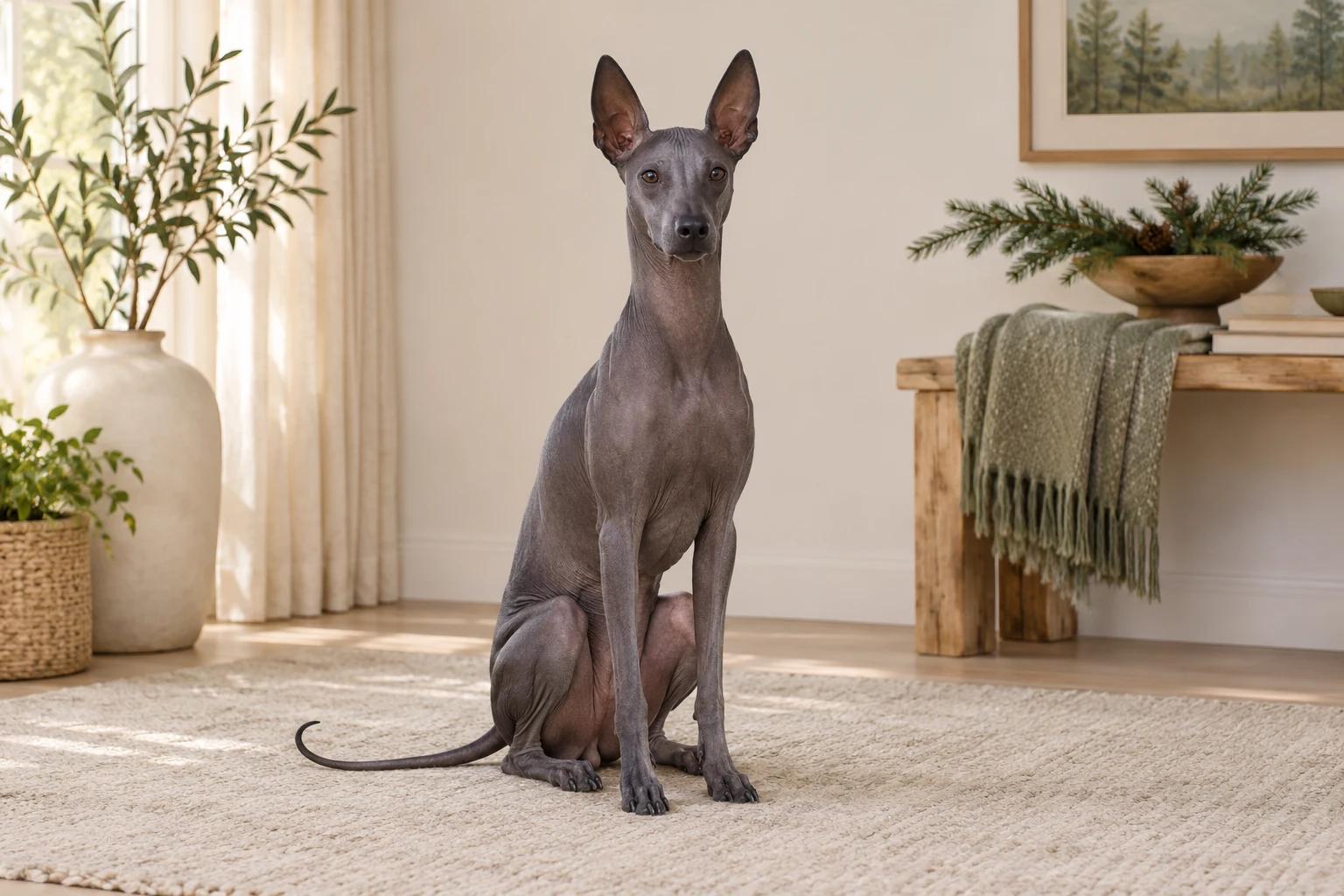
Peruvian Inca Orchid temperament combines an interest in familiar people with a need to approach new situations thoughtfully. If you are attracted to a dog that feels like a close companion rather than an indiscriminate greeter, that may appeal. The responsibility is to give the dog understandable routines and room to develop confidence, not to make reserve a novelty or expect immediate affection from every encounter.
Peruvian Inca Orchid temperament in context
The FCI standard describes affection toward familiar people alongside lively alertness and possible wariness of strangers. The UKC standard adds independent thinking. These brief descriptions are best used to shape introductions and questions, not to excuse distress or assume every individual will behave alike.
The Peruvian Inca Orchid breed profile also gives activity and mental engagement an important place in daily life. Think of temperament and routine together. A dog is not just a collection of adjectives; its day includes waiting, traveling, being handled, sharing space, and deciding what to pay attention to.
Before meeting one, identify the situations that matter most in your home. Frequent visitors, a quiet work-from-home schedule, or regular overnight travel create different expectations. Write down those realities so the discussion can focus on a possible match rather than on whether the breed sounds appealing in general.
A meeting does not need to begin with touching
For your first introduction, ask the caregiver where to sit or stand and let the dog observe. Do not make reaching over the dog's head your first test of friendliness. A meeting can be informative even if the dog spends much of it at a comfortable distance.
Look at the relationship already present. Does the caregiver recognize when the dog needs a pause? Can they describe how introductions usually develop? Are they willing to end an interaction rather than insist that you must be greeted? Those details tell you about the support surrounding the dog.
If the first meeting is in a busy place, ask whether another encounter in a more ordinary setting is possible. Do not compare a relaxed home visit with a crowded public event as though the circumstances were identical. Record the setting along with your observations so that you do not turn one moment into a permanent label.
Peruvian Inca Orchid personality is easier to understand through a series of ordinary interactions than through an attempt to produce a dramatic first impression. Your task is to learn what the dog finds manageable and what it has not yet practiced.
Independence calls for clearer teaching
Independent does not mean that teaching is pointless. It means you should avoid treating attention as something the dog owes you regardless of the situation. A useful plan makes the requested behavior clear, the reward meaningful, and the setting manageable.
Start by learning the cues already in use. Ask the caregiver to demonstrate one familiar task, then try it under their guidance. Keep their wording and setup initially rather than replacing everything on the first day. This gives you a shared starting point and reveals where you need more instruction.
When progress stalls, change one element at a time. Perhaps the location is too distracting, the task is unclear, or the session has become longer than planned. A qualified reward-based trainer can help distinguish those possibilities without resorting to a confrontation over who is in charge.
Keep a brief training record that describes what happened. “Came over when called from the kitchen” is useful. “Very stubborn today” does not tell you what to change tomorrow. Practical language makes Peruvian Inca Orchid behavior easier to discuss with someone helping you.
Prepare for visitors before inviting a crowd
Decide where the dog can remain comfortably apart from guests. Explain the arrangement to visitors before they arrive so that nobody interprets an instruction to give space as an invitation to try harder. You can host people without making the dog the center of the gathering.
For the first visits, choose someone who can follow a quiet plan. Keep the meeting simple and avoid combining it with several other new experiences. A new home, unfamiliar people, and an unfamiliar handling routine do not all need to happen at once.
Do not use a visitor as a training prop without their agreement. If you need professional help with introductions, arrange a session designed for that purpose. Ordinary guests should not be expected to diagnose behavior or prove that the dog can be won over.
A sudden change in tolerance, or behavior that creates a risk of injury, needs veterinary assessment and an appropriate professional plan. A breed description is not a diagnosis and should not be used to dismiss a concern.
Familiar company still needs a realistic timetable
Among Peruvian Inca Orchid characteristics, closeness to familiar people can be especially appealing. Make room for shared time that is not always an outing or lesson. A resting place near your usual evening seat may be a useful part of that arrangement, provided it is genuinely restful.
Ask separately about being alone. Find out which absences the dog has experienced, who provided care, and what the caregiver observed. Do not assume that a dog who rests quietly while you are in the room will have the same experience after you leave.
During a move to a new home, plan help rather than relying on an immediate return to your longest workday. Give a sitter written details about familiar cues, equipment, and resting arrangements. That makes it easier to maintain a recognizable routine while your relationship develops.
Keep appearance out of the temperament assessment
The article on the coated Peruvian variety addresses a common appearance question. Temperament assessment needs different evidence: everyday observations, caregiver history, and the dog's response in suitable settings. A photograph cannot tell you how an individual manages a visitor or a quiet afternoon.
Ask for the same level of detail whatever the dog's appearance or size. What does an easy day look like? Which situation is currently hardest? What support would the caregiver recommend for a new owner? A candid answer about unfinished learning is more useful than an insistence that nothing ever needs attention.
Before deciding, compare that account with your own household. Use the dog breed quiz to clarify preferences, then identify the practical changes you would actually make. Choose based on the relationship you can support, not the version of the dog you hope to create by force of enthusiasm.
FAQ
Are Peruvian Inca Orchids friendly with strangers?
The breed standard allows for wariness of unfamiliar people. Ask about the individual and arrange introductions without pressure. A dog does not need to greet everyone physically for a meeting to be successful.
Does independent mean difficult to train?
Not necessarily. Independence makes clear tasks, suitable rewards, and manageable settings especially useful. Learn existing cues and seek reward-based professional help when you cannot identify why a task is difficult.
Can a Peruvian Inca Orchid live in a social household?
Assess the particular dog and what social means in your home. Frequent gatherings require a workable retreat and people willing to respect it. Describe your real routine to the caregiver rather than asking for a broad promise about sociability.
Sources behind this article
Article source checked: November 15, 2026. Source checked 2026-11-15
Keep reading
Peruvian Inca Orchid Size: Three Categories
Read article →