Peruvian Inca Orchid Size: Three Categories
Understand Peruvian Inca Orchid size categories and use individual measurements to plan equipment, transport, and everyday space.
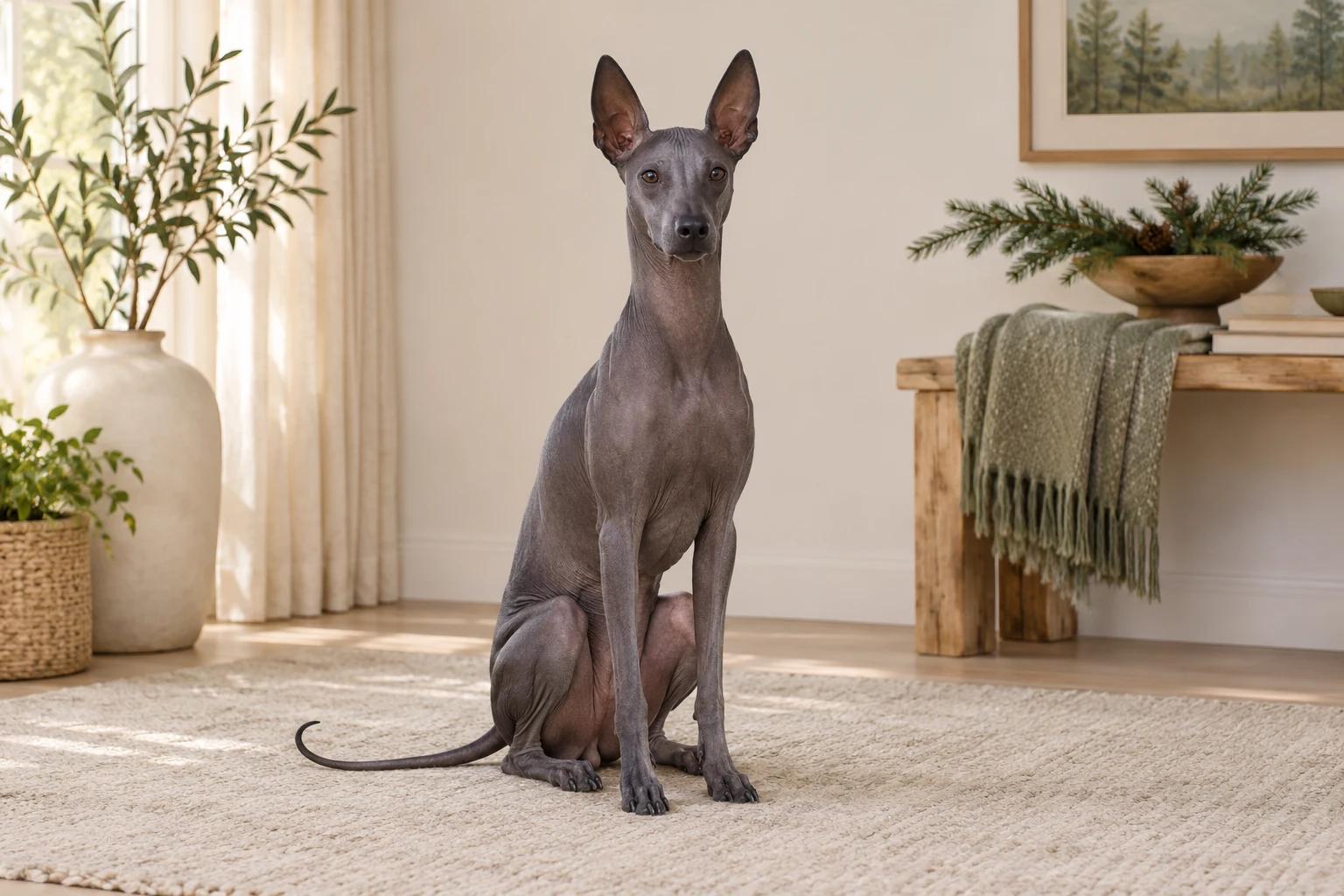
Peruvian Inca Orchid size is not represented well by one average. The breed has three size categories, so the small adult you meet and the large adult in a photograph may both be legitimate examples. Before buying equipment or deciding whether the breed fits your home, establish which category you are discussing. Then use the individual dog's measurements rather than expecting the category name to do all the work.
Peruvian Inca Orchid size categories explained
The UKC standard distinguishes small, medium, and large dogs by height at the withers. This means the shoulder area, not the top of the ears. Ask which category is recorded for the dog and obtain its actual measurements before making practical plans.
The FCI standard for the Peruvian Hairless Dog also recognizes three categories. For ownership planning, the key is to identify the standard or measurement system being used rather than assume that an unlabeled number describes every Peruvian. The breed profile provides an overview with the categories kept visible.
Treat these ranges as descriptions, not a target for feeding or a promise about a growing puppy. Ask your veterinarian to assess an individual dog's body condition and growth. A number appearing inside a breed range does not, by itself, establish that the dog's current weight is appropriate.
Height, weight, and equipment fit answer different questions
Peruvian Inca Orchid height helps you picture the dog's standing scale. Peruvian Inca Orchid weight helps with practical issues such as rated equipment capacity. Neither tells you the chest circumference needed for a harness or the usable resting space needed in a particular bed.
Make a measurement sheet before shopping. Include the date, the dog's age, the units used, and the measurements requested by the manufacturer. If the chart asks for chest circumference, do not substitute height because that is the number you already know. Follow the product's own measurement directions and arrange a fitting when possible.
For a growing dog, date every entry. A photograph of last month's label is not a current fitting check. Choose purchases with a realistic adjustment or replacement plan rather than buying something oversized and hoping the dog will eventually fill it.
There is also a difference between a product's outside dimensions and the space available inside it. This matters for carriers, crates, and enclosed beds. Check both before deciding that the item will suit the dog and fit the place where you intend to use it.
How to record a useful height measurement
Choose a level, nonslip surface and a moment when the dog can stand comfortably. Have a helper if that makes the process calmer. The purpose is an ordinary planning measurement, not a test the dog must endure until you obtain a perfect number.
Keep the dog standing naturally rather than stretching it or pressing it into position. If you are unsure where the withers are, ask the breeder, groomer, or veterinary team to show you. Mark the method on your record so a later measurement can be compared sensibly.
Do not measure to the ear tips. Ear position can change, and it is not the reference point used in the size categories. Likewise, a photograph with a ruler somewhere nearby can be misleading if the ruler and dog are at different distances from the camera.
If the dog is uncomfortable, stop and get help. A rough estimate with clear limitations is more useful than a supposedly precise result produced through struggling. Where a formal measurement matters for an event or service, ask the responsible organization how it must be obtained.
Plan the journey as well as the destination
A large Peruvian and a small Peruvian may require quite different travel arrangements. Begin with the dog's actual resting and transport needs, then check your vehicle. Can the chosen equipment pass through the door opening? Can you secure it as intended? Is there still room for the other things that must travel with you?
Make a cardboard outline of bulky equipment before purchasing it if space is tight. This will not verify the dog's fit, but it can reveal that the proposed crate blocks access to a seat or leaves no practical way to load luggage. Test the human logistics without making the dog part of an awkward experiment.
If you use a travel service, read its current rules directly before booking. A breed category is not a substitute for the carrier's measurements or weight restrictions. Keep the booking decision separate from a casual claim that a dog is small enough to travel anywhere.
Ask better puppy-size questions
“How big do Peruvian Inca Orchids get?” is a useful opening question, but follow it with the category and family information relevant to the puppy. Ask for the parents' adult measurements, the puppy's current record, and the breeder's explanation of the expected range.
Ask what is known rather than requesting a guarantee. A responsible conversation can distinguish a supported expectation from an exact adult prediction. If a strict size limit determines whether you can keep or transport the dog, explain that constraint before making a commitment.
An adult dog with established measurements may make planning more straightforward when size is nonnegotiable. That does not remove the need to assess temperament, routine, and care. It simply reduces one uncertainty in the decision.
Do not let category names replace everyday planning
Walk through your home with the intended equipment in mind. Where will the dog stretch out? Can people move past without stepping over the resting place? Is there a route to the outdoor area that remains clear when bags, laundry, or visitors arrive?
Size is also separate from appearance. Our existing article on the coated Peruvian variety covers that distinction; here, use documented measurements rather than the visual impression created by a coat or camera angle. Ask to see the actual dog moving and resting in normal surroundings.
Finally, put size beside the rest of the ownership plan. The dog breed quiz can help you compare priorities such as activity and company. A dog that fits physically into a room still needs a suitable daily life outside the dimensions of that room.
FAQ
Is the Peruvian Inca Orchid always a medium-sized dog?
No. The breed has small, medium, and large categories. Ask which category applies and obtain individual measurements before planning equipment or transport. A single breed-wide average hides an important part of the size picture.
Should my dog weigh the middle of its category's range?
No fixed point in a breed range is an individual feeding goal. Ask your veterinarian about body condition, life stage, and growth. Use weight records as information for that discussion rather than trying to make the dog match a midpoint.
Can a puppy's adult size be guaranteed?
An expected category can be discussed using the puppy's background and growth information, but an exact adult measurement should not be assumed. If a strict size limit matters, explain it before choosing and consider whether an adult would make planning clearer.
Sources behind this article
Article source checked: November 15, 2026. Source checked 2026-11-15
Keep reading
Peruvian Inca Orchid Temperament: Life Together
Read article →