Persian vs Himalayan: Color, Classification and Daily Care
Compare Persian vs Himalayan classification, coat, size and everyday care. Ask about the individual cat instead of relying on appearance alone.
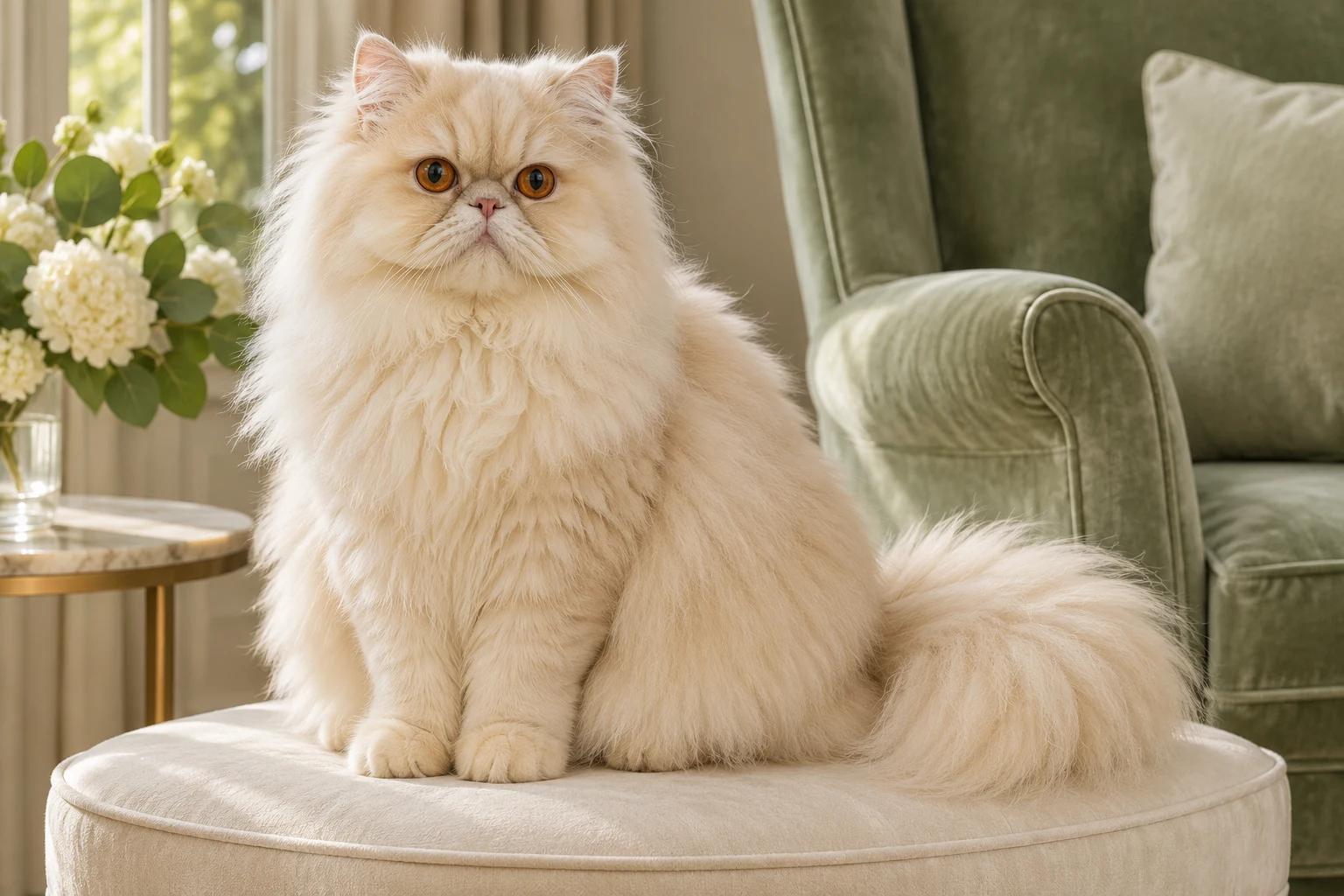
Persian vs himalayan can sound like a choice between two very different cats. In the reviewed registry descriptions, however, the relationship is close: both share the Persian group's rounded body type and abundant long coat. The Himalayan's pointed coloring and blue eyes are the most obvious visual distinction. Daily care requires a closer look than the color of the face, paws and tail.
Whether you are considering a persian or himalayan, ask about the individual animal's coat routine, comfort, activity and veterinary history. A classification can explain a name on a pedigree; it cannot decide whether a particular cat fits your home.
Persian vs Himalayan: why the names can overlap
TICA treats the Himalayan as a member of the Persian breed group alongside the Persian and Exotic Shorthair. CFA places the Himalayan pattern within its Persian divisions. That difference in classification is useful to understand when comparing records or reading articles written for different registries. It does not mean one source has discovered a fundamentally different type of daily companion.
A difference between persian and himalayan in an advertisement may therefore concern color and registration terminology rather than a promise of different care demands. Ask which registry and records the description refers to. Keep the source's terminology attached instead of treating a familiar-looking animal's photograph as proof of ancestry.
The Persian profile and Himalayan profile keep the site's current descriptions separate. Reading both is more useful than assuming that one name automatically means a smaller, more active or easier-to-maintain cat.
Compare the appearance without ranking the animals
TICA describes the Himalayan's pointed pattern and blue eyes within a Persian-type body and coat. The Persian category encompasses a much wider palette. Those differences can guide an aesthetic preference, but they do not provide a reliable test of sociability, learning speed or tolerance of handling.
Look at the whole animal when you meet it. Ask how it moves, where it rests and what its familiar care routine involves. A dramatic coat can hide the body outline, and a face that looks appealing in a still picture does not tell you whether normal activity is comfortable.
Avoid comparing two advertisements solely by how much coat they show. Ask about the grooming required to maintain that coat and what happens between photographs. A care demonstration and an honest history can reveal responsibilities that a polished image leaves out.
The long coat is a shared commitment
Both site profiles require substantial attention to coat care. CFA's Persian account describes regular combing and notes that some owners use professional groomers. The Himalayan profile explicitly includes daily brushing or combing and careful attention to the face. Neither is a choice that makes the long-coat commitment disappear.
Before adoption, ask to see the tools and technique already accepted by the cat. Which areas need more attention, how are difficult tangles handled, and what professional help is already part of the plan? Arrange that discussion before a problem leaves you trying to improvise.
Do not judge the animal's personality from its response to uncomfortable grooming. A cat may enjoy company while finding a particular tool or handling position difficult. Ask your veterinarian or an experienced cat groomer about appropriate care rather than forcing a task to preserve the appearance you expected.
Similar size references do not make the cats interchangeable
The site's current reference figures for both are 7–11 pounds for females and 9–14 pounds for males. They describe adult reference ranges, not predictions for a kitten or feeding goals for an individual. The abundant coat can also make an animal appear larger than its body alone would suggest.
Use the actual cat when selecting a carrier, bed or resting surface. Consider usable space, stability and access. A label for a medium cat is not a guarantee that the equipment suits its posture or movement. Follow product instructions and ask for help if travel or handling is already difficult.
Discuss body condition with your veterinarian instead of trying to bring the cat toward the middle of a breed range. The comparison cannot determine whether either candidate is at an appropriate weight or explain a recent change.
Calm descriptions still leave room for play
Registry descriptions often present these cats as quiet or placid, while also describing playful moments. Do not turn that into a rule that a Persian never wants activity or that a Himalayan must be the more playful option. Ask which games the individual already enjoys and what comfortable participation looks like.
Try to learn about a normal day rather than requesting a demonstration of maximum energy. Does the cat follow a toy briefly, watch it, choose a different game or prefer a particular room? Those observations help you plan opportunities without imposing an exercise contest.
FelineVMA's indoor-cat guidance emphasizes both physical and emotional needs. Apply that to either choice through appropriate resources, retreat, play and positive contact. A calm reputation should not become a reason to leave the cat without interesting choices.
Review health records with a professional
Both site profiles direct prospective owners to discuss screening and everyday comfort with a veterinarian. Ask what records belong to the actual cat and what assessment is appropriate. A breed standard, pedigree or isolated genetic result cannot establish general health or predict an individual's future.
Keep eye-care questions in their proper context. The existing Persian eye-observation guide explains why new concerns should not be treated only as cosmetic cleanup. This comparison does not diagnose breathing, eye or skin problems, and it does not recommend treatment.
If you are choosing between two animals, compare the information available rather than labeling one breed healthier. Note what is documented, what remains unknown and which questions need professional advice. Use the cat quiz to organize your household preferences, then make the decision around the individual and the care you can sustain.
Frequently asked questions
Is a Himalayan related to a Persian?
Yes. TICA places it in the Persian breed group, and CFA includes the Himalayan pattern within Persian divisions. Keep each registry's terminology attached when reading records.
What is the clearest visual difference?
The Himalayan is associated with pointed coloring and blue eyes within the Persian-type body and long coat. The broader Persian category includes many other colors and patterns.
Is a Himalayan easier to groom?
This comparison does not establish that. Both profiles describe a substantial long-coat commitment. Ask about the actual cat's routine, accepted handling and professional care needs.
Can breed classification tell me which cat is healthier?
No. Review the individual records and discuss appropriate assessment with your veterinarian. Classification and appearance cannot provide general health clearance.
Sources behind this article
Article source checked: November 20, 2026. Source checked 2026-11-20
Keep reading

Abyssinian vs Somali: Coat, Size and Everyday Company
Read article →