Oriental Shorthair vs Siamese: Similar Shape, Different Looks
Compare Oriental Shorthair vs Siamese appearance, social needs, care and reference size, then assess the individual cat and your household routine.
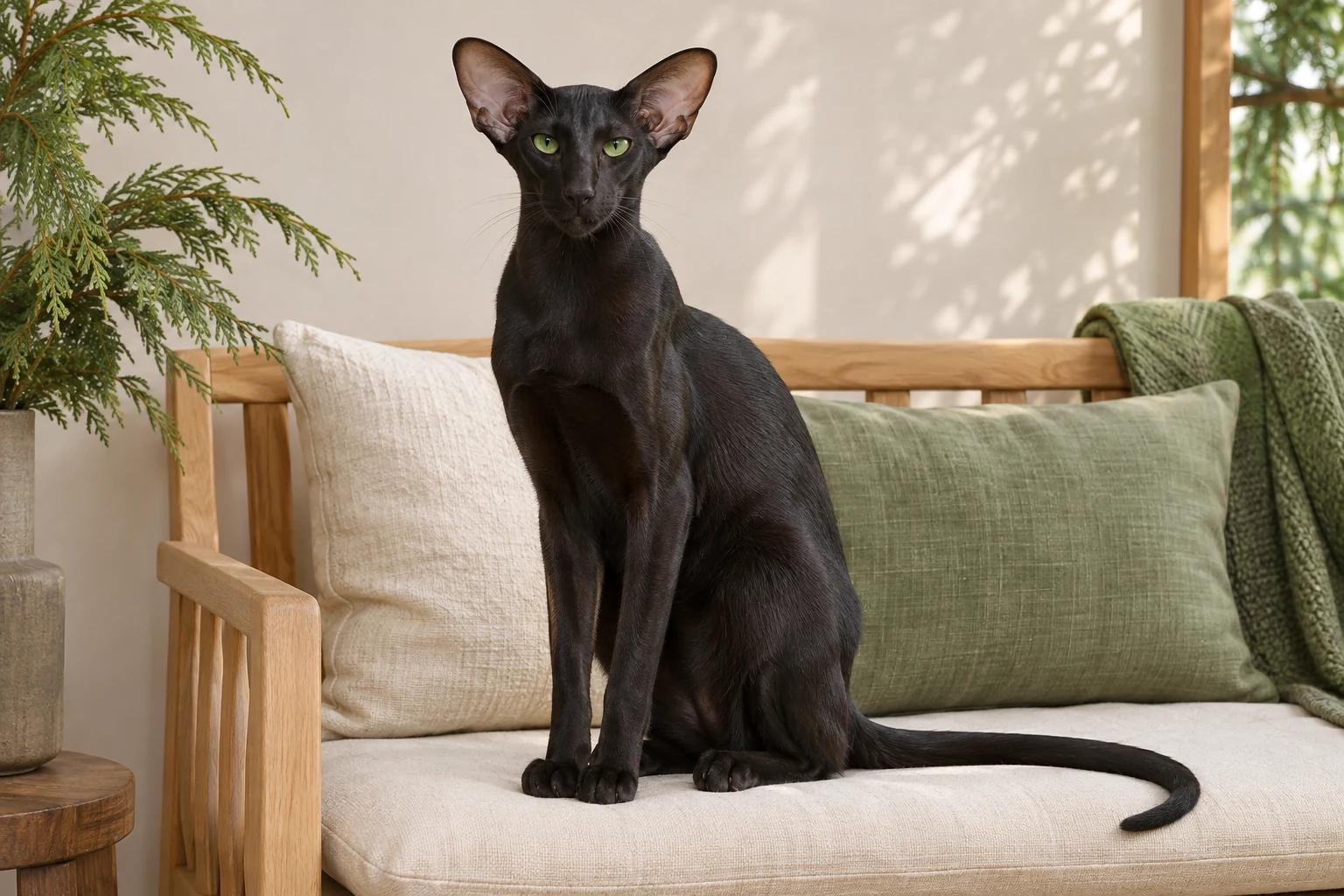
Oriental shorthair vs siamese is a comparison between closely related cats, not a choice between opposite personalities. Both belong to the Siamese breed group in TICA's classification and share a long, lean outline. Their most visible distinction is the range of colors and patterns associated with each name. The practical decision still depends on the individual animal, its care history and the kind of interaction your household enjoys.
If you are choosing an oriental shorthair or siamese, begin with those shared needs. A different coat color will not turn an interactive cat into a reliably quiet, self-sufficient companion.
Oriental shorthair vs siamese: start with the coat
TICA's Siamese account describes the familiar contrast between a paler body and darker points, together with blue eyes. Its Oriental Shorthair account covers a much wider color and pattern palette. TICA likewise distinguishes the Oriental Shorthair's broad range of colors and sleek coat within the group. These are useful identity descriptions, not personality tests.
A difference between oriental shorthair and siamese can look striking in photographs even when their underlying body types are similar. Look past the image to the source of the identification. Ask what records accompany a pedigree claim, and keep an uncertain background uncertain. Appearance alone cannot establish an individual cat's ancestry.
Read the current Oriental Shorthair profile and Siamese profile before comparing advertisements. The site keeps each breed's care and source context together, making it easier to separate documented information from an appealing description.
Do not choose a personality from the color palette
Registry accounts describe both breeds as vocal and people-focused. That shared description is more important for planning than an unsupported claim that one color variety must be calmer or more affectionate. It is reasonable to prefer a particular appearance, but the household still needs to welcome the actual animal's company and activity.
Ask each caregiver the same concrete questions. What happens while someone works at a desk? Which games does the cat request? Where does it rest when the room becomes busy? Comparable examples make a siamese vs oriental shorthair decision more useful than comparing adjectives written by different people.
A visit is only one sample. Tell the caregiver what you observed and ask whether it was typical. A cat that remains quiet during an unfamiliar meeting may be more expressive at home. Another may investigate immediately but still prefer limited touch. Leave both possibilities open until you have better information.
Talk about sound before making the commitment
A household that enjoys a conversational cat may welcome a tendency another household finds difficult. Before adopting, discuss ordinary noise tolerance with everyone who lives there. Consider work calls, sleep schedules and shared walls without pretending there is a breed-wide volume control.
Ask about the individual cat's calling patterns and the situations in which they occur. Avoid a promise that changing the feeding time, buying a toy or adding another pet will make an unwanted pattern disappear. If there is already a behavioral concern, request the history and any professional advice that accompanies it.
After adoption, a sudden change deserves attention in its own right. Do not dismiss it because Siamese-group cats are described as vocal. Your veterinarian can help assess a concern; an online comparison cannot determine whether a new sound reflects discomfort or another cause.
Compare the actual care commitments
Both profiles concern short-coated cats, but simple coat care is only one part of living with either breed. Review the accepted grooming tools, handling preferences and existing routine. A cat that needs relatively little combing can still require considerable time for company, play and routine veterinary care.
The current Oriental Shorthair profile suggests combing the fine coat every couple of weeks, adjusted to need. The Siamese profile describes light care with damp hands or a rubber brush. These are breed-profile starting points rather than a reason to impose an unfamiliar tool on an unwilling animal. Ask the caregiver to show what works.
The existing Oriental Shorthair companionship-duty guide addresses how people can coordinate interaction. Use it for that practical task, while keeping this comparison focused on choosing between animals rather than assuming one breed removes the need to plan companionship.
Similar reference size does not settle equipment fit
The site's current TICA-based reference figures for both breeds are approximately 5–8 pounds for females and 8–12 pounds for males. Those figures describe adult reference groups, not promised outcomes for kittens or a feeding target. They also cannot tell you whether a particular carrier, perch or litter area fits comfortably.
Ask for the actual cat's measurements or use of existing equipment. A long-bodied animal may need more usable space than a product's weight category suggests. Follow manufacturer instructions for load and installation, and give the cat accessible alternatives rather than relying on an athletic reputation.
Do not decide that two cats must have equivalent handling needs because their reference weights match. Experience, age, health and individual preference affect everyday care. Meet each animal on its own terms instead of treating the breed comparison as a substitute for that assessment.
Make an evidence-based shortlist
Write one short description of each candidate cat using only information you can attribute to the caregiver or your own observation. Include its preferred interaction, a familiar activity and a care task you would need to learn. If most of the description concerns eye color, you have not yet gathered enough information about daily life.
FelineVMA's indoor-cat guidance emphasizes an environment that supports physical and emotional needs. Apply that to both options: appropriate resources, retreat, play and positive contact. Neither breed should be selected on the assumption that being indoors is the whole care plan.
The cat quiz can help you organize preferences before those conversations. Treat its suggestions as a starting point. The best-supported choice is the cat whose documented needs you can meet, with an honest understanding of what remains unknown.
Frequently asked questions
Are Oriental Shorthairs and Siamese the same breed?
They are closely related but have separate breed identities. TICA places them in the same group; color and pattern are prominent distinctions in the reviewed registry descriptions.
Is one reliably quieter than the other?
This article does not establish that ranking. Both have vocal breed descriptions. Ask about the individual and the setting rather than choosing a promised noise level by breed name.
Do their published weights differ on this site?
The current TICA-based reference ranges are the same: approximately 5–8 pounds for females and 8–12 pounds for males. Individual animals and equipment needs still vary.
Can either breed be chosen as a low-interaction pet?
Do not infer that from the short coat. Review the actual cat's social routine and your available time before making the commitment.
Sources behind this article
Article source checked: November 20, 2026. Source checked 2026-11-20
Keep reading

Abyssinian vs Somali: Coat, Size and Everyday Company
Read article →