Sharing daytime companionship duties for an Oriental Shorthair
Share your Oriental Shorthair’s daytime care with predictable opportunities, clear responsibilities and respect for individual preferences.
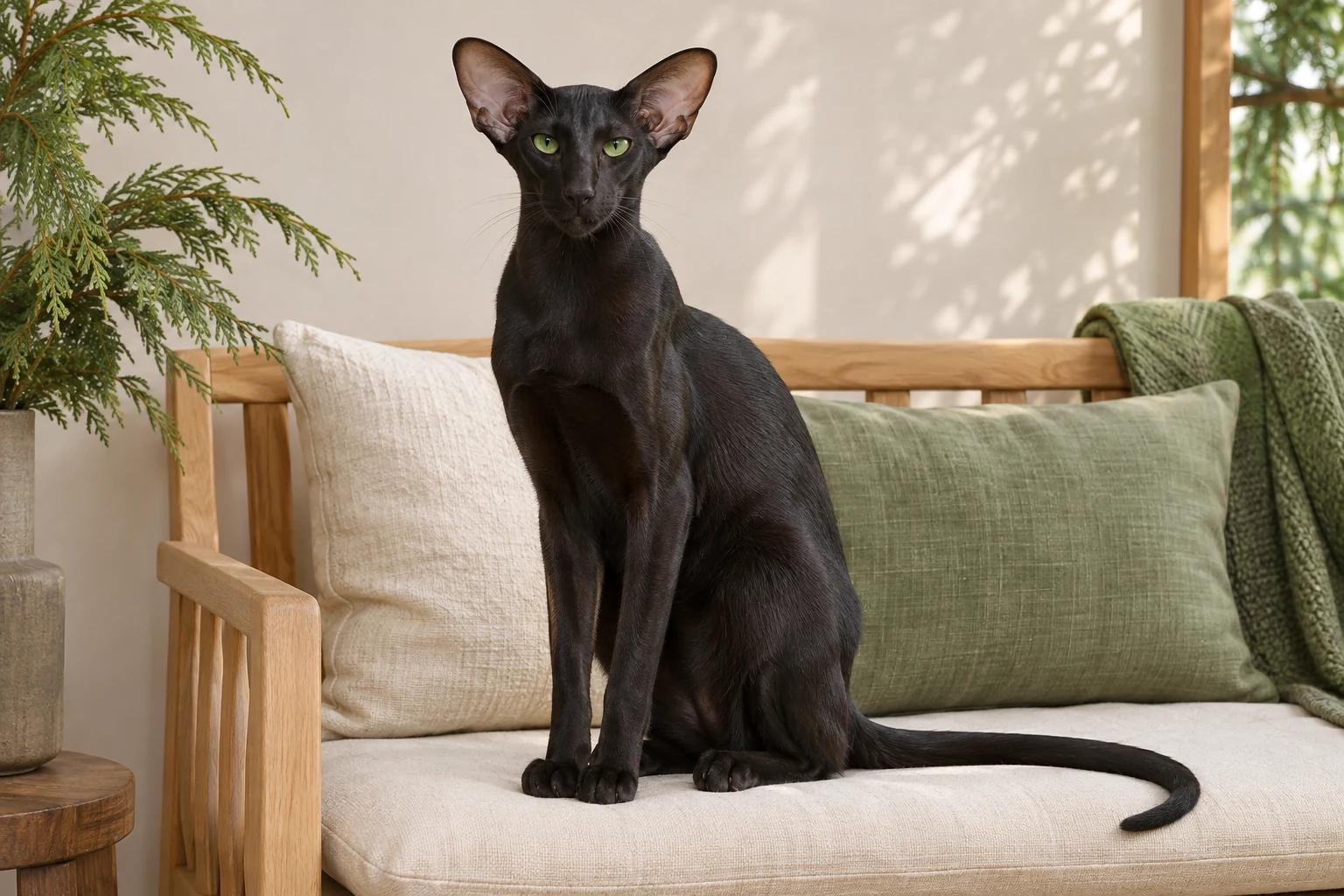
List opportunities rather than assigning a personality
CFA includes the Oriental Shorthair within its Oriental breed information. A breed description may suggest a sociable companion, but your household still needs to learn what this individual welcomes. Write down the interactions already part of the day: quiet company, play or a familiar greeting. Do not assume every available person should pick up or entertain the cat.
FelineVMA emphasises that cats differ in their preferences for social interaction. Begin with those choices instead of allocating a fixed amount of cuddling. One caregiver may be the person the cat approaches for play, while another provides comfortable quiet company. Both can contribute without trying to make the cat respond identically to everyone.
Assign a person to the opportunity
Look at ordinary weekdays and name who can reliably offer each opportunity. Include a backup for the person who is usually home at lunch or arrives first in the evening. This is a household coordination exercise, not a minimum-hours prescription for the breed. An ambitious schedule that repeatedly fails needs revision rather than another promise.
Keep the plan visible to the people who use it. A short note can distinguish offered interaction from accepted interaction, so nobody assumes the cat has missed out simply because it declined a game. Avoid several people repeating the same invitation in quick succession when each thinks nobody else has provided attention.
Protect choice within shared care
FelineVMA describes predictable positive contact and access to safe places as parts of a secure environment. Give the cat a way to leave an interaction without being followed. Tell children and visitors which places should remain undisturbed. Shared responsibility does not mean every person gets a turn regardless of the cat’s response.
Observe whether the arrangement is practical alongside feeding, litter and resting needs. If another animal interrupts every opportunity, review the setting. If a person is unsure how to offer contact appropriately, ask for guidance instead of inventing a handling technique. The useful question is what the Oriental Shorthair chose comfortably, not which household member obtained the longest interaction.
Review gaps without diagnosing them
When schedules change, revisit the plan before expecting the cat to adjust to an unexplained absence of familiar opportunities. If behaviour changes suddenly or raises concern, contact your vet rather than assuming the solution is more attention. A care rota cannot diagnose loneliness, pain or another cause from a single greeting or refusal.
Keep the arrangement simple enough to sustain: named opportunities, an informed backup and respect for individual choice. Your Oriental Shorthair should have dependable care without becoming responsible for everyone’s social expectations. The plan succeeds when people know what they are offering and can respond thoughtfully when the cat’s needs or preferences change.
Sources behind this article
Article source checked: October 22, 2026. Source checked 2026-10-22
Keep reading
Before a Chausie: can your weekday schedule support active care?
Read article →