Old English Sheepdog vs Sheepadoodle: choosing a companion
Compare Old English Sheepdog vs Sheepadoodle through parentage, coat care, daily routines, and the questions to ask about individual dogs.
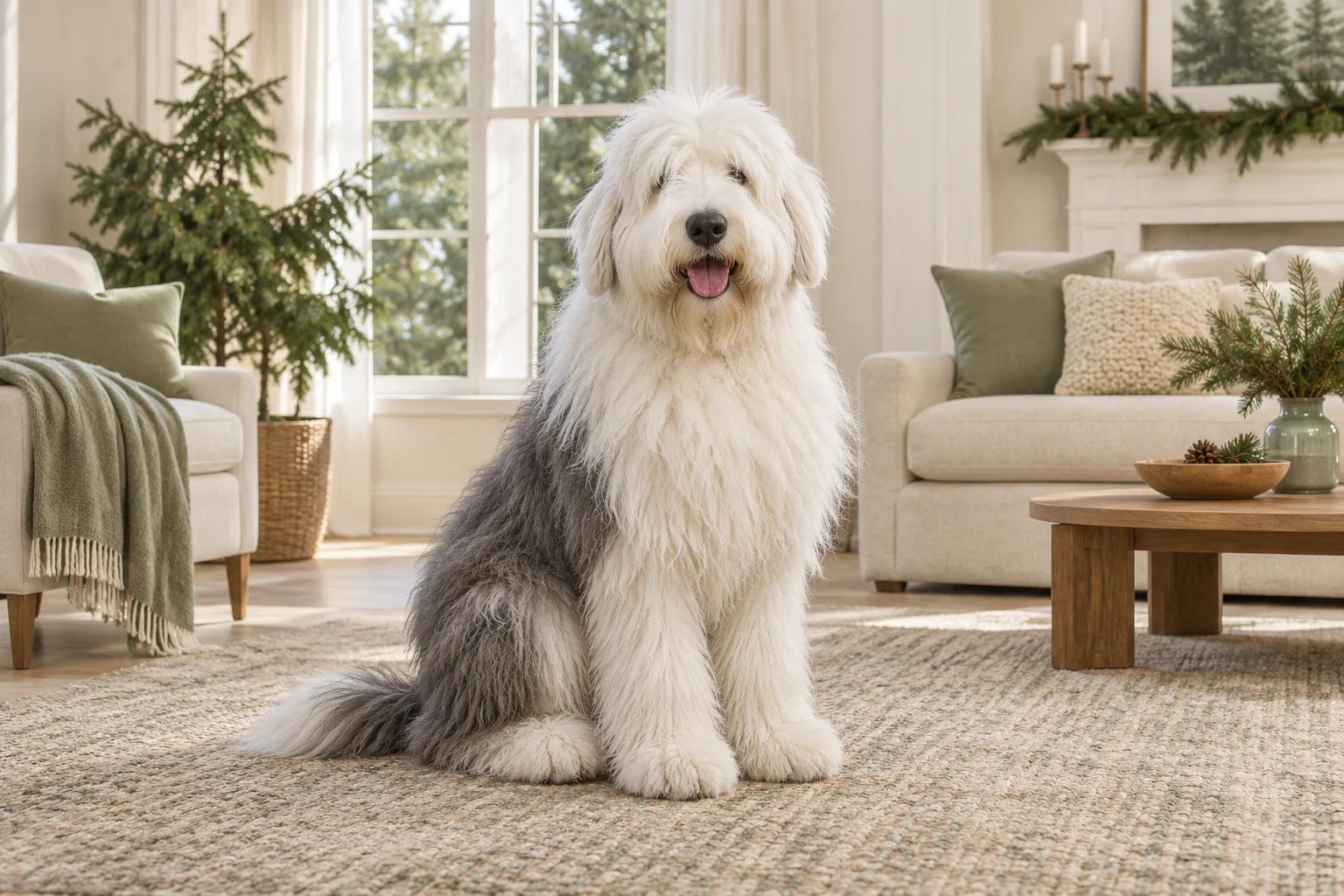
Old English Sheepdog vs Sheepadoodle is not simply a choice between two versions of the same shaggy dog. One is an established herding breed; the other combines Old English Sheepdog and Poodle ancestry. Both deserve a realistic care plan, but the evidence you need before choosing differs. Look beyond a puppy’s coat and ask what you know about its adult relatives, current routine, and likely demands on your household.
Compare the Old English Sheepdog profile with the Sheepadoodle profile, then use the questions below to investigate actual dogs.
Old English Sheepdog vs Sheepadoodle: the central difference
The most important difference between Old English Sheepdog and Sheepadoodle is the background behind the label. An Old English Sheepdog has an established breed identity and standard. A Sheepadoodle’s parentage needs to be described explicitly, including the Poodle variety and whether the parents themselves are crosses.
VCA’s designer-dog overview explains that crossing breeds does not reliably assemble a chosen set of parental traits. A desired coat or personality is not something a breeder can simply select from a menu.
For either choice, request the actual family information. For a Sheepadoodle, ask the breeder to write the ancestry in ordinary words rather than relying solely on a generation code. For an OES, ask what the parents and related adults are like outside a show photograph.
What does an ordinary weekday require?
The Old English Sheepdog Club of America’s breed account describes a working heritage in livestock droving and an affectionate, playful companion. VCA’s OES profile also emphasizes family attachment and regular activity. Neither description supports choosing the dog as a purely decorative presence in the house.
The Sheepadoodle profile likewise describes active outings, purposeful learning, and a strong interest in people. If you hoped that Poodle ancestry would remove the need for daily involvement, reconsider the premise. Choose on the basis of the routine you can provide, not which label sounds easier.
Write down a normal workday: departure time, who is available midday, evening commitments, and when the dog will have company. Then ask the current caregiver how the candidate dog handles a comparable day. An answer about what the dog already does is more useful than a statement that the cross is “adaptable.”
For a puppy, the comparison includes your capacity to teach these routines from the beginning. An adult with a known history may give you more direct information about settling, noise, and time apart than either breed label alone.
Compare coats through appointments, not promises
Both options need a serious grooming budget. The OES has a double coat; Sheepadoodle coats vary. Do not assume a curly appearance means less work, or that less loose hair on the sofa means less time maintaining the dog.
Before choosing, speak to a groomer about the particular coat and a presentation you can maintain. Ask for a realistic appointment plan and an explanation of the work expected at home. Compare those obligations with your available time, rather than comparing two freshly groomed photographs.
The detailed OES technique belongs in the existing grooming article. For this decision, the key issue is whether you can sustain the commitment. If frequent coat care already feels like an unwelcome extra, neither option is an obvious shortcut.
Avoid selecting either dog on an allergy promise. The appearance of the coat and the name of the cross do not establish how a particular person will respond. Personal health concerns need appropriate professional advice, not a marketing guarantee.
Size is a question about the actual family
A large fluffy outline can make dogs look more similar than they are underneath. Meet adult relatives when possible and ask for actual measurements. With a Sheepadoodle, establish the parent sizes rather than assuming that every dog using the name will mature to the same dimensions.
Test the practical consequences in your home. Where will an adult dog lie during a video call? Can it turn comfortably beside the dining table? How will it travel with luggage? These questions apply to both candidates, even if one currently looks smaller.
Equipment costs should be compared using real requirements. Ask about suitable travel arrangements, bedding dimensions, and grooming access. Do not order everything from a generic breed-size chart before you know which dog is coming home.
Enthusiasm needs manners in either household
A Sheepadoodle vs Old English Sheepdog comparison should include greetings and movement around people. The OES has herding ancestry, and VCA notes that chasing or nipping can occur. A Sheepadoodle’s shared ancestry is a reason to ask about those behaviors, not proof that every individual will show them.
Describe your household accurately to the breeder or rescue. Mention busy entrances, frequent visitors, resident pets, and children’s activities. Ask how the individual responds when someone moves quickly or leaves a room. Supervision and a protected resting place matter more than a flattering family-dog description.
For noise, ask what triggers barking and how readily the dog settles afterward. The Sheepadoodle profile places more emphasis on vocal activity than the OES profile, but it would be a mistake to use that comparison as a prediction of a particular puppy’s volume. Meet and observe where possible.
How to choose without inventing a winner
Choose an Old English Sheepdog if its established breed background appeals to you and you are prepared for its physical presence, people-focused daily life, and coat commitment. Choose a particular Sheepadoodle only when its actual background and observed needs make sense for your household, not because you expect an automatic improvement on either parent breed.
When deciding between an Old English Sheepdog or Sheepadoodle, compare the quality of the information available. Can you review parent records? Does the caregiver answer specific questions? Are limitations discussed honestly? Ask your veterinarian to help interpret health documentation; neither purebred status nor crossbreeding establishes an individual’s health.
The dog match quiz can help clarify your priorities. A useful final decision names the routine you are willing to provide and the dog you have investigated, rather than declaring one label universally better.
FAQ
Is a Sheepadoodle the same as an Old English Sheepdog?
No. A Sheepadoodle combines Old English Sheepdog and Poodle ancestry. Ask for the actual parentage, including Poodle variety and the background of any crossbred parents, before applying general expectations.
Which needs less grooming?
Neither should be selected as a low-maintenance coat option. An OES has substantial double-coat care needs, while a Sheepadoodle’s requirements depend on its actual coat. Ask a groomer to assess the individual and discuss a sustainable plan.
Which is easier to fit around a workday?
The answer depends on the individual’s routine and your care arrangements. Ask about demonstrated comfort during time apart and plan company, outings, and training rather than assuming either label guarantees an easy working-day companion.
Sources behind this article
- Old English Sheepdog Club of America: The Old English Sheepdog ↗
- VCA Animal Hospitals: Old English Sheepdog ↗
- VCA Animal Hospitals: Designer Dogs ↗
Article source checked: November 15, 2026. Source checked 2026-11-15
Keep reading

Affenpinscher vs Brussels Griffon: Everyday Differences
Read article →