Old English Sheepdog exercise needs: build a useful day
Plan Old English Sheepdog exercise needs with purposeful walks, simple learning, rest, weather adjustments, and a routine you can repeat.
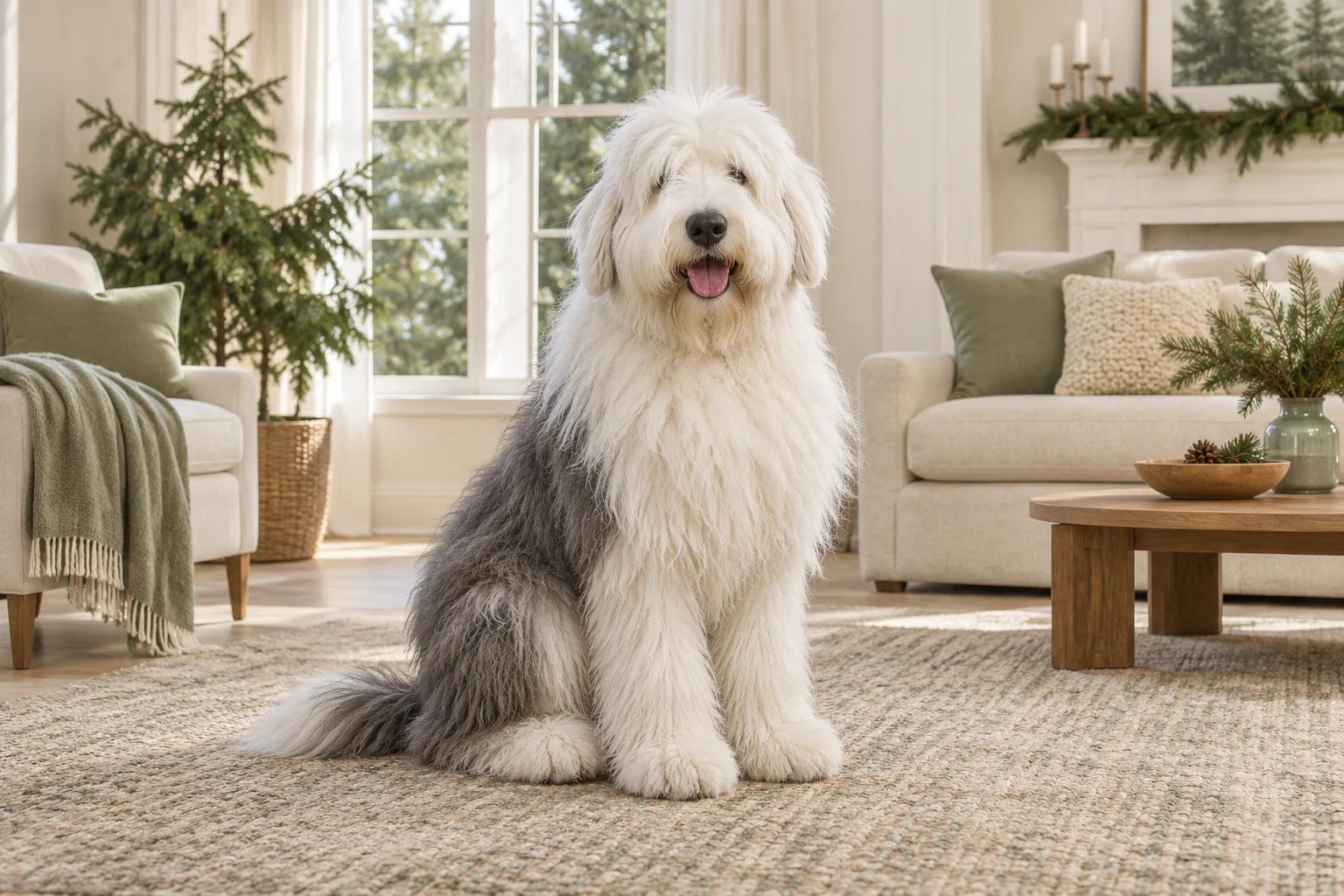
Old English Sheepdog exercise needs are best met by a workable daily pattern, not a heroic weekend outing followed by several inactive days. This substantial herding dog needs opportunities to move, learn, and share activities with people. A shaggy appearance can distract from that practical commitment. The goal is neither endless running nor permanent sofa duty, but a routine that suits the dog’s age, condition, and response.
The Old English Sheepdog profile provides the wider care picture. Use it alongside observations of your own dog, rather than treating a breed description as a stopwatch setting.
Old English Sheepdog exercise needs are more than mileage
VCA’s breed overview recommends regular walks, play, and structured activity. The Old English Sheepdog Club of America describes a history of droving and interest in activities such as obedience and herding work. These sources support variety and engagement, not a universal daily distance.
If your first question is how much exercise does an Old English Sheepdog need, start by separating three things: physical movement, opportunities to investigate, and learning. An outing can include all three without being fast or complicated. It can also cover a long distance while offering very little choice or mental engagement.
For example, a familiar neighborhood route might include a relaxed sniffing section, a few easy changes of direction together, and a pause in a quiet place. That is a more informative plan than “walk until tired,” because you can see which parts the dog enjoys and where it struggles.
Give each outing a purpose
An Old English Sheepdog daily walk does not have to look identical every time. Decide what the outing is for before leaving. Is it a quiet opportunity to explore, practice around mild distractions, or simply a comfortable change of scene on a busy day?
If the purpose is loose-lead practice, choose a route where you can turn and make space. A narrow pavement crowded with commuters makes the lesson harder before it begins. If the purpose is relaxed exploration, allow enough time that you are not repeatedly hurrying the dog away from every interesting spot.
A broad route with room to pass is especially useful with a dog whose coat and body occupy substantial space. Consider pinch points such as cafe tables, parked bicycles, and school entrances. Avoiding the busiest section is sensible planning, not a training failure.
Keep an alternative route available. If construction or a crowded event changes your usual walk, you should not need to improvise a difficult situation simply to complete the original circuit. A shorter familiar loop plus a calm activity at home may fit that day better.
Turn learning into part of the activity plan
You can give an Old English Sheepdog something to think about without filling the garden with obstacles. Practice moving to a named mat, finding a familiar toy, or walking around a simple marker with you. Keep the task clear enough that the dog can succeed without guessing wildly.
A toy search can begin with the dog watching you place the toy nearby. Make the next attempt only a little harder. The aim is a shared problem the dog understands, not a test designed to prove how clever it is.
Structured classes may appeal to owners who enjoy a continuing project. Ask an instructor how they adapt foundations for a large, coated dog and for different ages. Watching a class first can reveal whether waiting space, surfaces, and handling style will suit your dog.
Do not introduce demanding jumps or strenuous sports on the strength of a breed’s historical job. Ask your veterinarian about readiness for the activity you are considering and choose an instructor who will start with appropriate foundations.
Read the transition home
Old English Sheepdog activity level is not measured only while the dog is outside. Notice what happens afterward. Can it drink, settle, and rest comfortably? Does it remain excited by every movement in the house? Does it appear reluctant to get up later?
Those observations do not diagnose a problem, but they help you ask better questions. A dog that is frantic after an outing may have had an overwhelming experience rather than too little exercise. A dog that is unusually reluctant to move needs veterinary attention, not pressure to finish another route.
Keep a short activity diary when adjusting the routine. Record the type of outing, weather, unfamiliar distractions, and how the dog behaved afterward. Change one element at a time where possible. Otherwise, a longer walk, new park, and extra game on the same day make it difficult to know what helped.
Rest deserves a defined place in the schedule. Put the resting area outside the busiest household route so the dog is not repeatedly drawn back into movement. Ending activity predictably can be as valuable as adding another game.
Plan for weather and life stage
The OES carries a substantial coat, and VCA flags heat sensitivity. Choose suitable conditions and ask your veterinarian about individual limits. Do not turn a planned outing into an obligation when the weather is unsuitable.
Prepare a low-key indoor alternative: a short training session, a simple search, or comfortable handling practice. These are alternatives for engagement, not a claim that a few tricks replace every outdoor opportunity indefinitely. The point is flexibility on the days when the original plan no longer fits.
Puppies, mature adults, and older dogs need different decisions. Ask the current caregiver and veterinarian about the individual’s starting routine. Build from that information rather than applying an adult activity plan to a youngster or expecting an older companion to maintain a previous pace.
Allow time after outdoor activity for the practical return home. The OES grooming article explains the separate coat-care commitment. When budgeting your day, remember that an outing is not finished the instant the front door closes.
Choose a routine you can repeat
Before bringing an OES home, write a sample rainy Tuesday rather than an ideal Sunday. Who goes out before work? What happens if the evening is busy? Who can provide care if you are ill? Reliability matters more than an ambitious plan that depends on perfect conditions.
Use the dog match quiz to compare that commitment with your available time. A satisfying exercise plan is one that gives this dog regular movement and purposeful company while still leaving room for comfortable rest.
FAQ
Is there one daily exercise duration for every OES?
No. Age, condition, weather, and the type of activity all matter. Build a regular mix of walks, play, and learning, then discuss the individual’s needs and any changes with your veterinarian.
Does an Old English Sheepdog need a dog sport?
Not necessarily. A structured sport can offer an enjoyable shared project, but everyday walks and simple learning activities also provide engagement. Choose activities the dog can do comfortably and introduce demanding work with appropriate guidance.
Should a restless OES always get a longer walk?
No. Restlessness can follow excitement, an unsuitable environment, or an unclear routine. Consider what happened before and after the outing, provide a quiet resting opportunity, and seek professional advice for persistent or concerning changes.
Sources behind this article
- Old English Sheepdog Club of America: The Old English Sheepdog ↗
- VCA Animal Hospitals: Old English Sheepdog ↗
Article source checked: November 15, 2026. Source checked 2026-11-15
Keep reading

Afghan Hound Exercise Needs: Build a Workable Active Day
Read article →