Norwegian Forest Cat training: useful everyday skills
Try Norwegian Forest Cat training with small, reward-based steps, mat practice and clear cues, while respecting your individual cat’s choices.
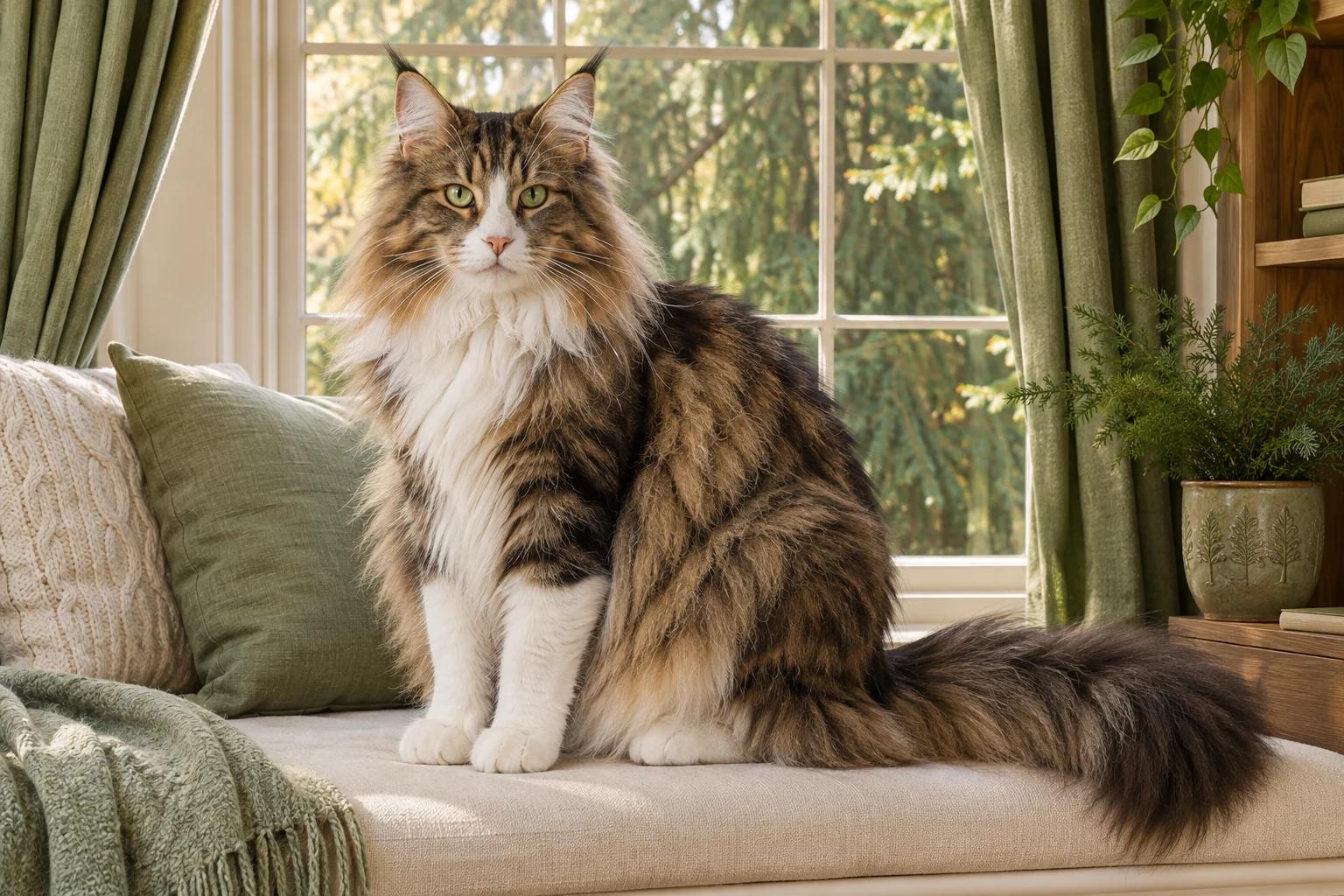
Norwegian Forest Cat training does not need to begin with an impressive trick. A useful first question is what you would like to communicate: come closer, step onto this mat, or investigate an open carrier. These are different jobs, not one general instruction to behave. This guide separates them so you can choose an appropriate starting point rather than attempt everything together.
The Norwegian Forest Cat breed profile covers everyday care and companionship. Here, the focus is the learning process, not a breed ranking or a promise about speed. Individual cats vary. If you are still considering a cat, the cat matching quiz can help you think through your household before choosing one.
Norwegian Forest Cat training starts with realistic expectations
GCCF describes an independent cat that can enjoy human company and interactive games without demanding constant attention. It also notes possible reserve around unfamiliar people. Those tendencies offer context, not proof that a Norwegian will perform whenever an owner asks. Do not equate independence with refusing to learn, or sociability with wanting an audience.
When thinking about how to train a Norwegian Forest Cat, separate your wish for a responsive companion from the particular skill you want. “Be more obedient” leaves the task undefined. “Approach me when I use this cue” gives you something observable. Neither a breed description nor another owner's successful video tells you how quickly your own cat will respond.
Norwegian Forest Cat obedience is therefore better understood as communication about specific actions than as a personality makeover. A quiet observer does not need to become an extrovert to participate.
Make one cue clear before adding distance
RSPCA Australia describes starting recall while an animal is already nearby: use a consistent short cue, then give a reward. Repeat in short sessions before trying from a little farther away. When the cat approaches, reward promptly. Different familiar settings can come later, rather than changing location and distance at once.
For a first attempt, this is a small indoor conversation, not a test from the other end of the house. Decide whether you are teaching a name response or a particular word, and keep that choice consistent.
RSPCA also recommends individual rewards, a quiet familiar setting and small achievable steps. Use something your cat values; food is not the only possibility. Keep sessions brief, and do not force a sitting position or other movement. If your cat is frightened, stop rather than trying to finish your plan.
Teach a mat and carrier as separate tasks
The IAABC Foundation Journal presents mat work as a foundation skill. In its example, a target is held over the mat; the cat steps onto it and touches the target, and the trainer marks and rewards the action. Placing the reward on the mat supports staying there. A reward tossed away can reset the cat for another approach.
The article then distinguishes separate practice from a sequence. Entering a carrier, leaving it for a mat and touching a target are taught individually before being joined. That distinction matters: a cat who understands the mat has not automatically learned the carrier part.
Treat this as an optional next project, not a requirement for the first session. For questions about preparing for appointments or cooperative care, talk with your veterinarian. Training at home is not a substitute for advice about your cat's circumstances.
Choose equipment for a defined job
VCA describes clickers and targets as training tools, but the equipment is not the goal. A marker can identify an action promptly; a target can give the cat something to approach or touch. Neither device supplies a complete plan by itself. Decide what behavior you mean to reward before adding another accessory.
VCA emphasizes teaching the wanted behavior rather than merely punishing the unwanted one. It also asks owners to consider whether an unwanted behavior is being reinforced. That makes a useful question when a routine is confusing: what happens immediately after the action you wish would stop? Do not jump straight from that question to buying a deterrent.
For a Norwegian Forest Cat, home layout is a separate subject from teaching a cue. Our guide to Norwegian Forest Cat climbing furniture covers that physical setup. A training tool cannot replace an appropriate place to rest, move or withdraw. Avoid treating either article as a product endorsement.
Frequently asked questions
Is Norwegian Forest Cat training the same as changing personality?
Norwegian Forest Cat training teaches particular actions; it does not require changing the cat's personality. Independence or reserve with strangers can coexist with participation. Describe the action you want instead of expecting a generally “obedient” version of the breed.
What should I teach a Norwegian Forest Cat first?
A nearby recall cue is one possible first Norwegian Forest Cat training task. Pair one consistent cue with a valued reward before gradually adding distance. Start with a small, clear task rather than several instructions together.
Does a Norwegian Forest Cat need to learn a whole carrier routine at once?
No. A Norwegian Forest Cat can practice entering a carrier, stepping onto a mat and touching a target separately before those actions become a sequence. Knowing one part does not mean the cat already understands the others.
Does Norwegian Forest Cat socialization require lots of visitors?
Norwegian Forest Cat socialization is not a visitor-count challenge. The site's breed guidance favors a quiet retreat and letting the cat control distance. Ask about the individual cat's experience; do not use a friendly breed reputation to promise comfort with every person or animal.
Sources behind this article
- GCCF: Norwegian Forest Cat ↗
- RSPCA Australia: Training small companion animals ↗
- IAABC Foundation Journal: Cat Training Corner ↗
- VCA: Behavior Management Products for Cats ↗
Article source checked: November 16, 2026. Source checked 2026-11-16
Keep reading

Abyssinian Cat Training: Useful Skills for an Active Cat
Read article →