Norwegian Buhund Temperament: Life With a Watchful Dog
Understand Norwegian Buhund temperament through everyday choices about visitors, activity, learning, company and household sound.
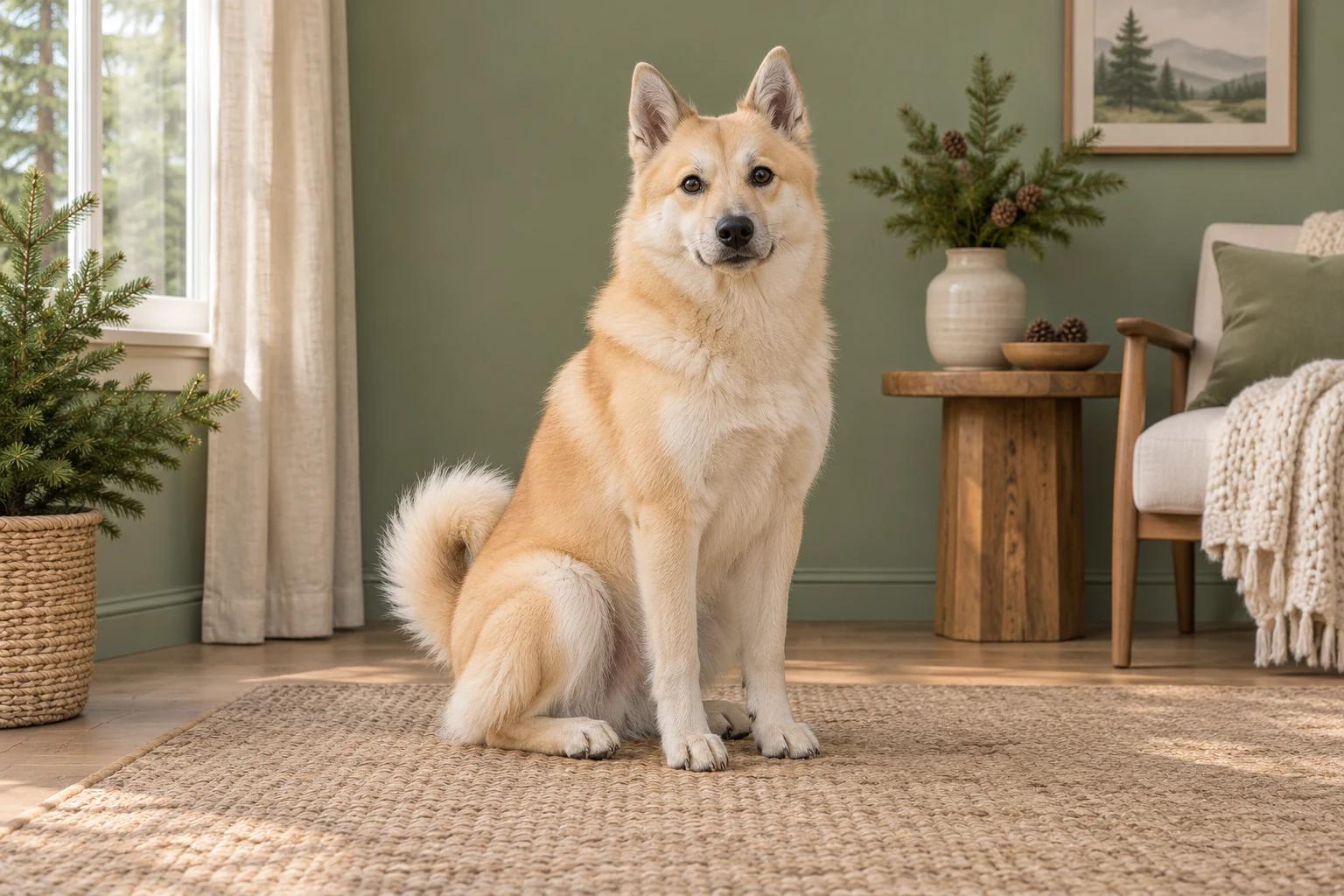
Norwegian Buhund temperament combines interest in people with a readiness to notice what is happening around them. That can make the breed appealing to someone who wants an involved companion. It can also surprise an owner who expected a compact dog to take a passive role while the household rushes through its day.
The most revealing way to think about the breed is through ordinary moments: a person passing the window, a walk being prepared, a game ending and the family sitting down for the evening. Those transitions show you more than a list of flattering adjectives.
Norwegian Buhund temperament in a changing room
The AKC describes the Buhund as affectionate and devoted, with herding and guarding in its working background. The Royal Kennel Club standard emphasizes courage and energy. Together, these are starting points for questions about involvement and awareness, not promises that every dog will respond identically. AKC breed profile, Royal Kennel Club standard
Imagine a room where one person is cooking, another is packing a bag and someone else keeps going to the door. Would you welcome a dog that may take an interest in those changes? Or would you find its attention intrusive? Being honest about that preference matters more than whether you admire the breed in photographs.
When visiting a breeder or meeting an adult, ask to observe a familiar routine. A quiet period after the initial welcome can be especially informative. Notice where the dog chooses to be and ask whether its behavior that day is typical.
A doorbell is a household event
AKC's breed feature notes the Buhund's strong voice and readiness to alert to movement. That makes your response to visitors an important part of ownership planning. AKC breed feature
Do not build a plan around everyone shouting over the dog while the door opens. Decide in advance who answers, where the dog waits and how you will reward a useful alternative. A resting area set back from the entrance may give you more options than a bed placed beside the busiest window.
Ask caregivers about the whole event rather than only the first bark. How does the dog respond after a visitor enters? What helps it return to a familiar activity? Does it react differently to expected friends and unexpected deliveries? Those details make Norwegian Buhund behavior easier to understand without treating every vocal response as the same problem.
If you live close to neighbors, consider when sounds travel most. You may need a different arrangement for early departures than for an afternoon visitor. Training and thoughtful setup can work together; neither should be advertised as a guarantee of silence.
An invitation to learn needs a clear finish
The Norwegian Buhund personality can appeal to people who enjoy teaching. But enjoying a responsive dog is different from wanting to run training sessions continuously. Think about both the start and the end of your shared activities.
For example, place the toy away after a short game and move to a predictable quiet routine. You are creating an understandable change in the day, rather than waiting until you are irritated and abruptly withdrawing attention. Ask the current caregiver what signals and routines the dog already recognizes.
AKC notes that Buhunds may become bored with repetition and can think independently. That suggests making lessons purposeful rather than treating endless repetitions as proof of diligence. AKC breed feature
A practical learning project could be waiting while a lead is clipped on, moving to a mat during meal preparation or checking in before passing through a doorway. Choose something that improves your life together. You do not need to pursue a competition to make teaching worthwhile.
The outdoor plan must survive a busy week
The Norwegian Buhund profile places activity and mental engagement toward the higher end of its reference scale. Read that as a scheduling question. Where do meaningful outings and shared activities fit when your day is inconvenient?
Write down an actual weekday, including travel time and care responsibilities. Identify who will take the dog out before work, what happens at midday and what remains possible after a late finish. A plan with several people can work well, but only if each person knows which part they own.
Keep more than one kind of outing available. You might have a route suitable for steady walking, another with room for unhurried exploration and an indoor learning option when outside conditions limit your plans. These are ways to organize your resources, not a universal exercise prescription.
Ask your veterinarian about appropriate activity for the individual dog's age and condition. An adult's established routine is useful context when adopting, while a puppy's needs should not be inferred from an athletic adult's capabilities.
Affection and time apart are separate questions
A dog enjoying human company does not tell you exactly how it handles an empty house. Nor does a confident appearance prove it is comfortable alone. Ask directly about departures, the length of absences already experienced and how anyone checked what happened during them.
When planning a work schedule, include the person who can cover breaks and the alternative if that person is unavailable. This is particularly important during the transition to a new home, when even a familiar dog may be encountering a different routine.
You can also ask what closeness looks like. Does the dog prefer contact, a nearby resting place or moving between rooms? Norwegian Buhund characteristics are most useful when translated into observations you can compare with your own preferences.
Bring every household member into the decision
Before committing, agree on rules that would otherwise be improvised: access to furniture, handling at the door, quiet resting places and who provides care. Consistency becomes much easier when everyone understands the plan rather than discovering it after the dog arrives.
For children, adults remain responsible for supervision and handling decisions. For existing animals, ask for individual history and arrange considered introductions. A broad temperament description cannot tell you whether a specific household combination will work.
The dog match quiz can help organize your priorities. If the breed's background interests you, read the separate explanation of the Buhund's farmstead name. History provides context, but the present-day dog, its experiences and your ordinary week should determine the decision.
FAQ
Is a Norwegian Buhund naturally obedient?
No dog arrives with your household's rules already understood. A Buhund may enjoy learning, but clear cues, suitable rewards and practice still matter. Ask what the individual already knows and how those skills were taught.
Does watchfulness make the Buhund a guard dog?
Watchfulness can mean noticing and announcing activity. It is not a promise of protective behavior or a reason to encourage confrontation. Plan calm visitor routines and assess the individual instead of assigning it a security role.
Can a Norwegian Buhund settle while I work at home?
Possibly, but working at home does not automatically provide a routine. Plan outings, care breaks and an undisturbed resting place. Ask about the dog's current settling habits and build on skills it can already manage.
What should I ask before choosing an adult?
Ask about barking triggers, recovery after excitement, time apart, outdoor routines and previous experiences with people and animals. Concrete examples help you assess fit more clearly than a description such as “lovely temperament.”
Sources behind this article
- American Kennel Club: Norwegian Buhund ↗
- Royal Kennel Club: Norwegian Buhund Standard ↗
- American Kennel Club: Meet the Norwegian Buhund ↗
Article source checked: November 15, 2026. Source checked 2026-11-15
Keep reading

Airedale Terrier Temperament: What Everyday Life Can Feel Like
Read article →