Norrbottenspets Temperament: An Everyday Fit Guide
Explore Norrbottenspets temperament, everyday noise, companionship and outdoor interests before deciding whether this small hunting spitz fits your home.
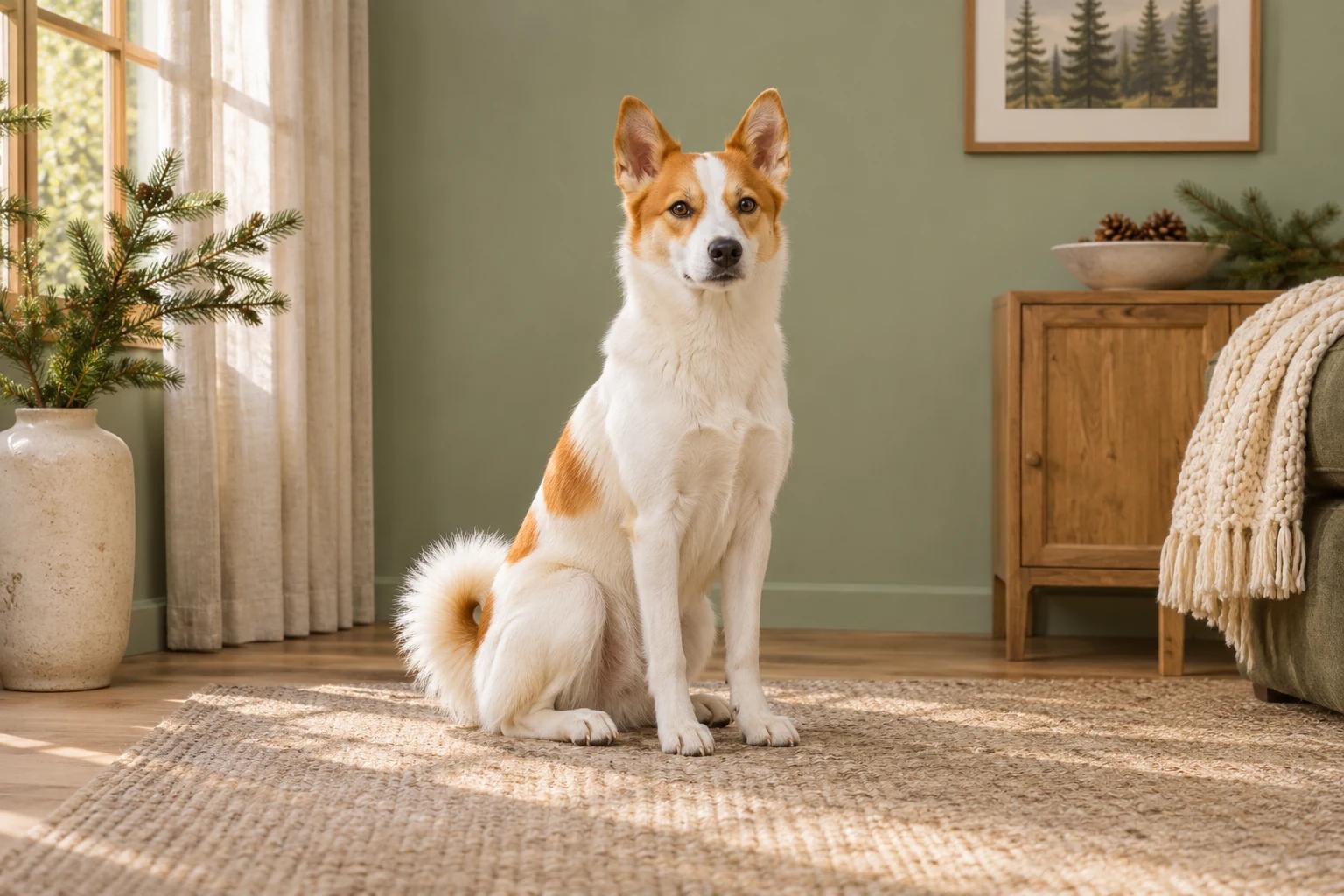
Norrbottenspets temperament makes more sense when you imagine a small hunting dog noticing the world, rather than a decorative spitz sitting out the day. Alertness, confidence and agility belong in the picture alongside companionship. For a prospective owner, the useful question is not simply whether this breed is friendly. It is whether you enjoy sharing your day with a dog whose attention may move quickly from you to something outside.
The Norrbottenspets profile supplies the broader care picture. Here, the focus is what personality can mean at your front door, on a walk and during an ordinary working week.
Norrbottenspets temperament: attentive does not mean motionless
The AKC describes a keen, attentive dog with a kind disposition and an agile, fearless manner. Those words can coexist: a dog may be comfortable beside you yet immediately interested in a movement beyond the window. Calmness is not the same as indifference. American Kennel Club
Think about what you want from shared time. Would you enjoy a dog watching as you prepare its walking gear, joining a short learning game and then resting nearby? Or do you want a companion that rarely needs a change of scene? That distinction is more useful than deciding that a small dog must suit a quiet schedule.
When meeting an adult, watch an entire transition. The first excited greeting gives you only one frame of the film. What happens after visitors sit down, after the lead comes off, or when another family member walks through the room? Ask the caregiver what is typical rather than interpreting every movement yourself.
Sound is part of the household decision
The American Norrbottenspets Association explains that this breed used its voice during hunting and may vocalize with excitement or at passing activity. Barking therefore deserves a place in your housing plans, not a promise that training will remove every sound. American Norrbottenspets Association
Do a practical sound check before committing. Where will the dog rest while deliveries arrive? Does your main window overlook a busy pavement? Can you create a quieter resting space away from the shared hallway? A change in furniture placement may be easier to maintain than repeatedly calling a dog away from the same lookout point.
Ask for examples of this particular dog's voice: during play, in the car, when left alone and when something unfamiliar passes the home. These are separate situations. A dog that becomes noisy while playing does not necessarily respond the same way during a quiet afternoon.
Avoid turning every bark into a long conversation. Instead, plan an alternative routine you can teach consistently, such as moving with you to a resting area after the doorbell. If barking is persistent or distressing, seek help from a qualified reward-based trainer; a sudden behavioral change also warrants discussion with your veterinarian.
Outside interests deserve room, and boundaries
The breed club describes a hunter using sight, scent and hearing. That background helps explain why a walk can involve much more than following your route. American Norrbottenspets Association
A useful outing might include a stretch of comfortable walking, permission to investigate a suitable verge and a few easy check-ins with you. You need not turn each trip into an obedience examination. Equally, you do not need to follow every interesting trail. Decide which parts of an outing allow exploration and which require moving together.
For someone who enjoys observing a dog work out its surroundings, this can be rewarding company. For someone who needs every walk to be a hurried trip around the block, it may feel frustrating. Consider your least convenient day, not just the weekend hike you would like to take.
Secure boundaries matter when those interests point beyond your property. Look at gates, visitor access and where the dog waits while a car is unloaded. Management is part of living with the individual in front of you, rather than a verdict on whether it is well trained.
Company without constant entertainment
The Norrbottenspets personality is not usefully reduced to either independent or clingy. Ask what companionship looks like for the dog you are considering. Does it choose a nearby bed? Bring a toy? Settle in another room? Those observations will help you plan a home routine more accurately than a label.
Build a day with recognizable changes: an outing, food, quiet household activity, another chance to go outside. During quiet time, you should not need to manufacture an endless sequence of games. Give the dog an undisturbed resting place and notice when it settles there voluntarily.
Before a long workday becomes necessary, establish how you will cover breaks and company. Ask the current caregiver about time spent apart, what has already been practiced and any signs of difficulty. Do not assume a confident greeting predicts comfort when everyone leaves.
Look for compatibility, not a perfect personality score
Among the Norrbottenspets characteristics worth discussing are response to movement, recovery after excitement and the ability to switch between exploration and interaction. Bring concrete questions to a breeder or rescue:
- What happens when a visitor arrives and then stays for an hour?
- Which outdoor distractions are hardest for this dog?
- What does a normal rest period look like?
- Which rewards and games hold its interest?
- How has it lived around other animals?
For a household with other pets, request a specific history and a careful introduction plan. For children, organize supervision, adult responsibility for handling and a retreat the dog can use undisturbed. Neither affection nor a breed description establishes compatibility on its own.
You can use the dog match quiz to organize your priorities before meeting dogs. Keep appearance in its own lane: the separate article on Norrbottenspets color patches explains the coat description, not a way to predict personality from markings.
FAQ
Is Norrbottenspets behavior usually quiet indoors?
An individual may settle well in a suitable routine, but quietness should be observed rather than assumed. Ask how the dog responds to windows, doorbells, play and time alone, then check whether your home can accommodate those patterns.
Is a Norrbottenspets a lapdog?
Some individuals enjoy close contact, but small size does not make this hunting spitz a low-engagement companion. Look for a match between the dog's preferred contact, your outdoor routine and the quiet time you can provide.
Can a first-time owner consider this breed?
Experience is only part of the decision. A first-time owner needs realistic plans for training, outside time, sound and daily care. Meeting adults and finding practical training support can reveal whether the commitment feels enjoyable rather than merely manageable.
Does confidence mean a dog needs no social experience?
No. A confident description does not replace gradual, positive experience with the situations a dog will encounter. Watch the individual, allow space during introductions and avoid forcing greetings simply because a breed is described as bold.
Sources behind this article
Article source checked: November 15, 2026. Source checked 2026-11-15
Keep reading
Norrbottenspets Size: Weight, Shape and Everyday Space
Read article →