Planning easy routes between a Minuet’s resting places
Review routes between your Minuet’s resting places and essentials, using individual movement observations and veterinary advice instead of a jumping challenge.
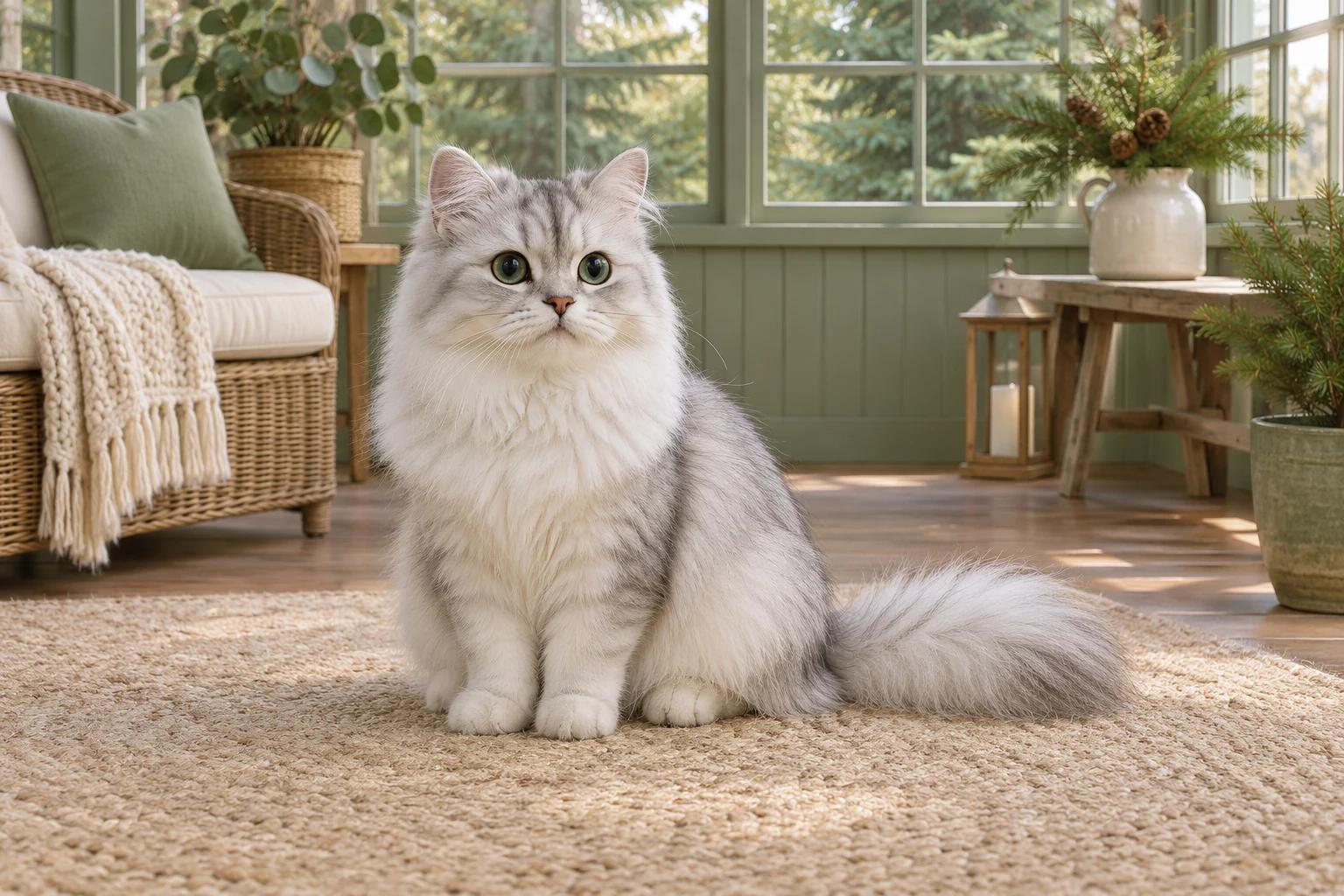
Map the places the cat chooses
TICA describes Minuets with short or long legs. That variation is a reason to assess the cat in front of you, not to assign one furniture arrangement to the breed. List its favourite resting places and the routes to food, water and litter. Notice where it chooses to go without encouraging a demonstration.
For a short-legged individual, Cats Protection’s dwarfism guidance raises important mobility and welfare concerns. Discuss comfort and access with your vet rather than assuming a cat that manages a route is necessarily comfortable using it. A video of an energetic Minuet elsewhere cannot assess yours or remove the need for individual advice.
Look for gaps in an ordinary route
Walk through the layout and note slippery surfaces, cluttered approaches or a resting place with only a difficult way down. Ask whether essentials are reachable without a demanding jump. This is an access audit, not an exercise test. Do not move the cat onto a high surface to see how it will get back.
If you are considering a step or ramp, discuss suitability and placement with the veterinary team where movement is a concern. Make sure any proposed route is stable and can be kept clear in daily use. This guide cannot certify a product, prescribe dimensions or promise that a particular aid will be appropriate for every individual.
Keep comfortable alternatives available
FelineVMA describes accessible, separated essential resources and safe resting choices as important parts of the environment. Offer practical options that do not require the cat to negotiate another animal or a busy household passage. A new low resting place should be genuinely comfortable, not simply the only option after a familiar spot has vanished.
Change the setup thoughtfully and observe which routes the cat uses. Keep necessary resources available while you review the arrangement. If the cat suddenly avoids a place it previously used, contact the vet rather than assuming it has forgotten the route or needs encouragement to try harder. New avoidance can be information about the cat, not just the furniture.
Share access needs with other people
Explain to household members why a particular path needs to stay clear. A helpful layout is easily undone by a bag left on the step or a door closed across the route. Include the arrangement in any caregiver handover and identify who checks it after cleaning or moving furniture.
Review with your vet if comfort or movement changes. The useful Minuet access plan connects individual needs with a maintainable room arrangement. It does not treat short legs as a novelty, promise that adaptations remove welfare concerns or diagnose a condition from appearance. The aim is appropriate care for the cat you already have, with professional assessment when needed.
Sources behind this article
Article source checked: October 22, 2026. Source checked 2026-10-22
Keep reading
Choosing climbing furniture for a Norwegian Forest Cat
Read article →