Mastiff temperament: understand the dog behind the size
Explore Mastiff temperament through everyday situations, useful caregiver questions and practical plans for greetings, learning and shared space.
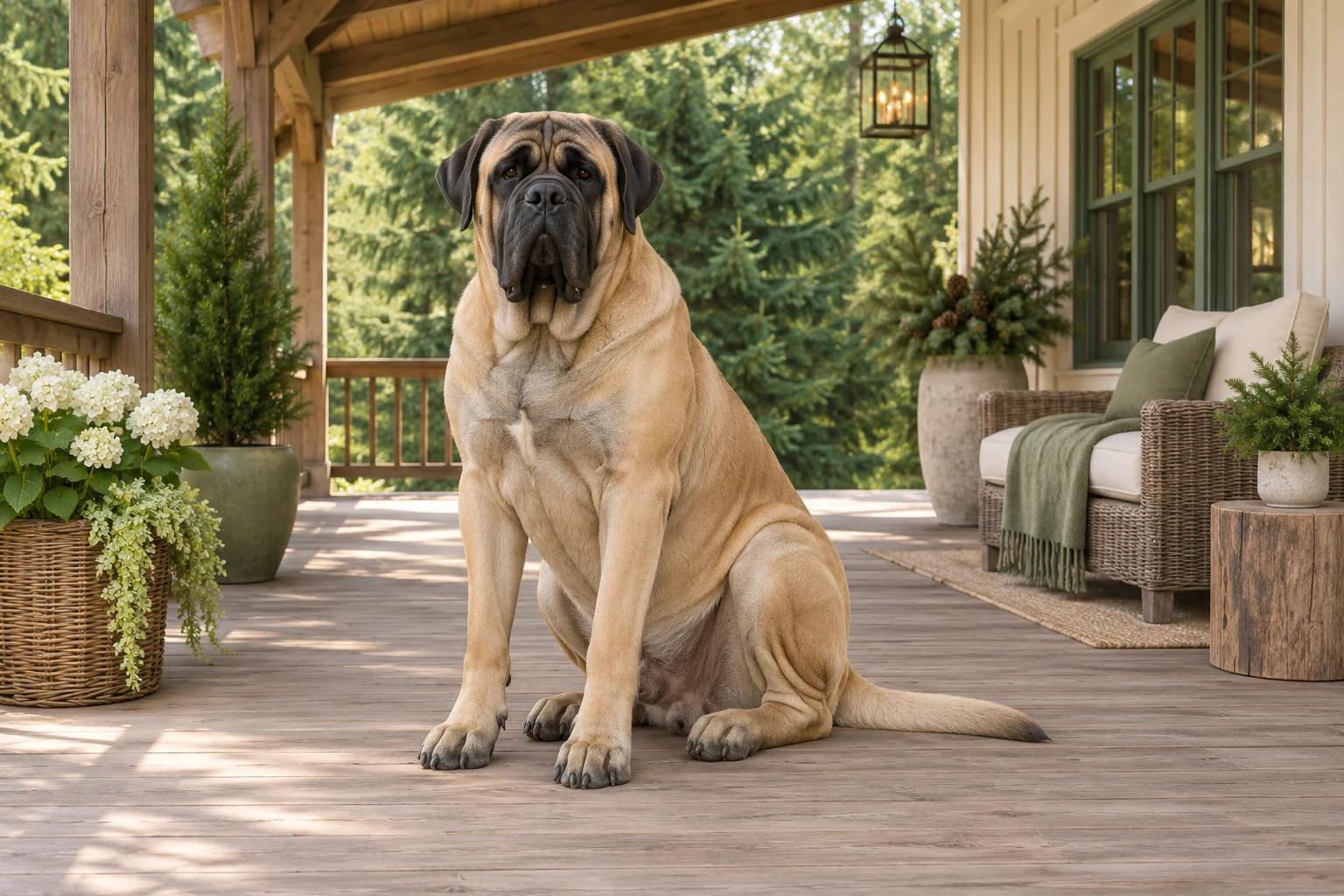
Mastiff temperament is often described in reassuring words, but those words need translating into everyday life. A dog can be dignified and still need help at the front door. It can enjoy company without wanting attention from every visitor. Its impressive size makes it particularly important to understand the individual rather than letting a familiar breed nickname do the thinking.
The best approach is to ask what behavior looks like in ordinary situations. Watch, listen to the current caregiver and plan how your own household would support the dog. You are choosing a companion, not casting a character in a story about giant dogs.
Mastiff temperament: dignity is not inactivity
The official Mastiff standard describes a dignified, good-natured disposition with courage and docility. A standard describes the intended breed character; it does not certify how a particular dog will respond in an unfamiliar home.
Use that description to sharpen your questions. When someone calls a Mastiff “laid-back,” ask what the dog does during a normal evening. Does it rest nearby, follow the household between rooms or spend time with a familiar activity? When someone says “confident,” ask how that looks when a routine changes.
Mastiff personality is easier to discuss through examples than adjectives. A caregiver who can describe both enjoyable habits and difficult moments gives you more to work with than a list containing only flattering traits.
Size changes the impact of ordinary habits
A Mastiff blocking a doorway may be doing something entirely ordinary: resting in a preferred spot. Nevertheless, the household needs a workable way to move through that space. Practical arrangements matter even when the dog is relaxed.
Before bringing one home, map the main routes between rooms. Decide where a large resting place can fit without becoming the center of traffic. Consider what happens when two people pass with bags or when a visitor has limited mobility. A room can feel spacious until the everyday routes are drawn onto it.
The breed profile gives size context. Use that information to plan the environment, not to infer temperament from a dog's dimensions. A calm-looking adult still deserves clear cues and adequate space rather than being physically shifted whenever it is inconveniently placed.
Ask how the dog handles unfamiliar people
The Mastiff Club of America's FAQ stresses that individual dogs differ and recommends asking about parental temperament when considering a puppy. Make those questions specific: what happens when a familiar visitor arrives, and what is different with someone new?
For an adult dog, ask about its own experience. Which arrangements have worked? Are there situations the caregiver avoids? How is the dog managed during a delivery or maintenance visit? These are ordinary ownership questions, not accusations about a breed.
Do not create a surprise encounter to test the answer. A planned meeting in a suitable setting gives you information without forcing the dog into an artificial challenge. Let the caregiver explain the process and respect the dog's space rather than insisting on immediate physical contact.
Company needs a place in the household plan
The club's FAQ emphasizes the importance of human company for Mastiffs. That does not mean every minute must involve interaction. It means you should decide how the dog participates in daily life instead of assuming that a large outdoor area substitutes for a relationship.
Think about where you work, eat and relax. Is there a comfortable place for the dog nearby without blocking movement? Can household members use the room while respecting a resting dog? What arrangements exist when everyone must leave?
Ask the current caregiver about time apart and transitions between people. If the dog has difficulty, discuss a plan with a qualified professional rather than assuming another pet or a bigger garden will solve it. A useful care handover includes what already works, not only the times at which meals are served.
Learning is a conversation, not a contest of strength
Among Mastiff characteristics, a thoughtful or unhurried response is easily mislabeled as deliberate defiance. The AKC's Mastiff facts guide notes sensitivity and recommends brief, enjoyable training. Keep instruction clear rather than escalating when a response is not immediate.
For example, agree on one cue for a familiar household action and have everyone use it the same way. If one person means “move away from the door” and another uses the same word for “lie down,” the household has created a communication problem. Write down the cue and intended behavior so a helper can follow the same plan.
When something does not work, look at the context. Is the location new? Is the person asking differently? Does the dog understand the task? Bring those observations to a reward-based trainer. Physical size is a reason to invest in cooperation, not an argument for turning practice into a confrontation.
Describe concerns without explaining them away
Mastiff behavior that worries you deserves attention even if it does not match the breed description. Record what happened immediately beforehand, what the dog did and how the situation ended. Avoid broad labels such as “dominant” or “just protective” in place of those details.
If behavior changes suddenly, or you are concerned about handling or interactions, consult your veterinarian and an appropriately qualified behavior professional. Do not wait for a more dramatic incident to make the concern seem legitimate. A clear account can help them decide what information is needed next.
At the same time, distinguish a preference from a problem. A dog that does not seek every stranger's attention does not need to become the host of every gathering. Your household can organize visits without expecting the same social style from every companion.
Prepare for the dog you meet
Before a decision, gather examples across several parts of life: rest, outings, visitors, care and time apart. Ask what has changed with age or experience. A single pleasant meeting is valuable, but it is not the whole biography.
For puppy planning, the existing article on Mastiff food labels and growth addresses a separate practical commitment. The dog match quiz helps organize lifestyle questions, while temperament discussions should remain grounded in actual observations. The goal is not a perfect label. It is enough understanding to build a workable life together.
FAQ
Does the Mastiff's dignified temperament mean it never plays?
No. A breed description does not remove individual preferences or variation across situations. Ask what the particular dog enjoys and how play fits its routine rather than interpreting dignity as a requirement to remain still.
Can I judge Mastiff personality from one meeting?
One meeting offers useful observations, but not a complete picture. Ask the caregiver about behavior during ordinary routines, unfamiliar events and time apart. Use those examples alongside what you see yourself.
Should concerning behavior be dismissed as protectiveness?
No. Describe the behavior and its context, and seek veterinary or qualified behavior support when needed. A breed's guarding association should not replace an assessment of what is happening with an individual dog.
Sources behind this article
- American Kennel Club: Official Standard of the Mastiff ↗
- Mastiff Club of America: FAQs ↗
- American Kennel Club: Mastiff Facts You May Not Know ↗
Article source checked: November 15, 2026. Source checked 2026-11-15
Keep reading

Airedale Terrier Temperament: What Everyday Life Can Feel Like
Read article →