Feeding a Mastiff puppy: read beyond the big-dog picture
Understand growth and large-size puppy statements on food labels, and why a Mastiff puppy needs an individual feeding plan rather than a race to grow.
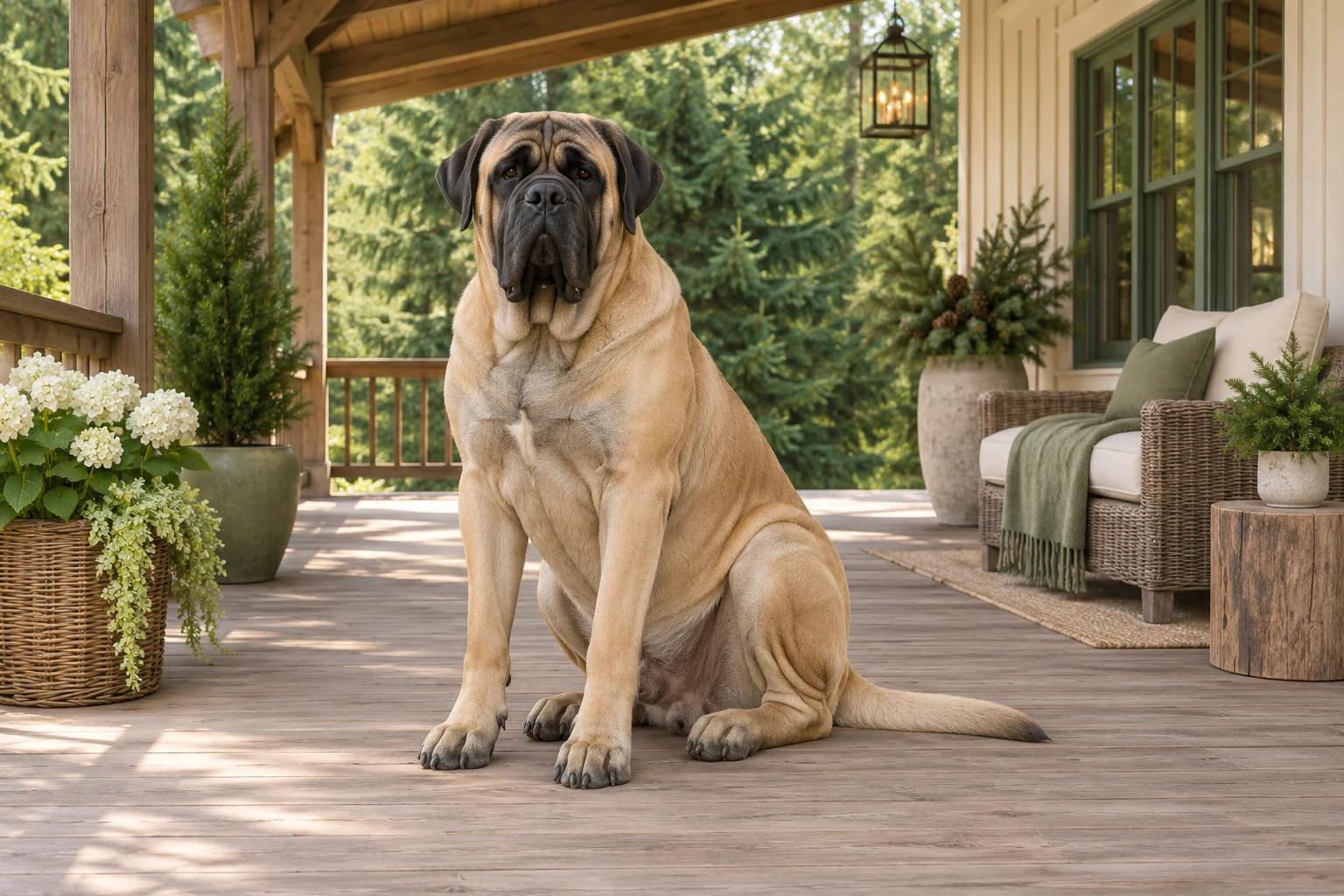
The photograph on the bag answers very little
A Mastiff puppy can make a large bowl look small remarkably quickly. That visual impression is not a feeding guide. The breed's eventual size makes it especially useful to distinguish food intended for growth from food intended only for adult maintenance. A picture of a massive dog, or a prominent breed name, does not make those nutritional purposes interchangeable.
AAHA's nutrition guidance recommends growth-appropriate diets until skeletal maturity. It also emphasizes lean body condition and avoiding excessive calcium for giant-breed puppies. The aim is to support development, not to produce the heaviest puppy in a group of littermates. Comparing weekly weights with another owner's dog can turn an ordinary update into an unhelpful competition.
Find the nutritional adequacy statement
On a U.S. label, look for the nutritional adequacy statement rather than relying on the front of the package. The life-stage wording distinguishes growth from adult maintenance. For a puppy expected to become a large dog, also check whether the statement includes growth of large-size dogs. AAHA specifically highlights that additional qualification for large- and giant-breed puppies.
Bring the full statement to your veterinarian if its wording is unclear. A food that excludes large-size growth should not be treated as equivalent because its brand also sells a different puppy formula. Likewise, adding calcium to an already formulated diet is not a shortcut to stronger development. Discuss supplements before using them rather than assuming more is better.
Make one plan the household can follow
Write down the exact product, the agreed daily amount, how it is measured and how food used during training fits into that allowance. Put the plan near the food container so different caregivers are not independently topping up the bowl. Keep the original packaging information available when transferring food into storage.
Review growth and body condition with the veterinary team, and agree on when the plan should change. There is no universal birthday at which every Mastiff should switch foods, nor a cup count supplied by this article. The useful result is a clear, adjustable routine for this puppy, supported by the appropriate food and a shared understanding of what healthy growth is meant to accomplish.
Sources behind this article
Article source checked: October 20, 2026. Source checked 2026-10-20
Keep reading
Mastiff vs Cane Corso: compare the everyday commitment
Read article →