Mastiff exercise needs: build a manageable walking routine
Plan Mastiff exercise around suitable walks, useful learning and accessible routes, with individual guidance rather than a fixed mileage target.
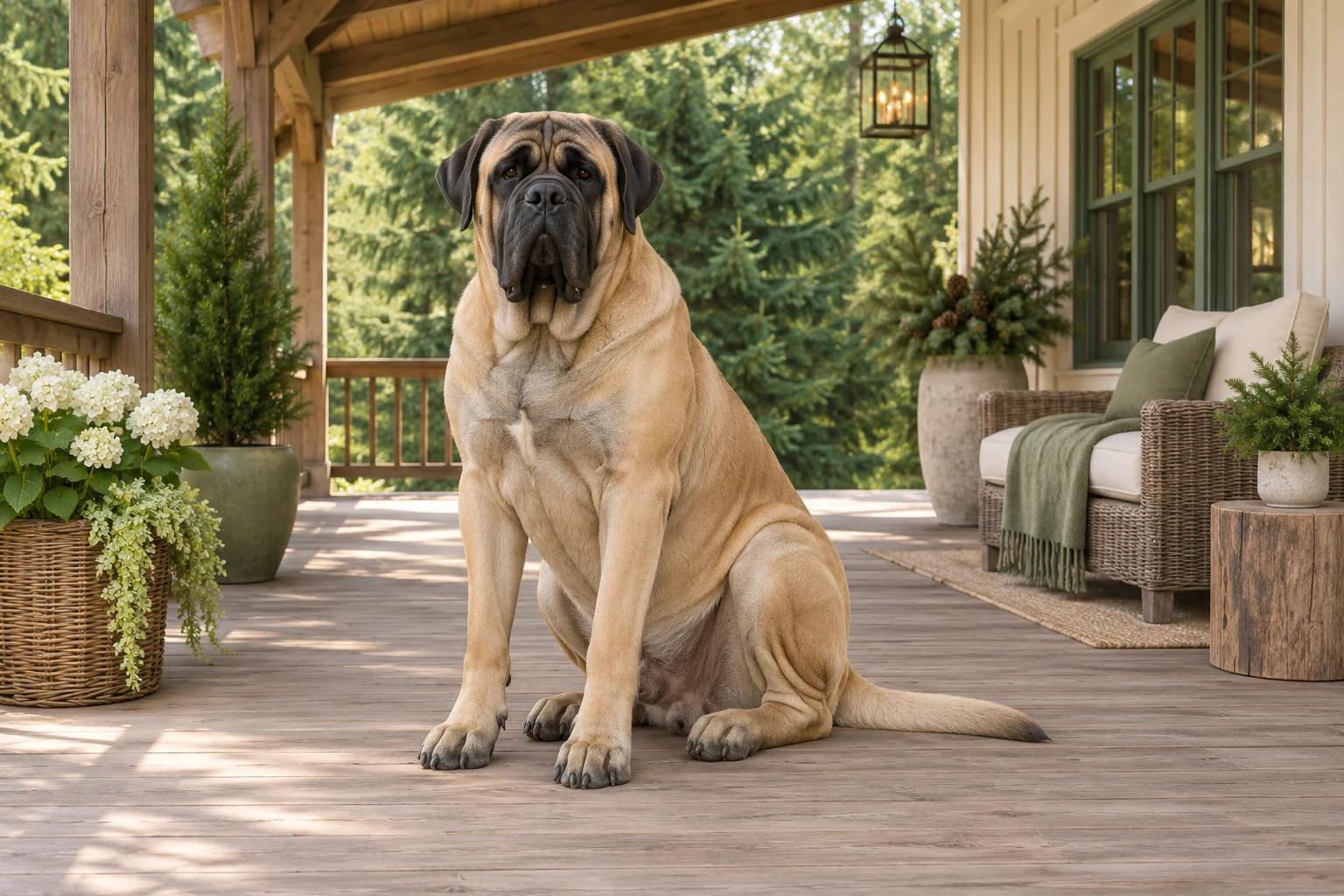
Mastiff exercise needs are easiest to understand when you separate movement from an endurance challenge. A giant body does not automatically call for giant distances, but resting comfortably at home is not the same as having no need for activity. The aim is an ordinary routine you can manage and your dog can participate in comfortably.
For this breed, logistics are part of exercise planning. Your route, vehicle, walking skills and ability to turn back all matter. Start there rather than searching for the longest walk another Mastiff owner has completed.
Mastiff exercise needs: moderation with a purpose
The American Kennel Club's Mastiff facts article describes moderate exercise rather than a need for rigorous workouts. VCA's Mastiff profile includes daily moderate walks and highlights training as mental activity. Together, these suggest a day that contains both movement and engagement, not a fitness contest.
The My Breed Atlas profile also places the breed's activity tendency in the moderate range. That is useful context, but it cannot determine the right duration for a puppy, older dog or dog with a particular health history. Discuss the individual plan with your veterinarian.
When asking “how much exercise does a Mastiff need?”, bring a description of what the dog currently does. Include the route, pace, surfaces and any difficulty you have noticed. “We walk to the park” can describe very different demands depending on hills, access and how far the park is from home.
Make the route easy to change
A Mastiff daily walk benefits from practical escape routes. Choose a course where you can shorten the outing without committing to a distant loop. Being able to return directly is more useful than discovering halfway around that the only way home is another long stretch.
Before taking a new dog, inspect the route yourself. Look for narrow barriers, steep steps, awkward footbridges and places where you might need to pass close to other dogs. An attractive trail may involve obstacles that are inconvenient for a very large companion.
Think about where you can pause without blocking other people. A broad verge or open section of path gives you more options than a tight pavement beside traffic. When you need to organize equipment or let someone pass, having room changes the whole experience.
Plan the beginning and end as carefully as the middle
If the outing starts with a car journey, examine the complete process. Can you secure the dog appropriately? Is the parking space wide enough to open the door and manage entry? What is your plan if access is different on the return journey?
Do not rely on lifting an adult Mastiff as your only solution to a difficult transition. Ask your veterinary team or a qualified professional about an appropriate access arrangement and how to teach its use. Practice before a trip makes it urgent.
At home, give yourself enough time to prepare without rushing through a narrow doorway. Put the lead and other supplies where the responsible person can find them. A shared walking checklist is especially helpful when several people use the same equipment but leave it in different places.
Puppies need a different conversation
The AKC article cautions against demanding exercise while a Mastiff is still growing. Looking large does not mean a youngster is ready for an adult activity plan. Ask your veterinarian what is appropriate now, and arrange a review as the puppy develops rather than using appearance as permission to add difficulty.
Keep a record of the activities you want to introduce later. There is no need to rush through them because another dog the same age is already doing them. Your list might include longer outings, unfamiliar terrain or a particular organized activity; your care team can help you decide when each belongs in the plan.
Feeding and growth are a separate part of that conversation. The existing Mastiff puppy food-label article explains why planning matters without turning size into a race. You do not need to repeat a feeding discussion every time you choose a walking route, but the people guiding the puppy's care should understand the whole routine.
Give learning its own place in the day
Mastiff activity level should not be judged solely by minutes spent moving. There is also value in practicing the skills that make outings workable. Choose a useful task with your trainer, such as approaching the exit calmly or moving with you through a wide turn.
A practice session can be deliberately simple. Clear the area, choose one goal and stop before you become frustrated. The purpose is to make tomorrow's walk easier, not to demonstrate every cue the dog knows. Ask your trainer how to adapt the exercise if your home layout offers little space.
For quiet indoor engagement, select suitable supervised activities that do not require repeated high-speed movement through furniture. Inspect any equipment for size and suitability. A game designed around a small dog may need more than a larger toy to work well for a Mastiff.
Write down observations you can act on
After a new route, note the details that affected the outing. Was the entrance too narrow? Did you spend most of the time negotiating crowds? Was there a convenient turning point? These are actionable observations that help you choose a better plan next time.
Keep observations about the dog separate from judgments about motivation. If willingness or movement changes, speak with your veterinarian rather than deciding the dog is being lazy. Do not push on simply to complete a route that looked sensible on a map.
Share relevant notes with anyone who walks the dog. “Use the broad entrance beside the car park” is more helpful than “be careful.” Clear information also prevents each helper from having to discover the same awkward section independently.
Keep an everyday plan and a backup
List the outings you can reliably provide during a normal week, then identify what could disrupt them. Weather, work and transport all belong on that list. Choose a nearby alternative and know who can help rather than leaving every change to improvisation.
The dog match quiz can help prospective owners compare available time with the broader commitment. For a Mastiff, the practical question is not whether you are an athlete. It is whether you can consistently organize appropriate activity for a very large dog, including on inconvenient days.
FAQ
Does a Mastiff need long-distance exercise because it is large?
No. The breed is generally associated with moderate activity, not mandatory endurance work. Ask your veterinarian to help set the individual plan and consider route access, current ability and life stage as well as duration.
Can I use the same walking plan for a puppy and an adult?
Not automatically. A large puppy is still developing. Discuss appropriate activities with your veterinarian and revisit the plan over time instead of treating body size as proof of adult readiness.
What should I do if the usual route becomes impractical?
Use a familiar, suitable alternative or adjust the day's arrangements with your regular helper. Plan these options in advance. If the difficulty involves a change in the dog's movement or willingness, contact your veterinarian.
Sources behind this article
Article source checked: November 15, 2026. Source checked 2026-11-15
Keep reading

Afghan Hound Exercise Needs: Build a Workable Active Day
Read article →