Maine Coon vs Norwegian Forest Cat: size and defining details
Compare Maine Coon vs Norwegian Forest Cat adult weights, head shape and companionship, using concrete details rather than size-based stereotypes.
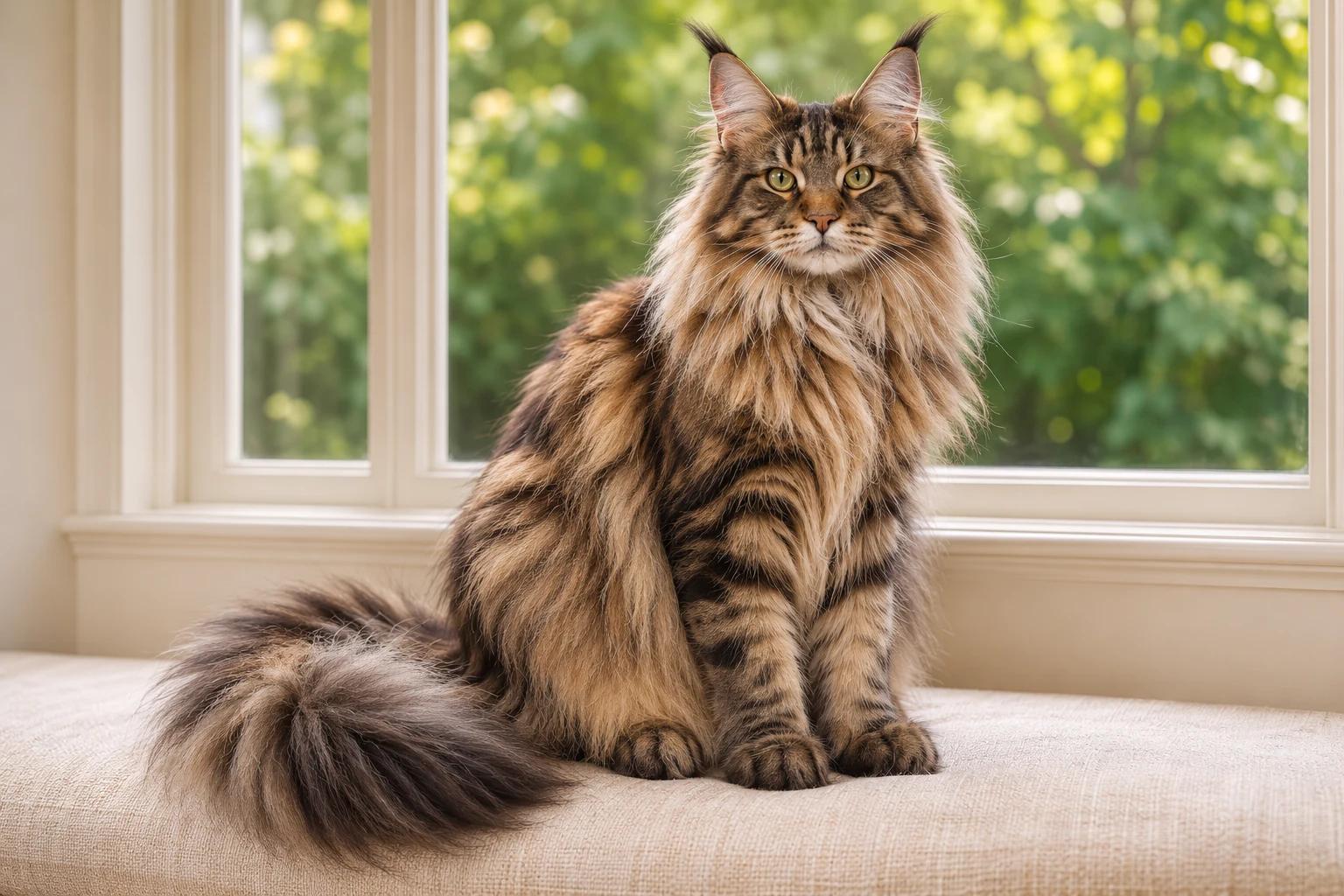
Maine Coon vs Norwegian Forest Cat is best approached as a comparison of several features, not a contest to find the biggest cat. Adult weight is useful, but it cannot by itself answer every question about appearance or living together. Keep the numerical comparison separate from the choice of an individual companion.
The current Maine Coon profile and Norwegian Forest Cat profile give the following adult reference weights:
- Maine Coon females: 12–15 pounds; males: 18–22 pounds.
- Norwegian Forest Cat females: 9–12 pounds; males: 12–16 pounds.
These are sex-qualified breed references, not predictions for an individual kitten.
Maine Coon vs Norwegian Forest Cat: read the weight overlap
The Maine Coon references extend higher for both sexes, but that does not mean every Maine Coon outweighs every Norwegian Forest Cat. The female ranges overlap at eleven to twelve pounds. The male ranges meet at sixteen pounds. Comparing a female of one breed with a male of the other can give a very different impression from comparing like with like.
For example, a twelve-pound Norwegian Forest Cat male is at the lower end of that male reference. A twelve-pound Maine Coon female is within her female reference. The same number is doing different work in the two descriptions; it does not erase the animals' individual proportions.
Likewise, the upper endpoint is not a goal. A twenty-pound reference for Maine Coon males does not say that a female should approach it, or that the heaviest kitten is the most desirable choice. Neither set of figures supplies a universal ideal weight for every adult. Questions about the individual animal's weight belong with its veterinarian.
When reading a Norwegian Forest Cat vs Maine Coon comparison, keep the sex, adult status and breed attached to each figure. That makes the comparison more useful than combining all four ranges into a single claim about which cat is “huge.” It also avoids treating a difference between particular animals as a rule that every pair must follow.
The Maine Coon's head has several separate dimensions
The FIFe Maine Coon standard describes the upper head as broader than the muzzle, with enough height to create a gently concave profile. It also notes that mature males may have larger, broader heads than females.
These details help distinguish breadth, height and the line seen from the side. A broad-looking adult male head is not simply a female head enlarged equally in every direction. Nor does an impressive frontal portrait show the full nose profile.
FIFe describes the eyes as oval, appearing round when wide open, and placed with a slight slant toward the outer ear base. Thus a change in expression can change the apparent eye outline without changing the cat's underlying identity.
For someone deciding between a Maine Coon or Norwegian Forest Cat, these are useful features to notice without turning a photograph into a judging exercise. Look at the head in front and side views and distinguish the resting eye shape from its fully open appearance. No single expression should carry the entire comparison.
The Norwegian Forest Cat's triangle is a different outline
The CFA Norwegian Forest Cat standard describes an equilateral triangular head, measured from the outer ear bases to the chin. Its nose profile is straight from brow ridge to nose tip, and the muzzle continues the line toward the ear bases without a pronounced pinch.
That supplies a concrete difference between Maine Coon and Norwegian Forest Cat appearance. Rather than calling both faces simply “large,” follow the lines that define each. The triangular outline and straight profile are related but separate observations: one is chiefly apparent from the front, the other from the side.
CFA also describes the Norwegian's dense undercoat beneath long, smooth guard hairs. Its care account calls for regular combing, with additional attention during the spring coat change and variation according to texture.
Do not interpret that description as a promise of a maintenance-free long coat. A comparison should include the actual coat-care task, not merely the visual appeal of a particularly full coat. Ask how the individual Norwegian's coat is currently managed rather than assuming every example requires identical attention.
Companionship is more specific than a lap-cat label
TICA's Norwegian Forest account describes a cat that likes remaining close to its family while choosing how long to sit with people. It gives the back of the couch as an example of proximity that is not lap sitting.
That is useful when comparing everyday preferences. If your priority is a cat sharing your room, a nearby resting place may satisfy that wish. If you specifically imagine prolonged lap contact, proximity alone is not the same experience. Ask which interaction you actually want rather than using “affectionate” to stand for both.
The distinction does not establish that a Norwegian is less attached than a Maine Coon, or that a Maine Coon will provide more lap time. It explains why a particular cat's choices matter more than assigning either breed a blanket sociability ranking.
A fair meeting gives you information about the animal rather than a staged performance. Notice where the cat chooses to remain when ordinary activity resumes, not only where someone places it for an introduction.
For the Maine Coon's care commitment, read the Maine Coon grooming routine. The cat breed quiz offers a broader comparison of your preferences.
Frequently asked questions
Is every Maine Coon heavier than every Norwegian Forest Cat?
No. Maine Coon and Norwegian Forest Cat female references overlap, and male references meet at sixteen pounds; individuals need their own context.
What are the female adult weight references for these breeds?
Maine Coon females are listed at 12–15 pounds and Norwegian Forest Cat females at 9–12 pounds on the current breed profiles.
Should I choose the heavier Maine Coon or Norwegian Forest Cat kitten?
A Maine Coon or Norwegian Forest Cat kitten's weight alone cannot decide which individual suits your home or predict its exact adult weight.
Sources behind this article
- FIFe Maine Coon standard ↗
- CFA Norwegian Forest Cat ↗
- TICA Norwegian Forest ↗
- TICA typical adult summary — adult-weight reference ↗
Article source checked: November 16, 2026. Source checked 2026-11-16Article source checked: November 18, 2026. Source checked 2026-11-18
Keep reading

Abyssinian vs Somali: Coat, Size and Everyday Company
Read article →