Lowchen size: measuring for a practical everyday fit
Understand Lowchen size through body shape, accurate measurements and equipment fit rather than relying on a breed label or photograph.
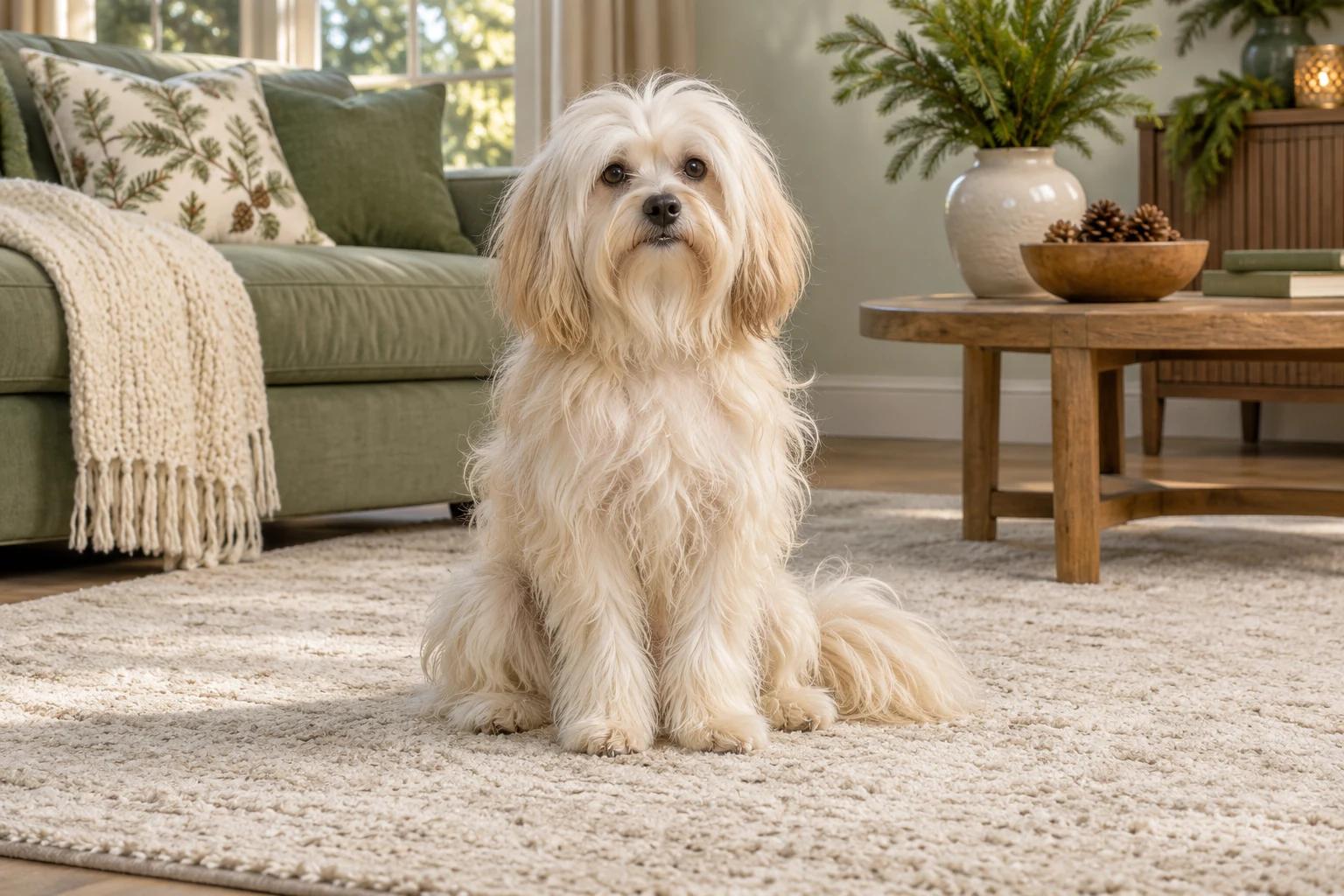
Lowchen size is useful to understand before buying a carrier, choosing a bed or planning how a dog will move through your home. The Löwchen is a small companion, but “small” is not an equipment measurement. A full coat can also make it surprisingly difficult to judge the body beneath it from a photograph.
Start with the practical question you are trying to answer. A harness needs one set of measurements, a travel carrier another, and a home routine involves more than either. Knowing why you need the number helps you avoid treating one breed average as the answer to everything.
Lowchen size includes shape, not just weight
The My Breed Atlas Löwchen profile lists an adult reference range of 12–14 inches at the shoulder and 9–15 pounds. These are planning ranges, not a promise about an individual puppy or a target weight for every adult.
The AKC breed standard describes a compact, balanced dog with sturdy substance and a body slightly longer than its height. The UKC standard also treats the Löwchen as a small companion with a defined body outline. These structural descriptions help explain why a coat-covered photograph is an imperfect guide to fit.
A dog can have the same scale weight as another yet need a different harness or bed. Chest shape, body length and resting posture all matter. When preparing for a Löwchen, obtain measurements of the individual rather than borrowing dimensions from another small breed.
If you have not yet chosen a dog, buy only items whose suitability does not depend on an exact fit. Keep receipts and check return arrangements for size-dependent equipment. Waiting until you can measure is often more practical than trying to predict every purchase before the first meeting.
Measure height without including the hairstyle
Lowchen height refers to the body, not the top of the hair or the head held proudly upward. For a useful home record, ask an experienced caregiver or veterinary team to show you how to identify the withers at the top of the shoulders.
Use a level surface and let the dog stand normally. If the dog is moving, crouching or leaning into you, pause rather than trying to force a result. Record what you measured, the units and the date. A number without its method can create confusion when you compare it with a later measurement.
Photographs can support that record, but perspective distorts size. A dog close to a phone camera may look much larger than one farther away. If you ask a caregiver for a photo to help understand proportions, also ask for actual dimensions instead of using a nearby object as an improvised ruler.
There is rarely a reason to repeat a height measurement every day. For a growing puppy, agree on a useful review interval with the people supporting its care. The purpose is practical planning, not searching for a perfect number.
Use weight as a record, not a target to chase
Lowchen weight should be recorded accurately, but a breed description is not a feeding instruction. Ask your veterinary team to assess the individual dog’s body condition and discuss any concern about growth or changes in weight. Do not alter food simply to make a dog match a figure found online.
Keep dated measurements from a consistent scale when possible. Note whether the dog was wearing equipment, particularly if you are comparing records from different settings. A harness, clothing or carrier should not quietly become part of the dog’s recorded weight.
For a puppy, request the existing growth record and details of the current feeding routine. Keep that information together rather than collecting scattered messages. At a veterinary visit, a clear record makes the discussion more useful than an estimate based on how heavy the puppy feels in your arms.
For an adult, consider weight alongside everyday observations rather than interpreting an isolated change yourself. If a difference concerns you, bring it to your veterinarian with the dates and circumstances. The aim is good information, not a home diagnosis.
Fit each item to the job it must do
A Löwchen’s coat can hide loose straps or make a close fit difficult to judge. Follow the equipment maker’s measurement instructions and ask for help checking the result. Do not assume that a label such as toy, miniature or small has the same dimensions across brands.
For a harness, record the measurements the manufacturer actually requests, then check adjustment range and placement on the dog. Recheck fit as a puppy grows or when the coat presentation changes. A product chosen once is not automatically suitable indefinitely.
For a bed, notice the dog’s preferred sleeping position. A compact curled-up footprint is different from the space needed when stretched on the side. If you are buying before arrival, prioritize a straightforward design with enough usable surface rather than an ornamental outer shape that reduces the resting area.
For travel equipment, compare the dog’s dimensions with the carrier’s usable interior, not just its outside measurements. Check the relevant provider’s current requirements before booking any journey. A small breed label does not establish that a particular dog-and-carrier combination is accepted.
Think through lifting and household access
A small companion may be easier to accommodate in some spaces, but do not build the whole routine around carrying. Consider who will handle the dog, whether that person is comfortable doing so and what happens while they are also managing bags or doors.
Ask a professional to demonstrate appropriate handling if you are unsure. Make sure everyone who will provide care knows the same approach. A dog that can be lifted is still a participant in the routine, not an object to pass between people.
Walk through the home at dog level. Check gaps near gates, access beneath furniture and the placement of cables or stored items. Decide where equipment will go and how the dog will reach its resting area without crossing the busiest path through the room.
The Löwchen profile brings together broader care considerations, while the dog match quiz helps assess household fit. The separate grooming appointment guide explains how to discuss presentation; measurements should always relate to the body and the task at hand.
FAQ
How big do Lowchens get?
Löwchens are small companion dogs with a compact but substantial build. For a specific puppy, discuss adult expectations using its family background and growth record. For equipment, measure the individual rather than treating a general breed figure as a guaranteed final size.
Is a Löwchen’s weight enough to choose a carrier?
No. Check body dimensions, usable interior space and the carrier manufacturer’s instructions as well as weight limits. If the carrier is for a journey, confirm the transport provider’s current requirements before making a booking.
Can the lion-style coat affect how large a Löwchen looks?
Yes. Coat length and presentation can change the visible outline substantially. Use actual body measurements for fitting equipment, and ask an experienced caregiver to demonstrate where measurements should be taken rather than judging from a photograph alone.
Sources behind this article
Article source checked: November 15, 2026. Source checked 2026-11-15
Keep reading
Lowchen temperament: understanding an involved companion
Read article →