Watch a Lapponian Herder’s tail both at rest and in motion
A Lapponian Herder’s tail changes carriage with movement. A short video gives a fuller picture than a single posed photograph.
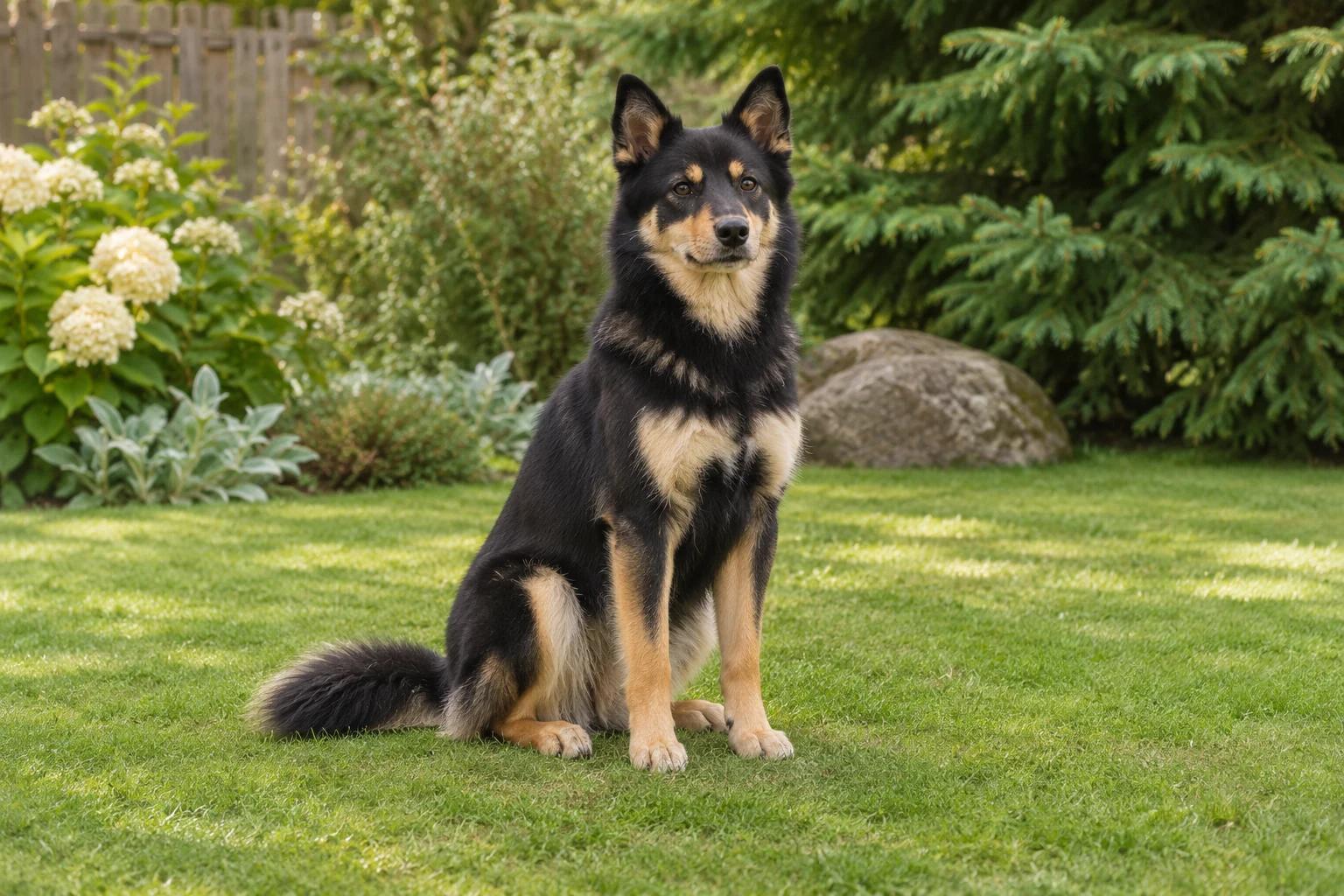
A spitz without the expected curl
If the word spitz makes you picture a tightly curled tail over a dog’s back, the Lapponian Herder offers a useful counterexample. Its FCI standard describes a low-set tail that hangs at rest. During movement, it continues the back line or curves slightly, but should not rise over the back. A rotating action is also allowed.
Give the photograph some context
Imagine two images of the same dog: one resting beside its handler, the other crossing a field. The tail may look quite different without either image representing a different kind of dog. The description explicitly separates resting carriage from movement.
For a breed presentation, ask for a short side-view clip that includes a pause and a few ordinary strides. Keep the whole dog in frame so viewers can see the relationship between the tail and back. This is a suggested way to illustrate the description, not a formal judging procedure.
Use a precise caption
A helpful caption can say whether the dog is standing or moving. Avoid using one frozen tail position to make a claim about pedigree or emotional state. The point of watching both moments is to understand this breed’s outline more accurately, including the detail that a curled-over-back tail is not its intended silhouette.
Sources behind this article
Article source checked: October 20, 2026. Source checked 2026-10-20
Keep reading
Lapponian Herder vs Finnish Lapphund: Everyday Differences
Read article →