LaPerm vs Selkirk Rex: adult weights and appearance
Compare LaPerm vs Selkirk Rex using current female and male weights, coat texture, head shape and the practical care behind the curly appearance.
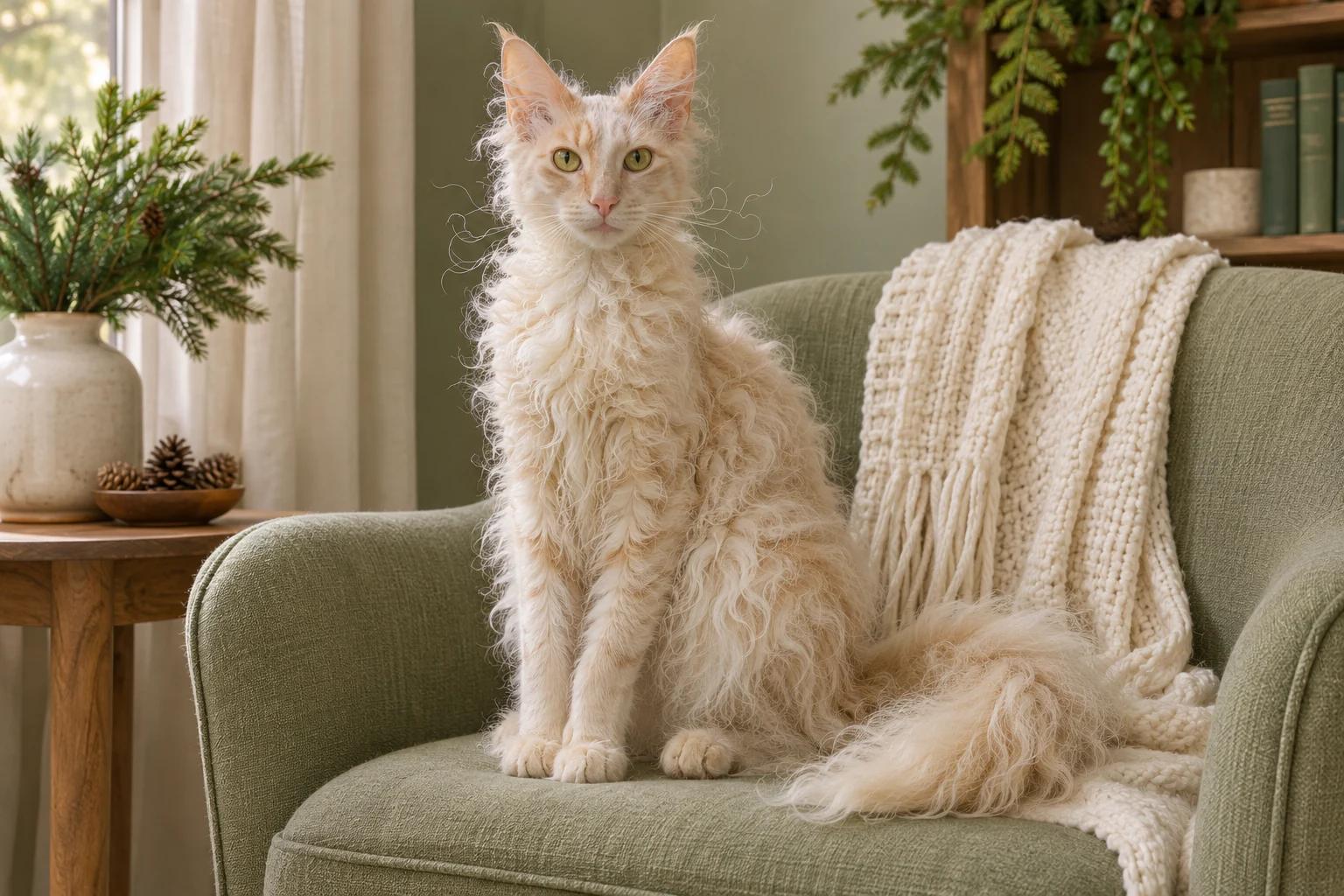
LaPerm vs Selkirk Rex is best approached through sex-qualified adult weights rather than a single maximum. Start with the relevant references, and keep them attached to the adult female or male you are discussing. This prevents an impressive upper endpoint from becoming the assumed size of every cat in the breed.
LaPerm vs Selkirk Rex: keep sex attached to the weights
The current LaPerm profile lists adult females at 6–8 pounds and males at 8–10 pounds. The current Selkirk Rex profile lists adult females at 6–12 pounds and males at 11–16 pounds.
The female references overlap: the Selkirk range includes the full LaPerm female range and extends higher. A seven-pound female could fit either reference, so that number alone would not tell you which breed you were meeting. Nor does the larger Selkirk upper endpoint mean that every female Selkirk must outweigh every female LaPerm.
The male references are more clearly separated. The LaPerm range ends at ten pounds, while the Selkirk range begins at twelve. Someone comparing adult males therefore has a different numerical picture from someone comparing females.
Combining the sexes gives 6–10 pounds for the LaPerm and 6–16 for the Selkirk Rex. That shorthand is less useful when it hides which adult you are discussing. If you are deciding between a LaPerm or Selkirk Rex, retain the female or male qualifier instead of repeating only the largest possible figure.
These are adult references, not targets or promises about a particular kitten. An individual's weight should be assessed with its veterinarian. Choosing the breed with the higher range does not mean choosing a number that the cat must eventually reach, and the lower end is not a reason to describe an adult female as incomplete.
Light, springy curls create the LaPerm's surface
CFA's LaPerm account describes a coat that can range from waves to tighter curls. The longhaired coat is light and springy, standing away from the body, with a plumed tail and possible neck ruff. The shorthaired variety has a different finish, including a bottle-brush tail and potentially crisper texture.
This is not simply one hairstyle cut to two lengths. The coat's length changes where the curls and furnishings are most noticeable. When viewing examples, establish the variety before assuming that a less dramatic ruff means the animal is not representative of the breed.
The LaPerm head has a modified wedge shape with gentle contours and rounded whisker pads. Its ears continue that outline, and the eyes are almond-shaped at rest. Consider those features alongside the curls rather than letting the coat hide every other part of the comparison.
For a Selkirk Rex vs LaPerm decision, the practical visual point is that a curly surface can have different texture and distribution. The LaPerm's light, springy presentation is a description of its coat, not a statement that an individual cat must feel weightless.
Dense individual curls and a rounded Selkirk face
The CFA Selkirk Rex standard describes a substantial muscular body with heavy bone, a round, full-cheeked head and large round eyes. Its coat is dense, with individual curls rather than one continuous orderly wave.
Shorthaired and longhaired Selkirks both exist. In the shorthaired variety, the tail fur is similar in length to the body coat and lies compactly around the tail. Longhaired tails are more plumy, while longer ruff hairs frame the face.
The difference between LaPerm and Selkirk Rex appearance should therefore include the head and body as well as the curls. The Selkirk's round facial impression and substantial frame are not created solely by grooming. Equally, the outer coat does not provide a direct reading of body weight.
CFA notes that curl can vary with age, sex and coat length. A kitten's finish is not necessarily an exact miniature of an adult's. Compare like with like when possible, rather than using one young shorthaired photograph to decide what every adult longhaired Selkirk will look like.
Care means preserving the curls, not maximizing them
GCCF's Selkirk Rex care guidance emphasizes removing loose hair with a wide-toothed comb while avoiding overgrooming that reduces the curl. Its discussion particularly highlights the care involved with the longhaired variety.
That gives a practical distinction for someone attracted to the tousled appearance. A deliberately unstructured finish is not an instruction to ignore the coat. Conversely, a grooming session is not a styling contest in which every curl must become more tightly defined.
A person comparing the breeds should consider the actual coat they will maintain, not only the most striking photograph. “Curly” does not specify how a comb will pass through that individual coat or which areas require attention. The task is to maintain the animal's coat without treating the natural texture as something to straighten out.
GCCF's warning about overgrooming also means that repeated combing is not automatically better. More passes can change the finish without making the session more useful. If you are unsure how to maintain your prospective Selkirk's coat, obtain a demonstration appropriate to that individual rather than copying a show photograph.
For the other side of the comparison, read working with a LaPerm's curls without pulling through knots. The cat breed quiz can help organize your wider preferences.
Frequently asked questions
Are Selkirk Rex females always heavier than LaPerm females?
Selkirk Rex and LaPerm female references overlap: 6–12 pounds and 6–8 pounds respectively, so the ranges do not support an always-heavier claim.
Which male reference is higher?
The Selkirk Rex male reference is 11–16 pounds, compared with 8–10 pounds for the LaPerm.
Does a breed's upper weight tell me what my kitten will weigh?
Neither the LaPerm nor Selkirk Rex upper adult reference predicts an individual kitten's final weight.
Sources behind this article
Article source checked: November 16, 2026. Source checked 2026-11-16Article source checked: November 18, 2026. Source checked 2026-11-18
Keep reading

Abyssinian vs Somali: Coat, Size and Everyday Company
Read article →