Labradoodle vs Bernedoodle: Choosing Your Companion
Compare Labradoodle and Bernedoodle care, activity, size uncertainty and everyday fit, with practical questions about the dogs you meet.
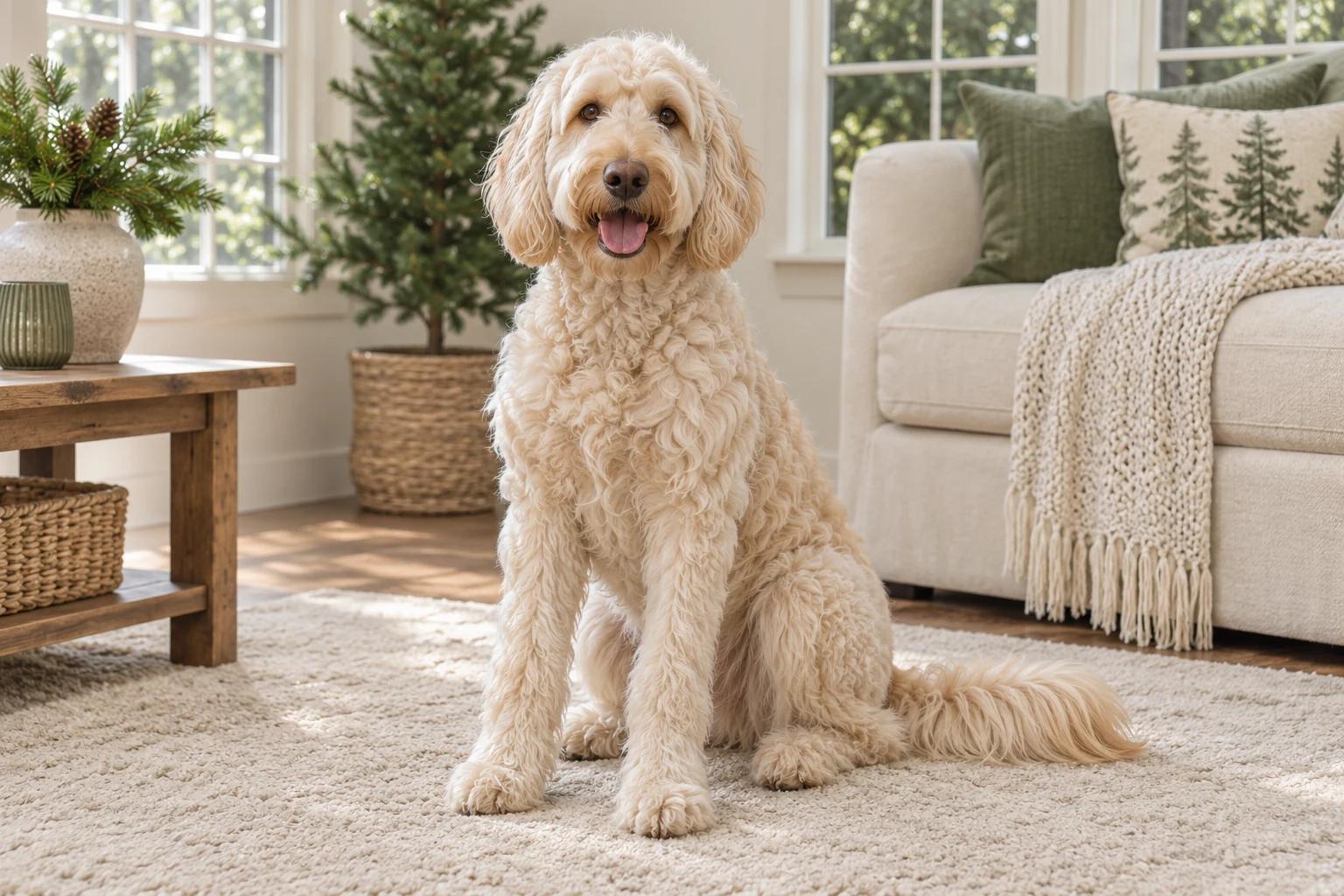
Choosing between a Labradoodle vs Bernedoodle is less about finding a winner and more about deciding which actual dog fits your days. Both names describe crosses with Poodle ancestry. The other parent background differs: Labrador Retriever for a Labradoodle, Bernese Mountain Dog for a Bernedoodle. That distinction offers useful context, but it is not a reliable shortcut to adult size, a precise exercise schedule or how either dog will greet your visitors.
Labradoodle vs Bernedoodle: start with the kind of company you want
The Labrador standard describes an outgoing, willing sporting dog. AKC describes the Bernese Mountain Dog as a powerful working companion with an affectionate disposition. Those are descriptions of the parent breeds, not a forecast that one cross will be a tireless athlete and the other a quiet sofa companion. UKC Labrador standard; AKC Bernese overview.
Instead of asking which name means calmer, describe a scene. You return from a walk, put the kettle on and sit down to work. Do you want a dog who is already comfortable resting nearby? Are you willing to teach that skill over time? A breeder, foster carer or rescue can answer questions about that transition in a particular dog far more usefully than a comparison chart can.
For an adult, ask to see the ordinary end of an outing, not just the exciting first greeting. For a puppy, ask how rest is currently arranged and what the adults in the household are like between activities. The answer may still leave uncertainty, but it gives you something concrete to discuss.
Compare space by measurements, not the word miniature
A major difference between Labradoodle and Bernedoodle prospects may be their eventual physical footprint. Yet a size label alone does not tell you whether a dog can turn comfortably in your car crate or pass another dog in a narrow hallway. The Poodle exists in different size varieties, so establish which variety is involved rather than picturing a single standard doodle shape. AKC Poodle overview.
Measure your available resting and travel spaces before shopping for equipment. With an adult, use the dog's actual measurements and the equipment maker's fitting instructions. With a puppy, ask for the parents' measurements and the basis of any adult-size estimate. Buy adjustable equipment where suitable, and budget for replacement rather than treating a puppy harness as a lifetime purchase.
If an estimate would put the dog close to a building or travel limit, resolve that uncertainty before committing. A reassuring description such as medium is not a substitute for the exact rule you need to meet. This is particularly important when two listings use similar labels but describe very different adults.
Make the grooming comparison hands-on
A photograph shows a haircut on one day. It does not show how much brushing the coat requires between appointments, what happens after a muddy walk or how comfortable the dog is with handling. VCA notes that crossbred coat outcomes can vary. Do not assume a shared Poodle background means the same care routine. VCA designer-dog guide.
Ask each carer to demonstrate the current brushing routine and identify the tools used. Ask which areas need particular attention on that dog, how appointments are arranged and what the dog finds difficult. For a puppy, ask a groomer what changes might be needed as the coat develops rather than committing to a permanent routine from a baby photograph.
Then compare your willingness to do that work. Someone who enjoys handling practice and regular coat care may see it as pleasant time together. Someone who wants a quick towel-dry after every outing should discuss the practical reality before choosing either cross. Choose an achievable care plan, not the most elaborate haircut in a gallery.
Ask what an ordinary outing looks like
The useful Bernedoodle vs Labradoodle activity comparison is between the dogs' current routines. Ask what outings they receive, how they behave on a lead and what they do afterward. If you hope to share a particular activity, such as long countryside walks, describe the terrain and pace rather than simply saying you are active.
For a Labradoodle prospect, do not translate Labrador ancestry into an obligation to retrieve endlessly. For a Bernedoodle prospect, do not translate the Bernese parent's steadier reputation into an assumption that exercise can be skipped. Ask what the individual enjoys. Consider whether your preferred activity leaves room for the dog's preferences too.
A weekday trial on paper can reveal a mismatch. Write out your departure time, available walking routes and evening commitments. Include time to clean and dry the dog, not only time outdoors. If the routine depends entirely on a weekend adventure, reconsider how the weekday needs will be met.
Labradoodle or Bernedoodle: make two separate shortlists
First list the characteristics your home genuinely requires: manageable travel size, a realistic care routine and behavior compatible with your daily surroundings. Then list preferences such as coat color or a particular outline. A lovely appearance should not move an unresolved practical requirement into the optional column.
For each dog, record the same three examples: a greeting, a walk and a quiet period. Note what was observed, what the carer reported and what remains unknown. Do not score one dog's polished video against another dog's difficult first meeting in a noisy setting. Ask for comparable information wherever possible.
Explore the Labradoodle profile and Bernedoodle profile alongside these questions. If the Labradoodle terminology is confusing, the separate ancestry guide explains that topic. The breed quiz can help organize preferences, but a final choice should still come back to the dog and the routine you can offer.
FAQ
Is a Bernedoodle always calmer than a Labradoodle?
No. Parent-breed descriptions cannot establish the temperament of an individual cross. Ask about resting after activity, responses to visitors and the dog's current routine. An adult's history can provide useful examples; a puppy's future behavior is less settled.
Can I compare their size from the names alone?
No. Ask which Poodle variety is involved and request actual adult measurements when available. For a puppy, treat the proposed size as an estimate and check whether your home and transport arrangements can accommodate uncertainty.
Which cross needs less grooming?
Compare the actual coats and the care demonstrated by their carers. Similar-looking dogs can have different brushing and appointment needs. A groomer can help you understand the work involved for the individual coat rather than choosing by the cross's name.
Sources behind this article
- VCA Animal Hospitals: Designer Dog Breeds ↗
- United Kennel Club: Labrador Retriever ↗
- American Kennel Club: Bernese Mountain Dog ↗
- American Kennel Club: Poodle ↗
Article source checked: November 15, 2026. Source checked 2026-11-15
Keep reading

Affenpinscher vs Brussels Griffon: Everyday Differences
Read article →