Labradoodle Temperament: Reading the Individual Dog
Explore Labradoodle temperament through greetings, play, learning and quiet time, with practical ways to assess a prospective companion.
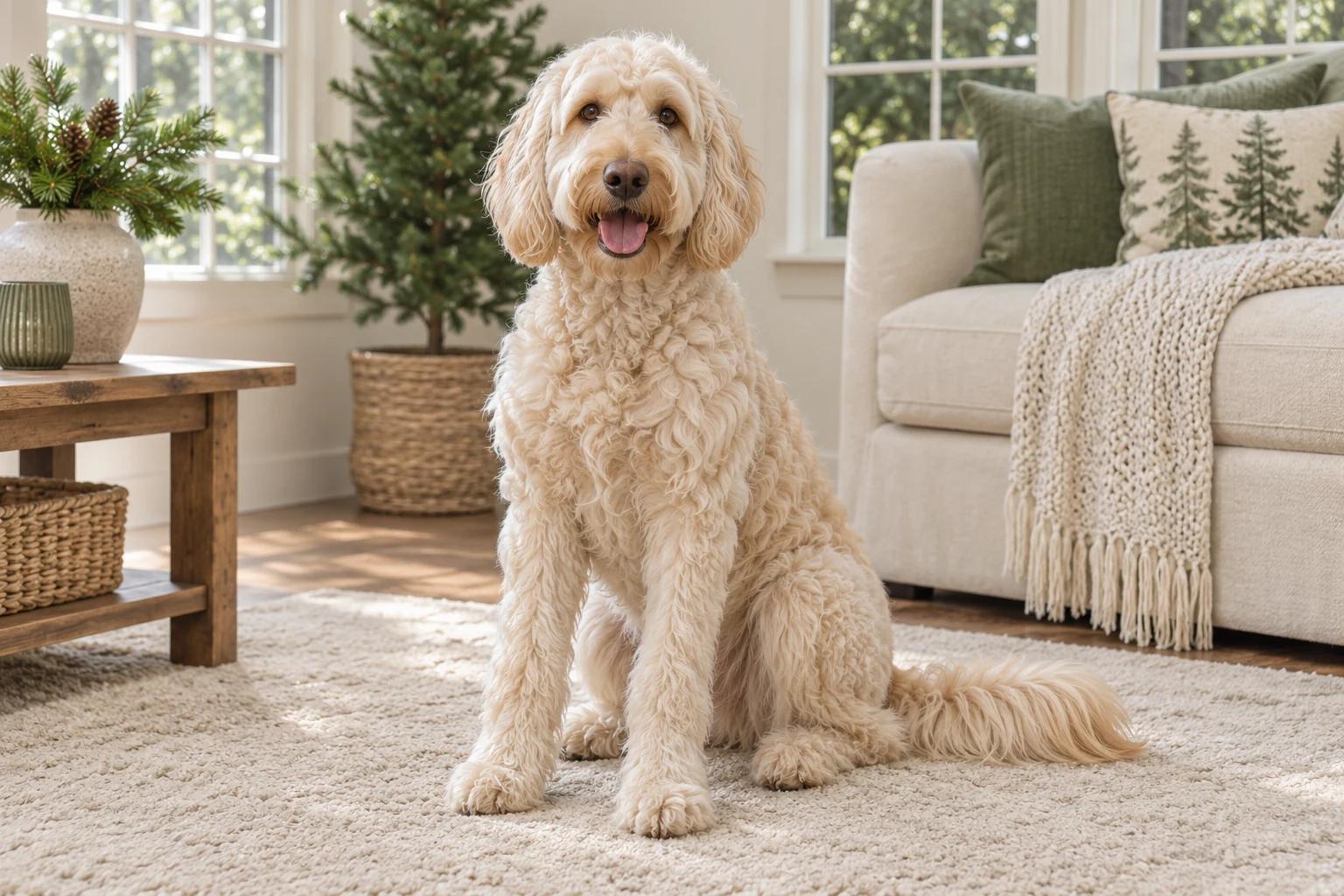
Labradoodle temperament is often described with appealing words such as friendly, playful and affectionate. Those words are useful only when you translate them into everyday situations. Does the dog enjoy approaching a visitor, or need a little space first? Can a game end without a struggle? What happens when the room becomes quiet? Looking at those moments gives you a clearer picture than assuming every curly-coated Labrador–Poodle cross has the same personality.
Labradoodle temperament: enthusiasm needs context
The UKC Labrador standard describes a friendly, outgoing dog willing to work with people. That is parent-breed context, not a behavioral recipe inherited in fixed proportions. VCA also notes that crossbreeding can produce variable outcomes. A Labradoodle is not simply a Labrador personality underneath a different coat. UKC Labrador standard; VCA designer-dog guide.
It helps to separate three questions: what does the dog seem to enjoy, which skills have been taught, and which situations are still unfamiliar? A dog who bounces toward a visitor may enjoy people but lack greeting manners. A dog who hangs back at a first meeting may need space in that setting. Neither moment is enough to write a complete personality description.
When meeting a prospect, ask for examples from normal days. A carer who can describe what happens before, during and after a visitor arrives is giving you something useful. A string of flattering adjectives leaves you to imagine the details yourself.
Look at sociability without demanding a performance
A Labradoodle personality assessment should not become a test in which the dog must accept every kind of attention. Let the carer arrange an introduction that suits the individual. Watch from a comfortable distance before trying to interact. Ask whether what you see is typical, and what changes when the dog knows someone well.
An adult living in a foster home may have a history of quieter evenings, deliveries and household visitors. Ask about those separately. Being relaxed with a regular visitor does not necessarily answer how the dog feels about a crowded entrance hall or a stranger reaching over a gate.
For a puppy, focus on the environment and experiences being provided as well as the puppy in front of you. Ask how new situations are introduced and what happens when a puppy wants to withdraw. You are choosing a young learner, not buying a completed adult temperament. Plan to continue learning about the dog after arrival.
Distinguish playfulness from constant entertainment
A playful Labradoodle may make everyday life enjoyable, but shared play should have boundaries that everyone understands. VCA recommends choosing games around the dog's preferences and skills, rather than pushing excitement so far that stopping becomes difficult. VCA play guidance.
Watch what the dog chooses when offered suitable options. Does a toy invite a cooperative game, a solitary carry around the room or no interest at all? Does the dog return to a familiar person, investigate elsewhere or look for a place to lie down? These are observations, not rankings. The best companion is not necessarily the one who plays hardest at the first meeting.
For your own dog, keep favorite activities available without making every request for attention start a bigger game. Plan periods when you are fully involved and periods when the household is quiet. If you work at home, that distinction matters more than simply being physically present all day.
Learning is not the same as understanding every situation
Among Labradoodle characteristics, responsiveness to training is especially easy to overinterpret. A dog may understand a cue in the kitchen but not yet in a busy park. It may have learned a useful behavior from one person and need help recognizing another person's timing or gestures.
Ask a prospective carer to show you a familiar skill and explain the cue, reward and setting. Then discuss how you would maintain that approach during the transition home. This is more helpful than collecting a list of commands without knowing what the words mean to the dog.
Choose a few practical priorities: walking with you, coming away from an interesting object and being comfortable with necessary handling. The coat itself makes the last priority particularly relevant. Ask how brushing and grooming currently work. A sociable dog can still need patient teaching around equipment, restraint or particular parts of its body.
Observe quiet behavior too
Descriptions of Labradoodle behavior often concentrate on the lively parts because they are easy to photograph. Quiet behavior can be just as important to a match. Ask what happens while the carer eats, answers the door or sits at a desk. Find out where the dog rests and whether that place stays undisturbed.
Do not invent a long absence test at a viewing. Instead, ask what is already known about time apart, how that information was obtained and what support the dog currently receives. If the dog has not been left alone, record that as unknown rather than assuming an affectionate nature predicts either comfort or distress.
When a dog joins your household, keep notes on patterns rather than applying labels such as stubborn or needy. Describe the event: the vacuum started, the dog moved to the doorway, the room became quieter and the dog returned. Clear descriptions make it easier to seek useful help if a concern persists.
Choose a relationship you can support
Picture the specific companionship you want. If you enjoy teaching and participating in activities, ask how that dog's interests might fit. If you need a companion already accustomed to a quiet adult home, look for evidence of that experience rather than expecting the cross's reputation to do the work.
Use the Labradoodle profile to explore the broader care commitment and the breed quiz to clarify your preferences. The ancestry guide covers the naming distinction separately. Temperament decisions should come back to daily behavior, your expectations and a willingness to adjust as you get to know one another.
FAQ
Do all Labradoodles have the same personality?
No. The cross name does not determine an individual dog's preferences or responses. Ask about actual behavior in ordinary settings, including play, visitors and rest, and keep training history separate from assumptions about inherited temperament.
Does a friendly Labradoodle still need greeting training?
Yes. Enjoying people and knowing how to approach them politely are different things. Choose a consistent greeting routine appropriate to the dog and setting, and seek a reward-based trainer's help if excitement makes introductions difficult.
Is a quiet Labradoodle puppy guaranteed to be a quiet adult?
No. A single viewing captures a moment, not a settled adult personality. Ask about the puppy across different times and situations, the adults in the line and the experiences being provided. Keep room in your plans for development and learning.
Sources behind this article
- United Kennel Club: Labrador Retriever ↗
- VCA Animal Hospitals: Designer Dog Breeds ↗
- VCA Animal Hospitals: Dog Behavior and Training: Play and Exercise ↗
Article source checked: November 15, 2026. Source checked 2026-11-15
Keep reading

Airedale Terrier Temperament: What Everyday Life Can Feel Like
Read article →