Korean Jindo Dog Temperament in Everyday Life
Explore Korean Jindo Dog temperament through visitors, walks, training, and everyday choices before deciding whether the breed fits.
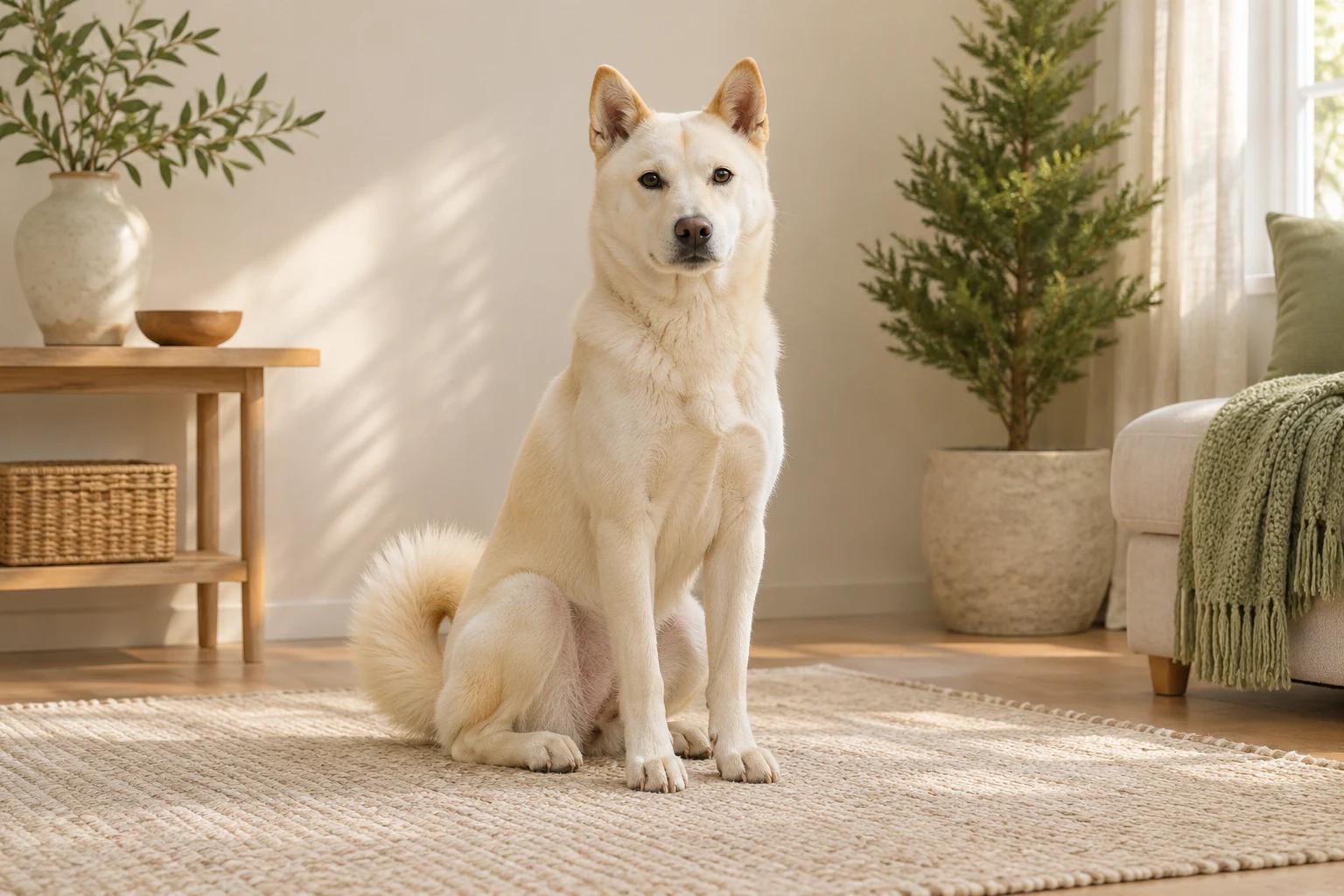
Korean Jindo Dog temperament combines attachment to familiar people with an independent outlook. The AKC overview presents the breed as loyal, watchful, and intelligent. Those words are a starting point, but they do not tell you how a particular dog will handle a busy hallway, an unfamiliar visitor, or another dog approaching on a walk. The useful next step is to translate broad descriptions into situations you will actually share.
Korean Jindo Dog temperament is not constant sociability
The UKC standard describes reserve toward strangers and an independent nature that responds to positive reinforcement. Do not confuse closeness within a household with a wish to greet everyone outside it. A dog can enjoy familiar company while finding an enthusiastic stranger's approach unwelcome.
For a prospective owner, this changes the questions worth asking. Instead of asking only whether the dog is friendly, ask what happens when a visitor enters, sits down, and later stands up. Does the dog choose to remain nearby, retreat to another room, or need more distance? Ask what the current keeper does to make visits manageable.
Avoid arranging a meeting as a performance test. You do not need to prove that a Jindo will accept repeated touching from someone it has just met. Observe ordinary interaction and respect the handler's instructions. A quieter encounter may reveal more than an overcrowded greeting.
Look at the walk you can offer
The Korean Jindo Dog Association of America cautions about off-leash recall and crowded dog-park expectations. For your own planning, picture a walk that does not depend on either. Can you offer interesting routes, enough space to pass other dogs, and secure arrangements for outdoor time?
Map a couple of alternatives near home. One might be the shortest practical toilet route; another might offer room to pause without blocking a pavement. Note narrow gateways and places where dogs tend to appear suddenly. You are not trying to avoid every possible encounter, but to have choices when a route is unexpectedly busy.
Consider the household's preferences too. Someone whose favorite activity is taking a dog to crowded social gatherings may want a different experience from someone who enjoys quieter shared outings. Neither preference should be hidden during the decision. The breed's appearance cannot resolve a mismatch in the daily life you want.
Make independence a training-design question
A useful response to independence is clarity. Decide what you want the dog to do in a particular moment and make that task easy to recognize. Ask for one familiar behavior in a manageable setting rather than repeating several different instructions while a distraction gets closer.
For example, if you want an easier departure from home, choose a consistent place to put on walking equipment. Keep the lead there, prepare what you need first, and avoid turning the process into a search through drawers. The routine is an opportunity to practice cooperation, not a contest over who controls the doorway.
Notice what your individual dog finds rewarding. A quiet interaction, an opportunity to investigate something, or a food reward may play different roles in different situations. Work with a qualified reward-based trainer if you are struggling to turn those observations into a practical plan.
Keep notes specific. “Ignored me” is less useful than “responded in the kitchen but not beside the open gate.” The second version identifies a change in context you can discuss. It also prevents Korean Jindo Dog behavior from being reduced to a single label such as stubborn.
Consider other animals before arranging a meeting
The breed association's discussion of other dogs and cats makes clear that familiarity and individual history matter. A pleasant encounter with one animal does not answer every question about another. Ask about the exact arrangement you are considering, including the resident animals, available separation space, and support for introductions.
Do not use a casual meeting to settle a complicated compatibility decision. A crowded public place may offer little useful information about sharing a home. Equally, a calm moment across a fence does not show what will happen around resting places or daily routines indoors.
If the household already includes animals, involve the placement organization or an appropriately qualified professional before bringing a Jindo into that arrangement. Decide where each animal can rest separately and who will manage transitions. A plan that requires immediate harmony is not much of a plan.
Learn the dog's social rhythm
Korean Jindo Dog personality is easier to understand when you observe what the dog chooses in ordinary moments. Does it remain in the room while people work? Does it initiate interaction after a walk? Does it prefer a resting place away from household traffic? These are useful details even when they do not fit a dramatic breed description.
Discuss those preferences with everyone who will provide care. One person may enjoy quiet companionship while another expects constant physical affection. Set expectations around the dog you meet rather than asking it to satisfy competing pictures of what loyalty should look like.
Our article on adult Jindo rehoming and bonding addresses a related but different question. Temperament planning is about everyday interaction and management, not predicting a deadline for attachment.
Match the household to the practical demands
Write down three situations that happen every week in your home. They might include a cleaner arriving, relatives visiting, or walking through a shared entrance. Then ask the breeder or rescue how the individual dog has handled comparable situations. Look for descriptions of actions and routines, not just adjectives.
Korean Jindo Dog characteristics should help you ask better questions, not answer them in advance. Use the breed profile for the broader reference and the breed quiz to clarify what kind of companionship you want. Follow that research with a conversation about the actual dog and the support available to you.
FAQ
Does a reserved Jindo dislike people?
Reserve does not tell you that a dog dislikes everyone. It tells you to pay attention to familiarity, distance, and the individual's choices. Ask for examples of how the dog behaves with household members and with visitors rather than treating both situations as identical.
Is a dog park essential for a Jindo?
No. Plan exercise and enrichment that do not rely on a crowded dog park. Quiet outings and appropriate secure activities can be part of a routine, with the details chosen for the individual dog and your circumstances.
Can intelligence make training automatic?
No. Intelligence does not remove the need for clear cues, suitable rewards, and practice in manageable settings. If a skill works in one place but not another, investigate the change in context instead of assuming the dog is deliberately refusing cooperation.
Sources behind this article
- UKC Jindo standard ↗
- AKC Korean Jindo Dog overview ↗
- Korean Jindo Dog Association of America questions ↗
Article source checked: November 15, 2026. Source checked 2026-11-15
Keep reading
Korean Jindo Dog Size: Planning for an Adult
Read article →