Korean Jindo Dog Size: Planning for an Adult
Understand Korean Jindo Dog size, measure for equipment, and plan transport and living space around the individual adult dog.
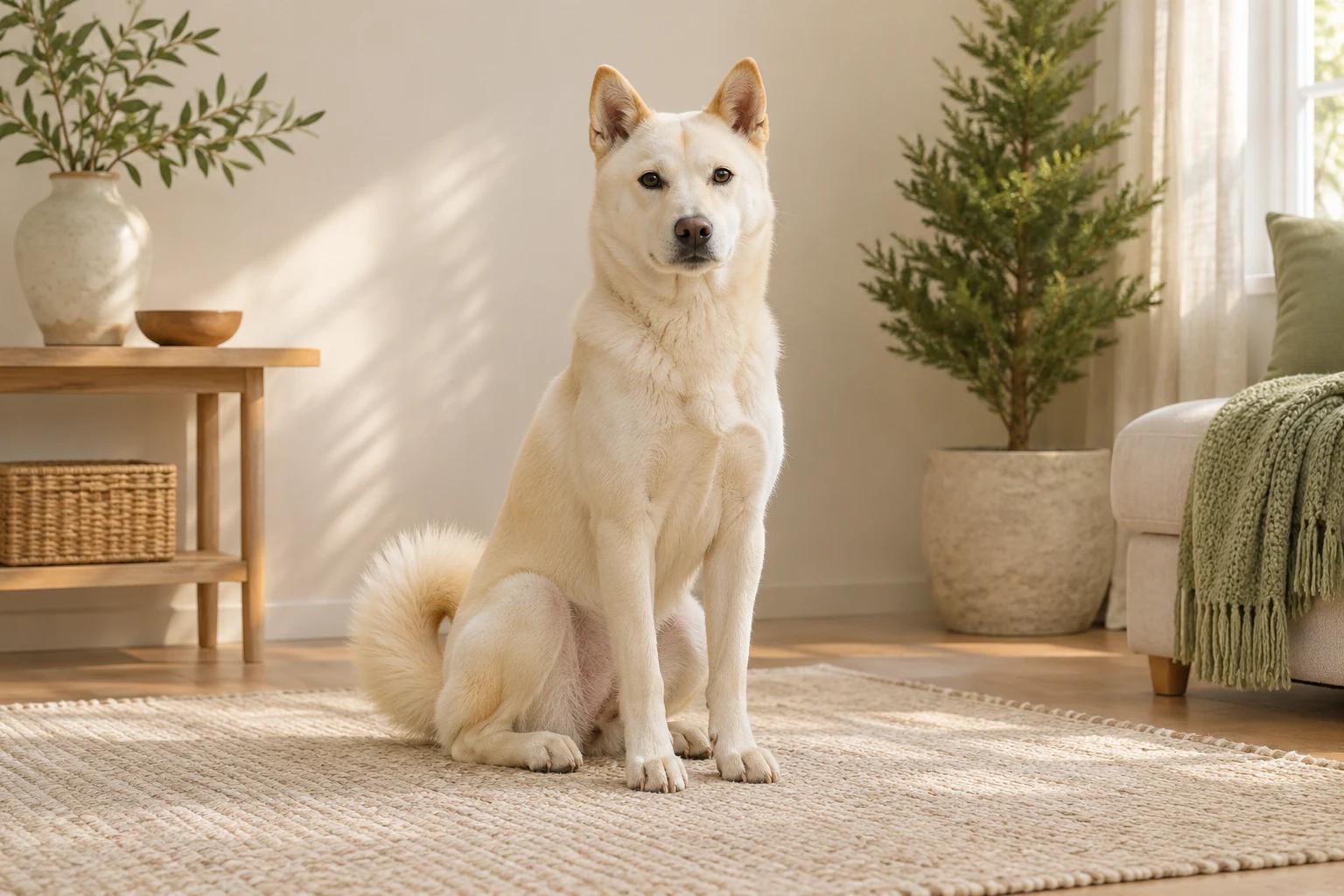
Korean Jindo Dog size is best understood as medium rather than miniature or giant. That still leaves several practical questions: can your dog turn comfortably in the car, does a harness fit the chest rather than just the neck, and can everyone who walks the dog manage the equipment? The AKC breed overview describes a medium-sized independent hunter. Start with that broad picture, then get measurements for the actual dog before committing to expensive equipment.
Korean Jindo Dog size means more than weight
The UKC standard describes a sturdy spitz-type dog whose body is square or slightly longer than tall, with males generally larger. The My Breed Atlas profile lists adult males at 40–51 pounds and adult females at 33–42 pounds. These figures are references for mature dogs, not targets for every Jindo or forecasts for a puppy.
For ownership decisions, separate three things. Skeletal size tells you roughly how tall and long the dog is. Current body weight tells you what the scale recorded on a particular date. The space the dog uses while resting, stretching, and moving tells you whether an arrangement works in real life. A single number cannot replace all three.
A photograph is a poor measuring tool. The camera angle, a full coat, and the size of the person standing nearby can change your impression. If a seller describes a dog only as small, compact, or large, ask for dated measurements rather than trying to decode those labels.
Build a measurement card before shopping
A simple card can include the dog's name, age or estimated age, date measured, weight, chest circumference, neck circumference, and body length. Keep the units beside every figure. Confusing centimetres with inches is an avoidable way to order something that will not fit.
Korean Jindo Dog height is measured at the shoulder, not at the tips of the upright ears. If you need a height measurement for a particular purpose, ask someone experienced to show you how to take it while the dog is standing naturally. Do not wrestle a reluctant dog into position for the sake of completing a shopping list. A fitting appointment may be a better option.
For a harness, follow that manufacturer's measuring instructions. Two products both labelled medium can have quite different adjustment ranges. Record the narrowest and widest adjustment settings, not just the label on the box. If you can try the product on, check it while the dog stands and walks rather than judging a stationary front view alone.
For a bed, note the dog's preferred resting positions. A curled-up Jindo and the same dog stretched on its side occupy different spaces. Place newspaper or a folded sheet on the floor to represent the bed's footprint before buying. Make sure the proposed location does not block a doorway when the bed is in use.
How big do Korean Jindo Dogs get in your home?
The answer matters most at the narrow points: a hallway corner, a car doorway, a stair landing, or the gap beside a dining table. Walk through those spaces with the adult dog in mind. A medium-sized breed can still find a particular layout awkward.
Consider a household where the dog sleeps downstairs but the lead hangs beside the front door. Each outing involves passing a chair, turning sharply, and waiting while the door opens. Moving the chair and storing the lead within reach may solve more than buying a smaller bed. Plan the route, not just the sleeping spot.
Check outdoor access too. A door opening into a shared corridor needs a different routine from a door opening directly into a private enclosed area. Size alone does not tell you whether that routine will be easy. The Korean Jindo Dog profile puts physical dimensions alongside the wider ownership picture.
Transport needs a trial run
Measure the usable space in the vehicle, not the outside dimensions of the boot. Wheel arches, sloping windows, and the opening itself can reduce room. Confirm how any proposed travel equipment is meant to be installed and which measurements the manufacturer requires.
A crate that fits through a car door may still prevent a passenger seat from being used. A restraint that fits the dog may not be suitable for the vehicle arrangement you had in mind. Resolve those questions before an essential journey, rather than discovering them in a busy car park.
For public transport or accommodation, check the actual provider's current rules. A medium breed label is not a substitute for a weight limit or a stated carrier requirement. Keep a recent Korean Jindo Dog weight entry available if a service asks for one, and ask how it treats dogs close to a limit.
Puppies need adjustable plans, not promises
A puppy's present size can tell you what fits today. It cannot settle every adult equipment decision. Ask the breeder about the parents' measurements and the development of earlier relatives, while leaving room for the individual puppy to differ.
Buy essential equipment for a secure current fit. An oversized harness purchased to avoid a second purchase can defeat its immediate purpose. Where a product offers adjustment, verify that the current measurement falls within its stated range rather than assuming the puppy will soon grow into it.
Keep dated growth records and let your veterinarian interpret concerns about weight or development. Do not change feeding to make a dog match a breed number. The useful question is whether the individual's growth and condition are appropriate, not whether the scale produces the figure you expected.
If you are considering an adult, ask for current measurements directly. Our article on adult Jindo rehoming and bonding addresses a separate part of that decision. Physical fit and the relationship you will build both deserve attention.
FAQ
Is the Korean Jindo a large dog?
The Korean Jindo is generally described as medium-sized. For household planning, actual height, weight, and body length are more useful than a category alone. Measure the dog and check the dimensions of beds, harnesses, and travel equipment separately.
Does adult weight tell me which harness to buy?
No. Weight can help narrow a product search, but chest and neck measurements and the manufacturer's fitting instructions determine whether a particular harness is suitable. Do not assume all medium harnesses share the same dimensions.
Can size alone tell me whether a Jindo suits my home?
No. Access, transport, walking arrangements, and the dog's individual behavior also matter. Use the breed quiz to organize your preferences, then compare the results with the practical demands of the dog you are considering.
Sources behind this article
Article source checked: November 15, 2026. Source checked 2026-11-15Article source checked: November 18, 2026. Source checked 2026-11-18
Keep reading
Korean Jindo Dog Temperament in Everyday Life
Read article →