Korat cat shedding: gentle grooming without overworking the coat
Learn about Korat cat shedding, practical brush choices, gentle grooming and the difference between routine coat care and unnecessary bathing.
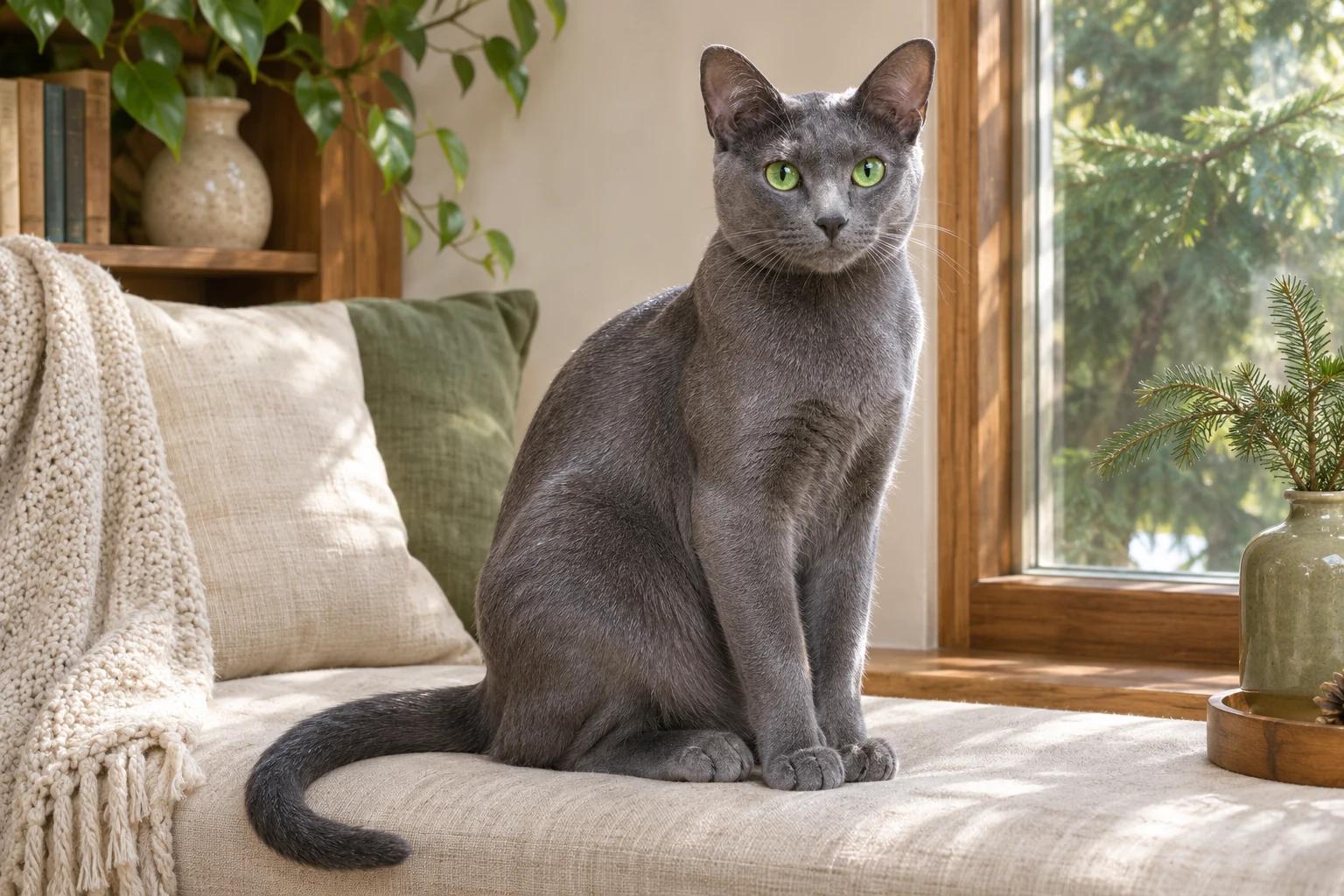
Korat cat shedding raises a practical question: what should an owner actually do, rather than which advertising label should they believe? A grooming routine is not a promise about how much hair will appear on every sofa, and a photograph cannot answer that question for an individual household.
Start with the Korat breed profile, then distinguish the task you are considering. Choosing equipment, using it on the cat and deciding whether washing is necessary are separate decisions. Buying a large kit does not answer all three, and a product marketed for “all breeds” does not explain how you should use it on your particular animal.
This guide combines a breed registry's Korat care account with general feline grooming guidance. The general instructions are useful for Korat owners, but they are not evidence from a controlled study of shedding in this breed.
Korat cat shedding and the natural finish
The GCCF's Korat care account describes a gentle grooming session involving brushing or combing together with hand-stroking the fur smooth. It also describes a final polish using a chamois or an old silk scarf.
The useful distinction is between removing loose material and finishing the surface. Stroking the fur into place is a finishing action, not a reason to keep going back over the same area with a comb. A polished appearance is not a measurement of how much more brushing the cat needs.
For everyday Korat cat coat care, the registry's description points toward a light routine rather than a dramatic makeover. The finishing cloth is an option in that account, not a requirement to buy show equipment. An owner need not reproduce a competition presentation.
Keep the purpose clear: care for the coat already present. Do not turn an optional finishing step into a rule that the cat must remain in place until its appearance satisfies a photograph or a personal idea of perfection.
Choose the tool for the task, not the biggest brush
The RSPCA's grooming guide distinguishes tools by their purpose. Grooming mitts can remove dead hair from shorter coats, while soft bristle brushes help distribute natural oils. Slicker brushes are discussed particularly for dead hair and mats in long-haired cats.
That distinction matters when assembling a Korat kit. A device designed to work through a long coat is not automatically an upgrade over a simpler mitt or soft brush. More teeth, a larger head or a more technical name does not tell you that it is the right tool for the job you have.
Think of a mitt and a brush as different contact surfaces rather than items in a mandatory sequence. You do not need to use every tool merely because it came in the same box. The manufacturer's instructions should still be followed; a general grooming guide does not make every product interchangeable.
The RSPCA's range of examples is a way to distinguish functions, not a shopping list. Keep the choice tied to the task instead of collecting equipment for coat problems your Korat does not have.
How to groom a Korat cat with a clear starting point
Battersea's practical grooming instructions begin when the cat is relaxed and interested in interacting. Offer the brush for investigation and allow the cat to move away. Brush in the direction the fur grows.
Begin with a few strokes around the head and cheeks, watching the response rather than assuming permission to continue everywhere. If that is comfortable, try between the shoulders and along the back. The guide advises against forcing the interaction and generally avoiding the sensitive tummy area.
Battersea also suggests alternating familiar stroking with brushing. Re-offer the brush when beginning again rather than treating the first approach as permission for an entire session. For a Korat owner, that gives a sequence: offer, try a little, and decide whether to continue from the cat's response.
The sequence need not cover the whole body. A brief interaction differs from holding the cat until every area has been brushed. Letting the animal leave is part of the method, not an interruption that must be overcome.
Washing is a separate decision
Cats Protection's grooming guidance explains that cats generally do not need routine baths while they are keeping themselves clean. For ordinary dirt, a soft cloth moistened with warm water may be sufficient. If bathing advice is needed, ask your veterinarian rather than improvising a product routine.
That makes washing a different question from finding loose hair. A bath is not an automatic next stage after a brush, and owning a Korat does not create a requirement to shampoo it on a fixed calendar.
The guide says that, where a bath is necessary, products should be specifically intended for cats rather than simply whatever is available in the household. A human shampoo's scent or label does not establish that it belongs in a cat's care routine.
For ordinary ownership, separate the observation from the proposed response. “I found some hair” is not, by itself, an instruction to wash the animal. The first decision is whether washing is needed at all, not which bottle to use.
Read preparing a Korat's routine before a baby arrives for a different household transition. Use the cat breed quiz to explore broader ownership preferences.
Frequently asked questions
Is a polishing cloth essential for Korat grooming?
Korat grooming need not include GCCF's optional polishing cloth; it is a finishing option, not mandatory equipment.
Must I brush every part of my Korat at once?
Korat grooming can stop after a comfortable section; Battersea's method allows the cat to leave.
Does finding loose Korat hair mean a bath is necessary?
Loose Korat hair does not automatically call for bathing; Cats Protection distinguishes ordinary grooming from washing.
Sources behind this article
Article source checked: November 16, 2026. Source checked 2026-11-16
Keep reading

Abyssinian Cat Grooming: Care for the Short Ticked Coat
Read article →