Keeshond vs Samoyed: Size, Company and Coat Care
Compare Keeshond and Samoyed size, companionship, outings, voice and coat-care commitments before choosing.
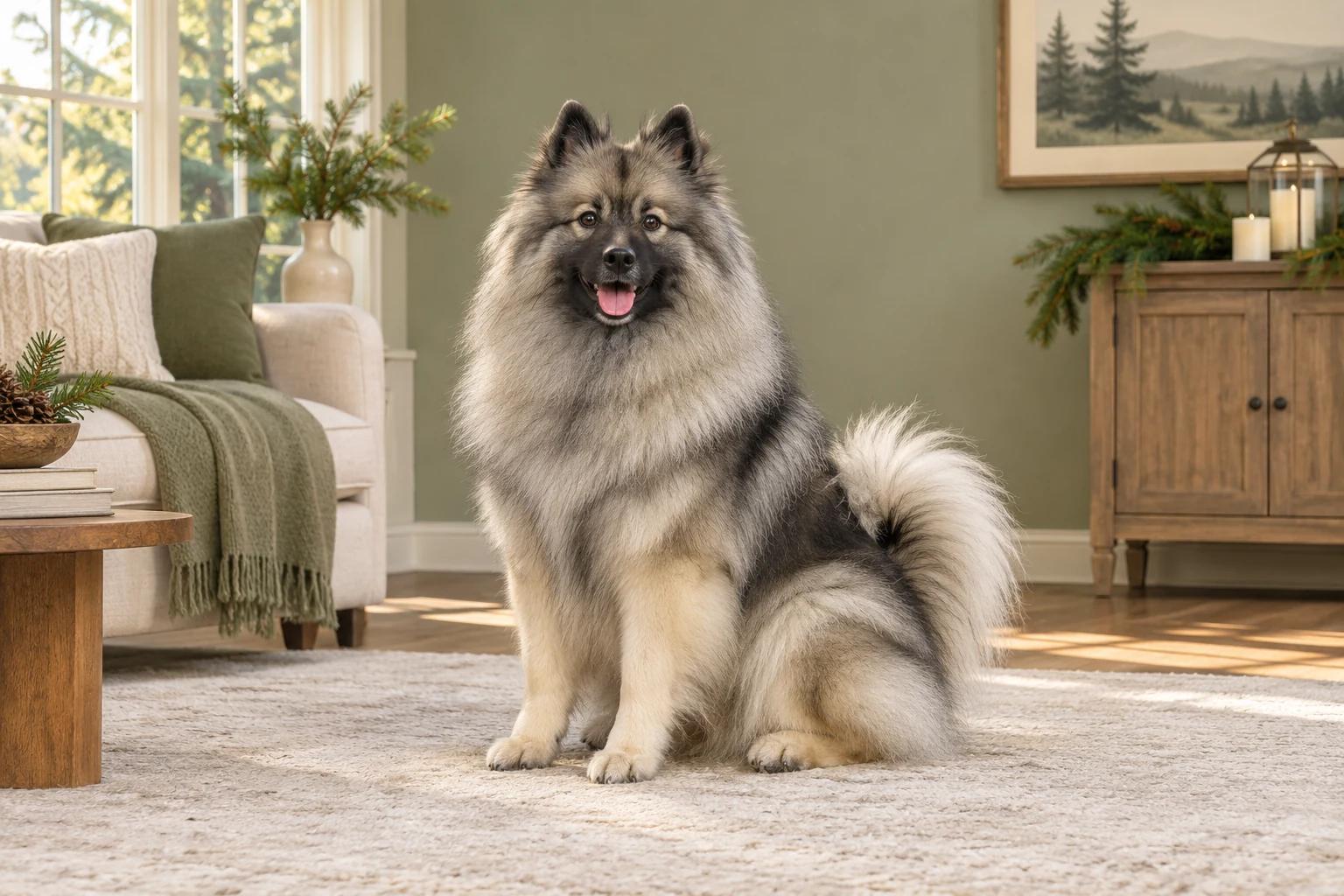
Keeshond vs Samoyed often starts as a choice between two spectacular fluffy dogs. For everyday ownership, the more useful contrast is between the Keeshond's compact body and shaded coat and the Samoyed's taller outline and pale coat. Both deserve a plan for companionship, training and the practical work hidden beneath the fluff.
Explore the Keeshond profile and Samoyed profile before deciding. Then compare the dogs in the context of your own rooms, walking routes and weekly schedule, not just side-by-side photographs.
Keeshond vs Samoyed: visible differences that matter
The UKC Keeshond standard gives ideal adult heights of 18 inches for males and 17 inches for females, with a one-inch allowance either way. Its Samoyed standard gives desirable heights of 21–23.5 inches for males and 19–21 inches for females. The Samoyed is generally the taller dog, although the individuals you meet may not match the ideal exactly. UKC Keeshond standard, UKC Samoyed standard.
The Keeshond's gray, black and cream shading includes the characteristic lines around the eyes often called spectacles. The Samoyed's standard allows white, cream, biscuit, and white with biscuit. Both have double coats. Choosing the darker dog does not remove coat care from your week, and choosing the pale dog does not mean every outing must become a full bath. UKC Keeshond standard, UKC Samoyed standard.
Size changes where you put a bed, how you arrange a car and the room available for grooming. Before purchasing anything, ask for the actual dog's dimensions. Coat volume can make a dog look larger than its body, while an attractive photograph may hide the space needed to turn and stretch.
Company belongs in the weekly calendar
The Keeshond Club of America emphasizes involvement in household life. The UKC also describes the Samoyed as a sociable dog that needs interaction with its owners. If you are choosing between these breeds, write down when that interaction will happen on ordinary working days. Keeshond Club of America general information, UKC Samoyed standard.
“Someone is home” is only the beginning of that plan. A person in meetings all day may have less available attention than the calendar suggests. Decide who handles the morning outing, which parts of the day include company and what happens when everyone needs to leave.
Ask the current caregiver about the particular dog's routine when alone. Find out how it was introduced to that arrangement and what support is needed. Do not assume that a friendly breed description establishes comfort with long absences, or that one dog can simply entertain another without separate planning.
For a household that travels regularly, research backup care early. A sitter needs to understand both handling and coat care. Describe the arrangement you require rather than asking only whether they like fluffy dogs.
Compare outings you will actually take
A Samoyed vs Keeshond discussion can easily turn into an imagined future of long walks and outdoor adventures. Test that idea against your current week. Which outings already happen? Which depend on a new habit, special transport or another person being available?
Meet adult dogs and ask caregivers to describe a typical weekday. Request examples of training, play, walks and quiet time rather than a single daily exercise number. A useful routine includes the transitions between activities, such as settling after a walk or waiting while equipment is put away.
Neither coat should persuade you to ignore weather or the individual dog's needs. Ask your veterinarian about appropriate activity for age, condition and circumstances. Keep alternatives available for days when your normal outdoor plan is unsuitable.
If you enjoy dog sports, ask to observe an introductory class before making the sport central to your choice. The travel, waiting and practice between lessons are part of the commitment. Choose a dog whose ordinary life fits you even if a particular sport does not become a shared interest.
Listen as well as look
Both linked breed profiles flag vocal tendencies as a planning consideration. Visit dogs in settings that include everyday sounds, and ask what prompts barking at home. You do not need to create a disturbance to have an informative conversation.
A useful answer identifies the event and the household's response: people passing a window, visitors arriving or excitement before an outing. Ask where the dog rests and whether the owner changes the environment to reduce repeated triggers.
If you share walls, discuss that honestly with the caregiver. Room placement, window access and your ability to practice a consistent response can matter more than choosing the breed you hope will be quieter. No comparison can promise a silent individual.
Grooming is a shared commitment, not a beauty bonus
When deciding Keeshond or Samoyed, arrange to watch a coat-care session if possible. See where the dog stands or lies, how the coat is worked through and what happens when a break is needed. A quick surface brushing for a photograph is not the same as the routine the owner maintains.
Price your local options without assuming professional grooming replaces all home care. Ask what the appointment includes and what the groomer expects you to do between visits. For either breed, a realistic plan should include tools, washing bedding and removing loose hair from the spaces the dog uses.
The larger outline of a Samoyed may affect the physical workspace, but coat condition and handling also influence the job. A compact Keeshond still needs a place where you can reach both sides without wrestling around furniture. Try the layout before filling the room with equipment.
Choose the relationship, not the photograph
The difference between Keeshond and Samoyed becomes useful when it helps you identify questions to settle. If the Samoyed's size creates a transport problem, solve that before proceeding. If the Keeshond's coat-care routine sounds appealing only when someone else does it, include that service in a realistic plan.
Use the breed quiz to organize your preferences, then bring your priorities to a caregiver who knows the dog. For the Keeshond's background, our breed-history article explores a separate topic. Historical charm and visual appeal can start your interest, but daily life should decide the match.
FAQ
Is a Samoyed bigger than a Keeshond?
A Samoyed is generally taller than a Keeshond. Compare actual adult measurements when arranging a bed, grooming area or vehicle rather than buying equipment from a breed photograph alone.
Does a Keeshond need less coat care because it is darker?
A darker coat does not remove the need for care. Keeshonden and Samoyeds both have double coats. Assess the individual coat and ask an experienced groomer what you will need to do between appointments.
Which should I choose if I work full-time?
Work hours alone do not decide the match. Consider daily company, outings, alone-time preparation and backup care for the specific dog. Discuss your real schedule with its caregiver instead of relying on either breed's friendly reputation.
Sources behind this article
Article source checked: November 15, 2026. Source checked 2026-11-15
Keep reading

Affenpinscher vs Brussels Griffon: Everyday Differences
Read article →