Keeping a photo record of a Kai Ken puppy’s developing brindle coat
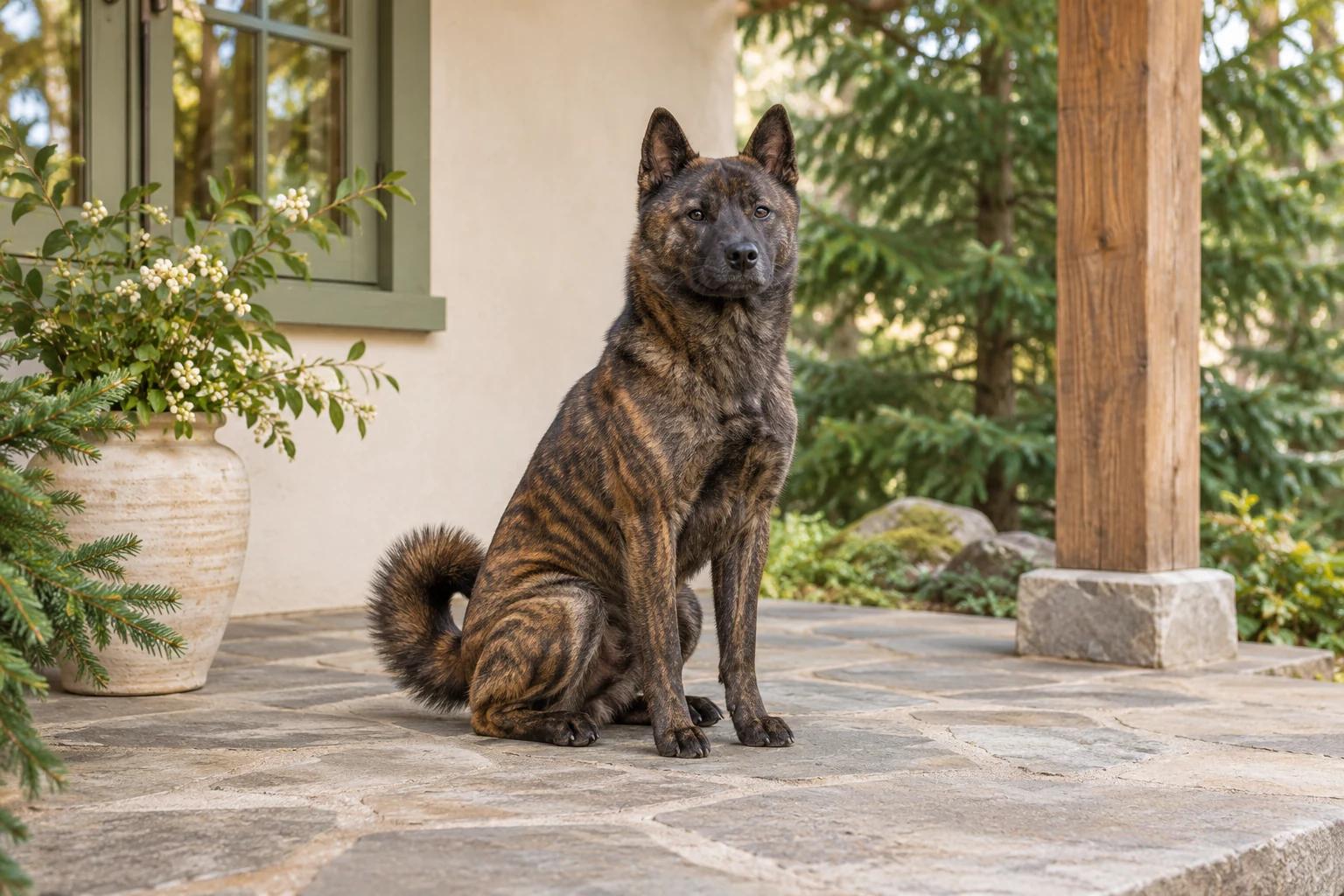
A Kai Ken’s puppy coat may develop brindling as it grows. An age-labeled photo record can document the individual without promising its eventual pattern.
Start with what you can see today
A Kai Ken puppy that looks solid-colored in an early photograph has not necessarily shown its final pattern. The FCI Kai standard lists black brindle, red brindle and brindle, and notes that a solid puppy color may become brindle as the dog grows. The possibility is explicit; a guaranteed result is not.
Make a small, useful photo record
Keep photographs of the same puppy in date order, with its age attached to each image. Include a clear side view when possible, and use similar lighting so that a darker room does not become confused with a darker coat. Record what is visible in the picture rather than naming an expected adult shade.
This gives the owner something a gallery of unrelated puppies and adults cannot: a record of that individual. If a breeder shares examples from earlier dogs, label them separately so they remain comparisons rather than the current puppy’s history.
Leave room for an unknown outcome
The standard does not give an exact age when adult brindling must appear, or a formula that converts an early photograph into a final pattern. A useful record can therefore end with an observation rather than a prediction.
When sharing a puppy update, distinguish new visible striping from an expectation about what will happen next. Neither the current pattern nor a forecast establishes ancestry, health or temperament, and the developmental note should not become a sales guarantee.
Sources behind this article
Article source checked: October 20, 2026. Source checked 2026-10-20
Keep reading
Kai Ken vs Kishu Ken: Choosing Your Everyday Companion
Read article →