Hokkaido Temperament: Devotion, Alertness, and Space
Explore Hokkaido temperament through company, introductions, outdoor interests, and household planning, with practical questions for prospective owners.
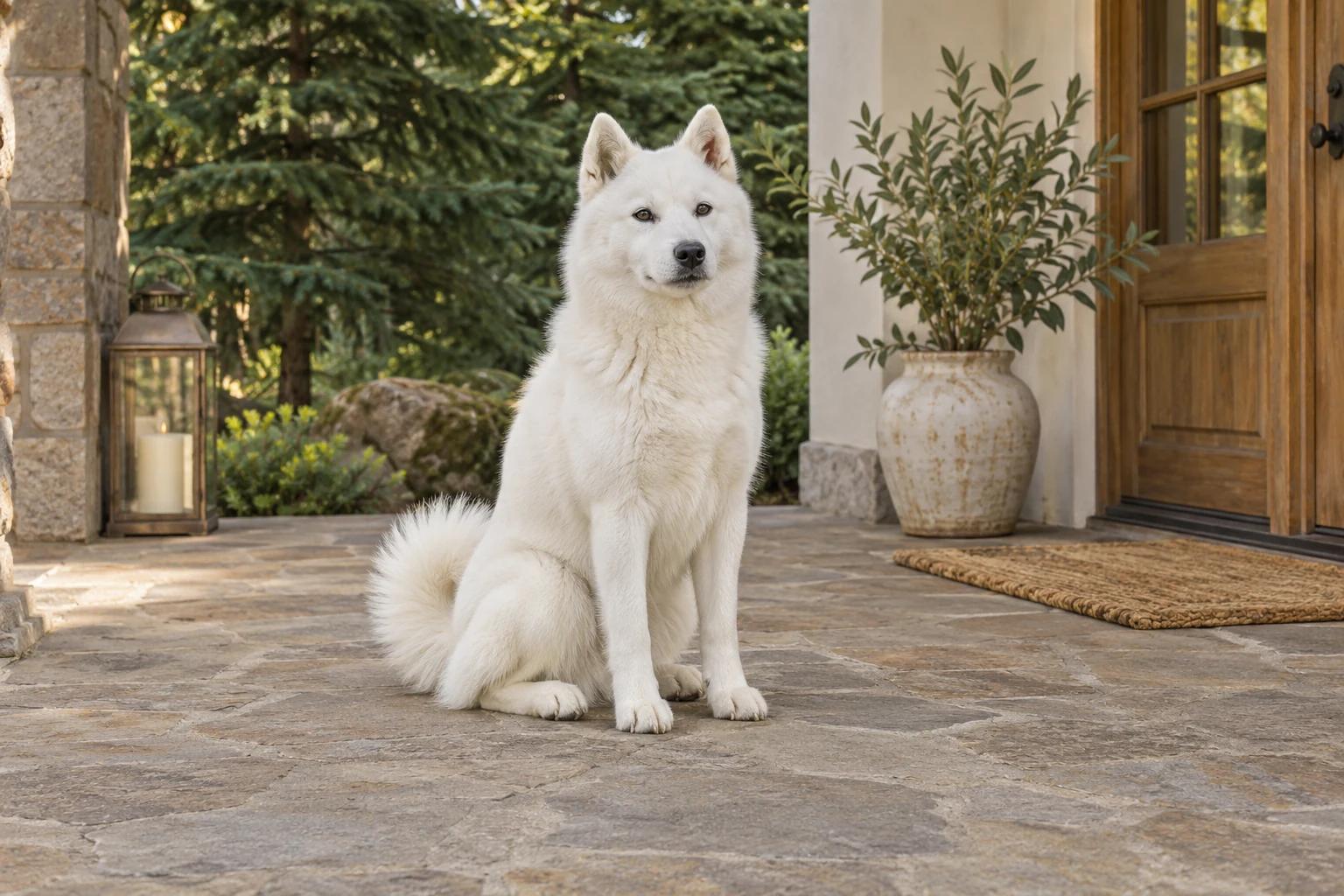
Hokkaido temperament brings together qualities that need to be understood together: attachment to familiar people, alertness, and an independent approach to the world. A dog can enjoy being involved in your day without welcoming every stranger's attention. It can learn readily without finding every task you suggest equally interesting. Those distinctions matter more than deciding whether the breed is simply friendly or stubborn.
The Hokkaido profile offers the broader ownership picture. To explore temperament, start with everyday situations and ask what the particular dog does in them.
Hokkaido temperament: closeness is not automatic compliance
The Hokkaido Association of North America describes strong attachment to owners alongside intelligence and independence. For a prospective household, that is a reason to consider both the pleasure of shared time and the responsibility of teaching useful routines.
Ask what company looks like with the dog you are meeting. Does it stay in the same room, follow household activity, or repeatedly invite interaction? What happens when the caregiver sits down to work? These details reveal more than being told the dog is loyal.
Also describe your own preferences honestly. Some people enjoy a dog who takes a close interest in their movements; others expect long quiet stretches with little interaction. Neither preference should be hidden because the breed's appearance is appealing. The aim is a workable daily relationship, not proving that you can accommodate any temperament.
Give unfamiliar people a clear role
The British Association of Hokkaido Ken notes that Hokkaido can be reserved with unfamiliar people and advises allowing the dog to initiate contact. Apply that background by organizing introductions rather than asking the dog to improvise around enthusiastic visitors.
Before a guest arrives, explain the current arrangement. Tell them where to enter, where to sit, and that they should follow your guidance about interaction. A visitor who believes every dog wants an immediate greeting may need clearer instructions than “be sensible.”
Think about the room as well. Is the dog's resting place beside the entrance? Will people repeatedly pass close by? Could you meet in a less cramped setting? These are household planning questions, not a complete behavior programme. If introductions are difficult, ask a qualified reward-based professional to help assess the arrangement.
Ask about other animals without assuming compatibility
BAHK identifies hunting interest as an important consideration and advises secure lead use outside suitable enclosed spaces. That context deserves practical attention if your household includes other animals or your usual walks pass places with wildlife.
Ask for the actual dog's history around the species and situations relevant to you. “Lives with another pet” is only a beginning. Ask how the arrangement is managed, whether the animals share space, and what supervision is used. A past encounter should not be treated as a universal permission slip for future contact.
During planning, identify doors, gates, and care routines that affect separation and supervision. If the proposed arrangement depends on everyone remembering an unwritten rule, write it down and discuss it. A breeder, rescue, trainer, or veterinary professional may help you identify whether the household plan is realistic before you commit.
A thoughtful dog needs an understandable day
The breed profile gives mental engagement a substantial place in Hokkaido ownership. Instead of interpreting that as a demand for constant novelty, think about activities you could share consistently: an appropriate class, familiar learning games, or purposeful practice of everyday skills.
Ask caregivers what the dog currently finds engaging. A person may describe enjoyment of a particular task, but you still need to learn how that task was introduced and what it requires. Do not assume that a breed reputation supplies experience the individual dog has never had.
Consider how the activity would fit your week. A class across town may sound exciting but be impractical on a regular working evening. A manageable routine you can maintain is more useful than an ambitious programme that happens twice and disappears. Your plan should include quiet time too, not only a list of things to accomplish.
Watchfulness makes the surroundings worth examining
The live profile identifies a watchful tendency. When assessing Hokkaido characteristics for your home, look at what the dog would regularly see and hear. A busy path outside a low window presents a different daily scene from a quiet room away from the entrance.
Ask the current caregiver about delivery sounds, passing people, and other predictable events. Request examples of what the dog does and how the household responds. Avoid reducing those observations to a numerical noise ranking; circumstances and individual patterns are more useful for planning.
If you already own a Hokkaido, record specific events when something becomes difficult. Include where the dog was, what changed, and what happened afterward. This helps a professional understand the situation without relying on a label such as protective that may mean different things to different people.
Keep temperament separate from discomfort
Not every difficult moment expresses a lasting Hokkaido personality trait. A sudden change in willingness to move, participate, or accept familiar care should not be dismissed as independence. Consult your veterinarian about changes that may involve discomfort or health.
For recurring behavior concerns, tell the professional what you observed rather than what you think the dog intended. “Moved away when the harness appeared” is a more useful starting description than “decided to be awkward.” It leaves room to investigate the circumstances instead of selecting a cause in advance.
The same principle helps during a prospective-owner visit. Ask about the dog's normal routine and any relevant recent changes. Do not attempt to provoke a response to reveal its true character. You are gathering information, not conducting an improvised temperament test.
Choose on the basis of daily compatibility
Understanding Hokkaido behavior means considering several settings: quiet company, unfamiliar visitors, outdoor distractions, and routine care. You do not need perfect certainty before deciding, but you do need honest answers about the situations that matter in your home.
For the breed's naming background, the separate Hokkaido history article explains the historical milestone. For choosing a companion, use the breed quiz to organize your preferences, then discuss the actual dog with people who know it. Devotion is meaningful, but it is not a substitute for a workable household plan.
FAQ
Does a devoted Hokkaido welcome every visitor?
A Hokkaido's attachment to familiar people does not mean it welcomes every visitor. Attachment to familiar people and comfort with strangers are different questions. Allow introductions to follow the dog's experience, explain the arrangement to guests, and seek professional help if greetings are difficult.
Can temperament descriptions establish compatibility with other pets?
A Hokkaido temperament description cannot establish compatibility with other pets. Ask about the individual dog's history and the practical management of introductions and shared space. Hunting interest deserves careful consideration. Do not assume that one calm encounter proves future compatibility.
Is reluctance always a sign of independence?
Reluctance in a Hokkaido should not automatically be dismissed as independence. Describe the situation and look at what changed. Sudden differences in movement, participation, or familiar handling should be discussed with a veterinarian rather than dismissed as a personality trait.
Sources behind this article
- Hokkaido Association of North America: About Hokkaido ↗
- British Association of Hokkaido Ken: Temperament ↗
Article source checked: November 16, 2026. Source checked 2026-11-16
Keep reading

Airedale Terrier Temperament: What Everyday Life Can Feel Like
Read article →