Hanoverian Hound vs Plott Hound: Choosing a Companion
Compare Hanoverian Hound and Plott Hound build, everyday engagement, introductions, and practical questions for a prospective owner.
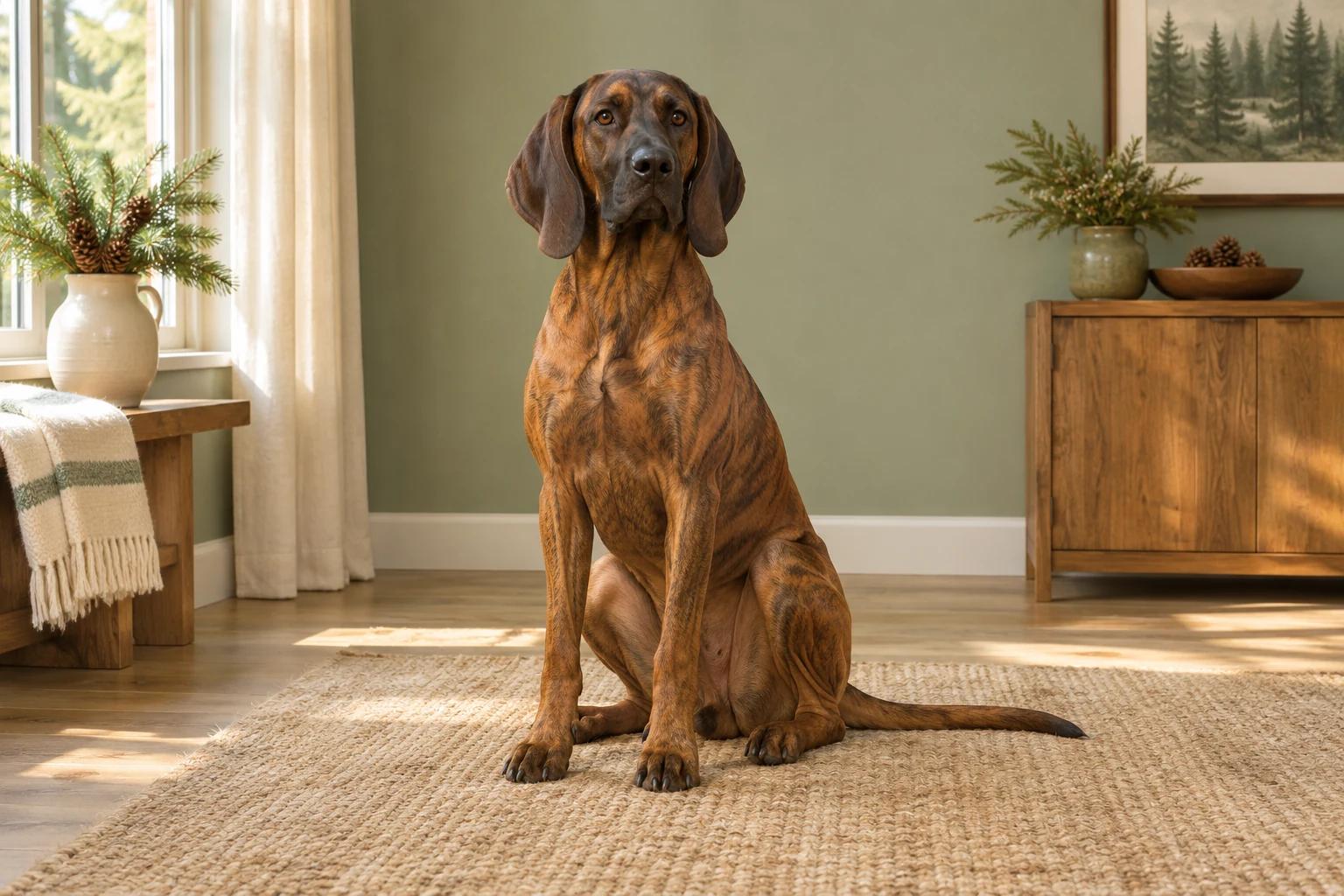
Hanoverian Hound vs Plott Hound is a comparison between two distinct scenthounds, not two interchangeable versions of a brindle dog. A useful decision starts with their different outlines and the individuals' actual routines. It then moves beyond appearance to ask what kind of involvement you want: how you spend time outdoors, how visitors enter your home, and what you expect a dog to do while nothing exciting is happening.
Read the Hanoverian Scenthound profile and Plott Hound profile alongside this practical comparison.
Hanoverian Hound vs Plott Hound: start with shape
The UKC Hanoverian standard describes a powerful dog with a body longer than its height. The UKC Plott standard describes a moderate hound whose outline is square or slightly longer than tall. Those descriptions help explain why a similar coat pattern need not mean similar proportions.
For a household, the useful difference between Hanoverian Hound and Plott Hound is not a contest over which looks stronger. It is a reason to measure the individual dog before choosing travel equipment, a bed, or a harness. A product sized for one hound should not be assumed to fit the other.
If you are comparing adult dogs, ask to see each standing naturally and moving in an ordinary setting. Photographs taken close to the face can distort the impression of size. Let actual measurements inform the practical choices and leave appearance preferences in their own category.
Compare attention in the same kinds of situations
The Hanoverian standard emphasizes calm assurance and concentration. The Plott standard emphasizes activity, alertness, and learning. That does not establish a universal ranking for household calmness, nor does it tell you which individual will find your street easier to navigate.
When considering Plott Hound vs Hanoverian Hound companions, gather examples from comparable moments. Ask each caregiver about a familiar walk, an unfamiliar visitor, and the period after an outing ends. If one description concerns a quiet adult at home and the other an adolescent at a busy event, you are not comparing equivalent evidence.
Write down what you would like the dog to do in those situations. “Live comfortably with my routine” is too vague. “Rest nearby while I work after our morning outing” gives the caregiver something concrete to discuss. Their answer may reveal a fit, a training project, or an expectation that needs changing.
Visitors: find out what greeting really means
A dog may approach a familiar person readily and behave differently when someone arrives carrying equipment or wearing unfamiliar clothing. Ask who each dog already knows, what new introductions look like, and whether the caregiver can describe a recent example.
Do not force the comparison through a staged friendliness test. A dog choosing not to approach a stranger immediately has still provided useful information. Notice whether the setup allows room to move away and whether the caregiver respects the dog's preference.
For your own home, think about the arrival pattern. A household with scheduled visitors has different management options from a busy entrance with frequent unexpected deliveries. Decide where the dog could rest while you answer the door. Choose between Hanoverian Hound or Plott Hound individuals using observed experience, rather than assuming one breed label removes the need for a plan.
Put outdoor life on a calendar
Both profiles describe substantial activity commitments. The useful next step is not to invent a universal mileage requirement but to examine the week you can consistently provide. Include the ordinary workday, the day you travel, and the evening when the weather changes your preferred route.
List the person responsible for each outing and identify what they can realistically manage. Someone who enjoys a weekend country walk may not enjoy the daily repetition of an urban route. Discuss that distinction before bringing home either dog, because enthusiasm for a breed photograph is not a substitute for enthusiasm for its routine.
Ask the current caregiver what forms of engagement the dog already knows. A familiar activity may be easier to continue during a transition than a completely new schedule. If your plans differ, discuss what support or instruction you would need instead of assuming every scenthound arrives ready for every scent-related activity.
Compare cleanup and handling, not just coat length
Both dogs have relatively short coats. The site profiles place Hanoverian shedding in the middle of the reference scale and Plott shedding lower, so the Hanoverian is the one for which to allow more cleanup in your initial plan. Do not turn that comparison into a promise about the amount of hair an individual will leave on your furniture. Ask what its current household actually does and, if possible, watch a grooming demonstration.
The demonstration can answer several practical questions at once. Does the dog stand comfortably for brushing? Where does the caregiver work? How is equipment introduced? Which parts require more patience? These details reveal a routine that the next household will need to understand.
Include transport and backup care in the comparison. Who would take the dog to an appointment if you were unavailable? Can that person manage the existing lead and loading routine? Physical handling and learned skills belong together; neither a compact outline nor a responsive reputation guarantees an easy handover.
Ask about the individual's history without filling gaps
For either breed, separate what has been observed from what someone hopes will be true. If a dog has never lived in a flat, “probably fine in a flat” is a prediction. If it has lived there successfully, ask about the circumstances, including outdoor access, time alone, and neighboring noise.
A useful comparison sheet has a column for evidence and another for unanswered questions. Leave an unanswered item blank instead of using a breed stereotype to complete it. You may discover that one adult has a documented routine close to yours while the other would involve more unknowns.
The article on the Hanoverian's specialist background addresses its traditional role separately. For this ownership decision, focus on the next home and the particular dog. The breed quiz can organize your priorities, but the most useful final conversation is with the dog's caregiver about your actual week.
FAQ
Are Hanoverian Hounds and Plott Hounds the same breed?
No. Hanoverian Hounds and Plott Hounds are distinct breeds with separate standards. A shared scenthound identity or similar coloration does not make their proportions, experience, or individual behavior interchangeable.
Which is calmer indoors?
Neither Hanoverian Hounds nor Plott Hounds can be guaranteed calmer indoors as a group. Ask about each individual's normal indoor routine, age, settling skills, and activity schedule rather than converting breed-standard adjectives into a guaranteed ranking.
What should decide between the two?
Choose between a Hanoverian Hound and a Plott Hound using your everyday routine, the dog's observed experience, and practical handling requirements. Specific evidence about a prospective companion is more useful than choosing solely by coat pattern, a single meeting, or a broad temperament label.
Sources behind this article
Article source checked: November 16, 2026. Source checked 2026-11-16
Keep reading

Affenpinscher vs Brussels Griffon: Everyday Differences
Read article →