Hanoverian Hound Size: Build, Fit, and Home Planning
Plan for Hanoverian Hound size using body proportions, individual measurements, equipment fit, transport, and practical handling.
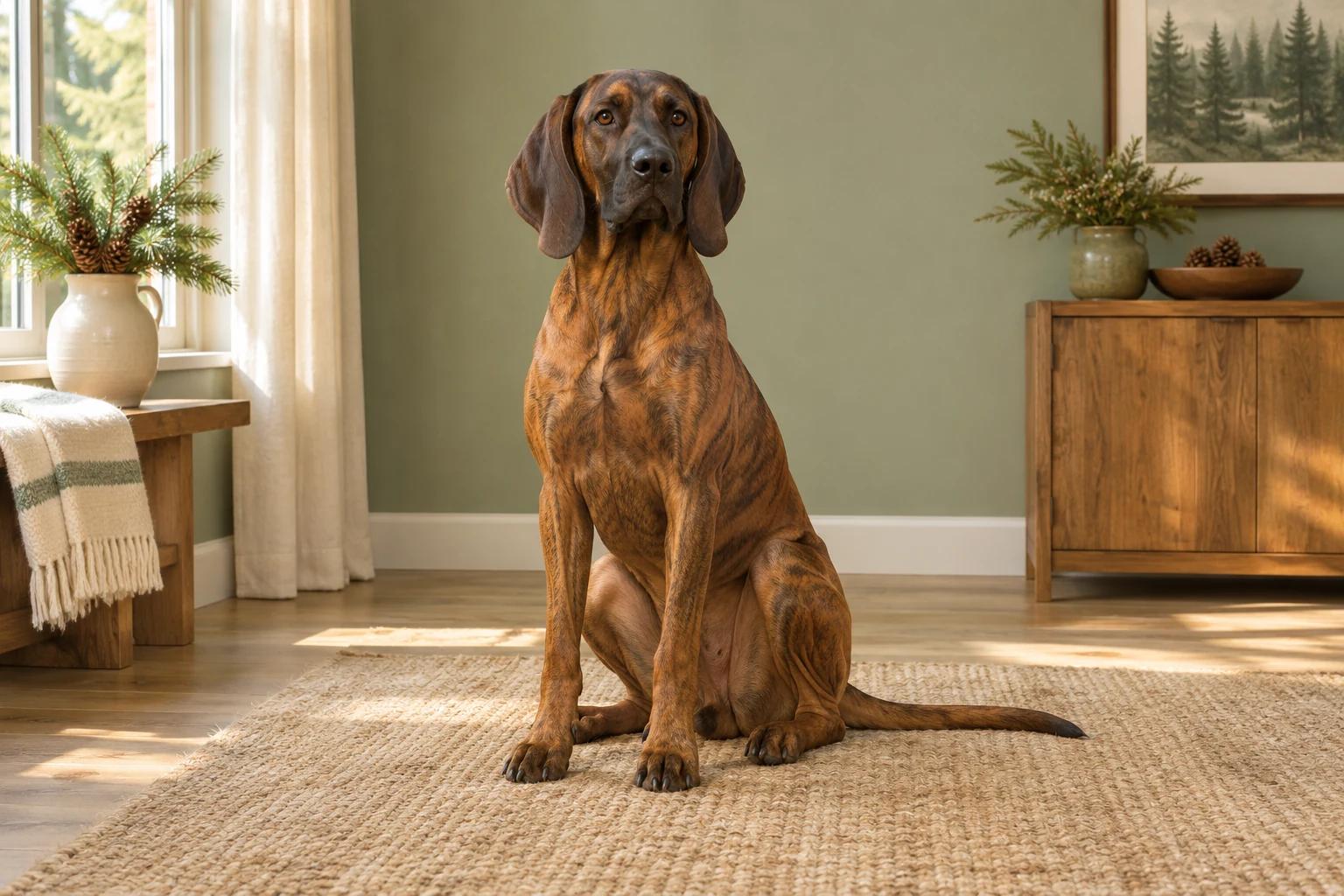
Hanoverian Hound size is easy to misunderstand if you look only at shoulder height. This is a substantial, strongly built scenthound, and the practical question is how its whole body fits your daily arrangements. The length of a resting space, the opening into a vehicle, and the fit of equipment can matter more than a broad category such as medium-sized.
Use the Hanoverian Scenthound profile for an introduction, then plan around measured dimensions of the individual dog rather than ordering everything from a breed label.
Hanoverian Hound size: read the outline first
My Breed Atlas currently lists adult Hanoverian Scenthounds at 55–88 pounds and 19–21 inches tall. The weight references are 55–77 pounds for females and 66–88 for males. Those ranges describe the breed collectively, not an exact forecast for a puppy or a target for an individual dog.
The UKC standard describes a powerful build and a body longer than tall. The FCI standard likewise emphasizes substance and proportions. The practical takeaway is straightforward: shoulder height does not describe the entire space the dog occupies.
A side-on photograph can help you understand the outline, but it cannot replace a tape measure. Camera angle, posture, and the absence of a scale reference all change the impression. If a seller supplies only a close-up portrait, ask for the actual measurements relevant to the item you are choosing.
Avoid judging the dog's condition by whether it looks more imposing than another Hanoverian. Breed structure and individual body condition are different questions. Discuss the latter with a veterinarian rather than treating a heavier appearance as an improvement.
Height: know which measurement you need
Hanoverian Hound height in a breed description refers to the withers, the shoulder area. Equipment instructions may ask for something else, including a measurement that accommodates the head in a natural standing position. Read the instructions before measuring so that the number answers the intended question.
Make a simple measurement card for the dog. Include the date, what was measured, and how. A note saying only “height” may be ambiguous when another household member later orders a travel product. A note naming the measurement method and product is much more useful.
If your dog is young, expect the card to need updating. Recheck fit rather than assuming that an item remains suitable because it was comfortable when purchased. An adjustable buckle is helpful only if someone remembers to assess the adjustment.
Weight: separate load limits from feeding decisions
Hanoverian Hound weight matters when checking a product's load rating or planning how to assist the dog. Obtain a current measurement from an appropriate scale and use it with the maker's guidance. Do not substitute a guessed weight based on the dog's height or a photograph.
Weight alone cannot choose a harness. A product may be rated for the load but have straps positioned poorly for the individual's shape. Conversely, an item that appears to fit still needs to meet any relevant load requirements. Fit and capacity are separate checks.
Nor should a breed weight description become a target to reach by feeding more. Ask a veterinarian about the dog's individual condition and development. Keep those care decisions separate from the shopping task, where the aim is simply to match appropriate equipment to the dog as it is now.
Work outward from the resting space
The Hanoverian's elongated outline makes usable length worth checking carefully. Look at the inner sleeping surface of a bed, not just the outer dimensions. Thick raised edges can consume a surprisingly large part of the advertised footprint.
Observe the dog in different resting positions if you already live together. A tightly curled posture is not the only one to accommodate. Mark the proposed bed area on the floor and open nearby doors. Check whether the location still works when someone carries laundry or moves a chair.
Also consider where a second resting place could go. This is not about filling the house with equipment. It is about having a workable alternative when the main cover is being washed, the room is busy, or the usual location is temporarily unavailable.
Transport begins at the doorway
A roomy car is not enough if the loading route is awkward. Follow the path from the resting area to the vehicle and notice narrow turns, slippery surfaces, and places where you need both hands. Decide where the lead is attached and where bags will wait.
Inside the vehicle, assess the space with the intended restraint arrangement in place. A sloping back window or wheel arch may reduce usable room even when the total cargo area sounds generous. Read the travel product's fitting instructions and ask its maker about uncertainty rather than improvising an attachment.
Discuss assistance with a qualified professional if your dog needs help getting in or out. The goal is a repeatable arrangement, not proving that one person can lift a substantial dog on a good day. Consider what happens when the regular handler is injured, tired, or away.
Buying for a puppy without pretending to know the future
“How big do Hanoverian Hounds get?” is often really a question about how much equipment to buy now. Information about mature relatives can help with planning, but it does not provide exact adult measurements for a particular puppy. Ask the breeder what is known and what remains an estimate.
Choose adjustable or replaceable items where appropriate, and keep receipts and sizing instructions together. A temporary item that fits properly can be preferable to a final-size purchase that is awkward now. Plan for reassessment instead of trying to eliminate every future purchase.
Make a short list of the decisions that can wait. Decorative bedding, an extra coat, or a second travel accessory may not need to be ordered before the dog arrives. Prioritize the essentials whose fit and purpose you understand, then learn from daily use.
Space is only one part of the match
Enough floor area does not automatically create a suitable routine. A Hanoverian needs more consideration than a place to put its bed, so connect the physical plan with who handles outings, care, and companionship. Walk through a normal weekday and name the person responsible for each part.
The breed quiz can help organize these broader preferences. Read the specialist-background article for a different aspect of the breed, without treating its traditional job as a substitute for assessing the individual dog's home arrangements.
FAQ
Is a Hanoverian Hound's height enough to choose a crate?
A Hanoverian Hound's shoulder height alone is not enough to choose a crate. Follow the crate manufacturer's measuring instructions and account for the individual dog's full dimensions. A breed shoulder-height description does not establish usable interior length or natural standing room.
Should I choose a harness by weight alone?
No. Check both the maker's load guidance and its measurement-based fit instructions. A Hanoverian's body shape must fit the harness as well as falling within any stated capacity.
How big is an adult Hanoverian Hound?
My Breed Atlas lists adult Hanoverian Hounds at 55–88 pounds and 19–21 inches tall, with female weight references of 55–77 pounds and male references of 66–88 pounds. These ranges are not exact forecasts for puppies. Use the actual dog’s measurements for fitted equipment.
Sources behind this article
Article source checked: November 16, 2026. Source checked 2026-11-16
Keep reading

Airedale Terrier Temperament: What Everyday Life Can Feel Like
Read article →