Hamiltonstovare Temperament: Life Beyond First Impressions
Understand Hamiltonstovare temperament through everyday routines, scent distractions, greetings, and questions to ask about an individual dog.
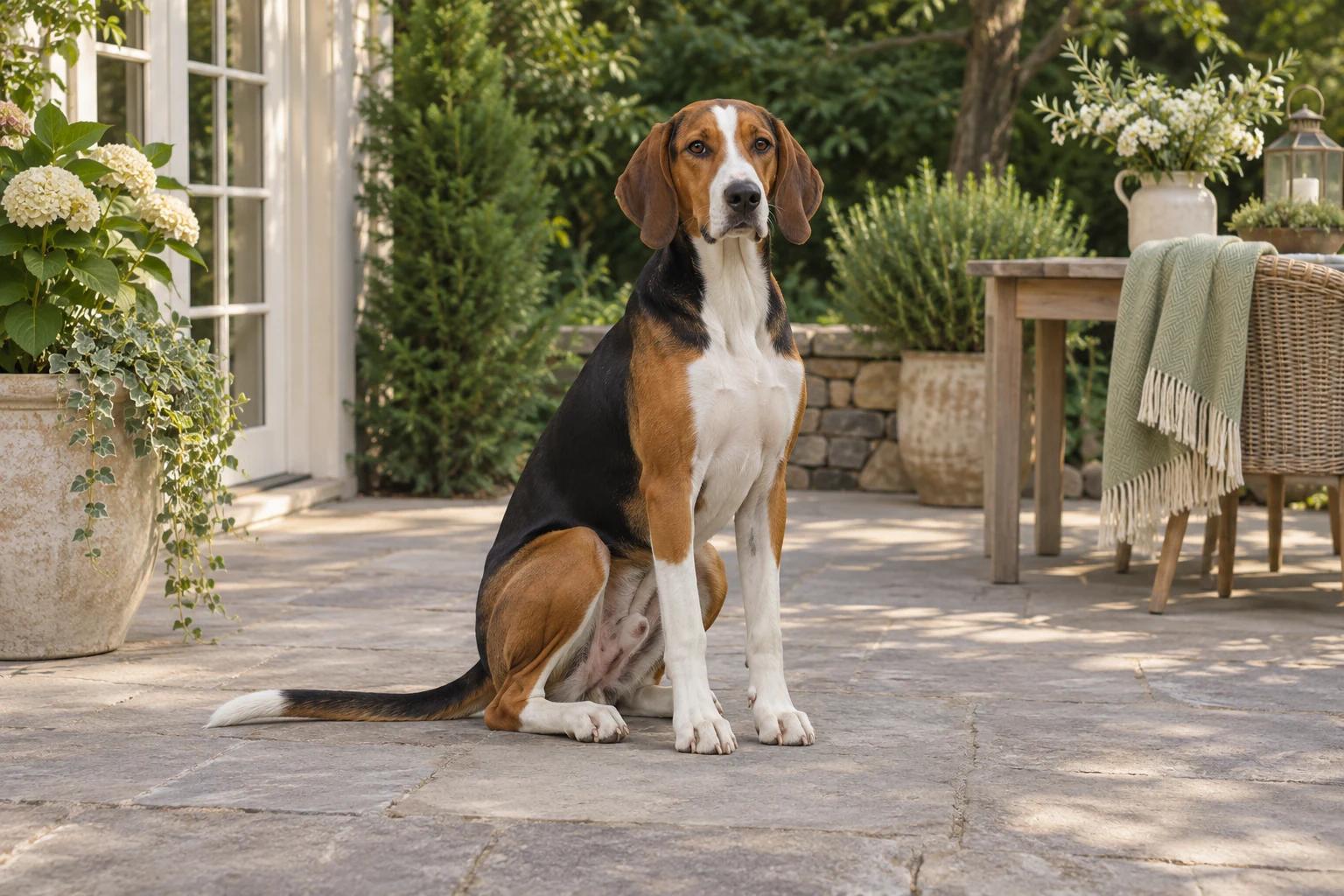
Hamiltonstovare temperament combines a friendly public description with the concentration of a scenthound. That combination is easier to understand in everyday scenes than in a string of flattering adjectives. A dog may enjoy your company indoors and become absorbed in a smell outside. Neither moment cancels the other. The useful ownership question is whether you enjoy making room for both.
The Hamiltonstovare profile introduces the breed. Here, the focus is how to observe a prospective companion, organize ordinary routines, and ask questions that reveal more than a cheerful first greeting.
Hamiltonstovare temperament: friendliness and focus
The UKC standard describes an even, friendly temperament alongside focus and drive. The Swedish Kennel Club similarly emphasizes friendliness and trainability. These descriptions are starting points for observation, not promises that every individual will behave identically.
Imagine meeting a Hamiltonstovare in a quiet room, then accompanying its caregiver on a familiar walk. Indoors, note how the dog approaches and whether it chooses to remain nearby. Outside, notice what captures its attention and how the handler reconnects. Ask about both settings rather than deciding that the more convenient one reveals the dog's entire personality.
A useful question is, “What does this dog find difficult?” An answer involving a particular place or event is more informative than “nothing.” You want someone who can explain the dog's ordinary behavior, not simply repeat the breed's best-known qualities.
Read attention, not intentions
Hamiltonstovare behavior can be misread when a person expects constant eye contact. A nose directed toward the ground does not tell you whether a dog likes its handler. Nor does an enthusiastic return after sniffing prove that every future distraction will be manageable.
For a prospective owner, the practical exercise is to watch the transition between activities. Can the caregiver move from standing still to walking without a long argument? What happens when the route changes? Does the dog recognize familiar cues in that setting? These questions expose the skills already learned and the work you may inherit.
Ask the handler to demonstrate an ordinary routine rather than testing the dog yourself. An unfamiliar person repeatedly calling its name adds confusion without producing useful evidence. Take notes afterward: location, distraction, cue, and response. That small amount of detail makes a later conversation with a trainer much more productive.
Company without a compulsory greeting
A friendly breed description can tempt visitors to crowd a dog. Instead, let a meeting include the option to approach and move away. Ask the caregiver how the dog prefers to greet people and whether excitement changes when several visitors arrive together.
For home planning, choose a resting location outside the busiest route between the kitchen and front door. This is not a prediction that a Hamiltonstovare will dislike visitors. It is a way to avoid making every arrival the dog's responsibility. A household can welcome guests while leaving the dog somewhere familiar to settle.
Consider your own preferences too. Do you want a dog beside you while you work, or do you expect uninterrupted solitude during the day? Ask about observed time alone rather than assuming that friendliness predicts either independence or distress. Request examples from the dog's current routine and discuss any concerns with an appropriate professional.
Give the day a recognizable shape
The Hamiltonstovare personality described in breed references does not arrive with a household timetable. Decide which parts of your day are dependable: the first outing, a period of shared activity, meals, and a quieter evening. Then identify where someone else would need to help.
A practical planning sheet can have three columns: what happens, who handles it, and what changes on a busy day. For example, an evening outing belongs to a named person rather than to whoever notices the dog first. A backup arrangement should be workable before an unexpectedly long workday, not invented during one.
Include learning among the activities, without turning every interaction into a test. You might practice waiting while the lead is attached or moving to a resting place while you prepare a meal. Choose skills that remove friction from your actual life. An impressive trick is optional; an understandable doorway routine has daily value.
Look at the whole household
When assessing Hamiltonstovare characteristics, separate different relationships. Familiarity with one dog does not describe every introduction, and friendliness toward a visitor does not explain behavior around another species. Ask what the dog has actually experienced, where those interactions happened, and how they were managed.
Draw your home's routes before introducing another animal. Where can each rest? Can you separate spaces without blocking access to water or an exit? Who supervises the first stages? These are practical preparation questions, not a verdict on the breed.
Sound deserves its own conversation. Ask what prompts vocalizing in the individual dog and how the current household handles it. A recording from an ordinary period may be more useful than a label such as quiet or noisy. Avoid assuming that a silent meeting represents the busiest part of the dog's day.
Choose on the ordinary Tuesday
A weekend visit can make almost any ownership plan look easy. Picture a wet Tuesday instead: the morning is rushed, someone is late, and the usual walking route is unavailable. Would you still welcome the dog's company and provide its routine, or would the breed's interests feel like an unwelcome interruption?
Our article on the Hamiltonstovare's specific working description explains a separate aspect of its background. Do not turn that background into a shortcut for judging household compatibility. Use the breed quiz to organize your preferences, then compare them with evidence about the dog in front of you.
FAQ
Is a Hamiltonstovare easy to live with?
A Hamiltonstovare's fit depends on the individual dog and the household's routines. Friendly breed descriptions are encouraging, but ask about walks, settling, visitors, and time alone before deciding what daily life would involve.
Does friendliness mean reliable recall?
A Hamiltonstovare's friendliness does not establish reliable recall. Social interest and returning when called are different matters. Discuss the dog's demonstrated skills and outdoor management with its caregiver rather than using a warm greeting as evidence of recall.
What should I ask about a Hamiltonstovare's personality?
When asking about a Hamiltonstovare's personality, request examples of a normal day, a difficult situation, and a successful transition between activities. Those examples provide more actionable information than broad labels such as affectionate, stubborn, or easy.
Sources behind this article
Article source checked: November 16, 2026. Source checked 2026-11-16
Keep reading
Hamiltonstovare Size: Measuring Space and Equipment
Read article →