German longhaired pointer vs german shorthaired pointer
Compare these pointing breeds through coat care, ordinary routines, outdoor access, and questions about the individual dog.
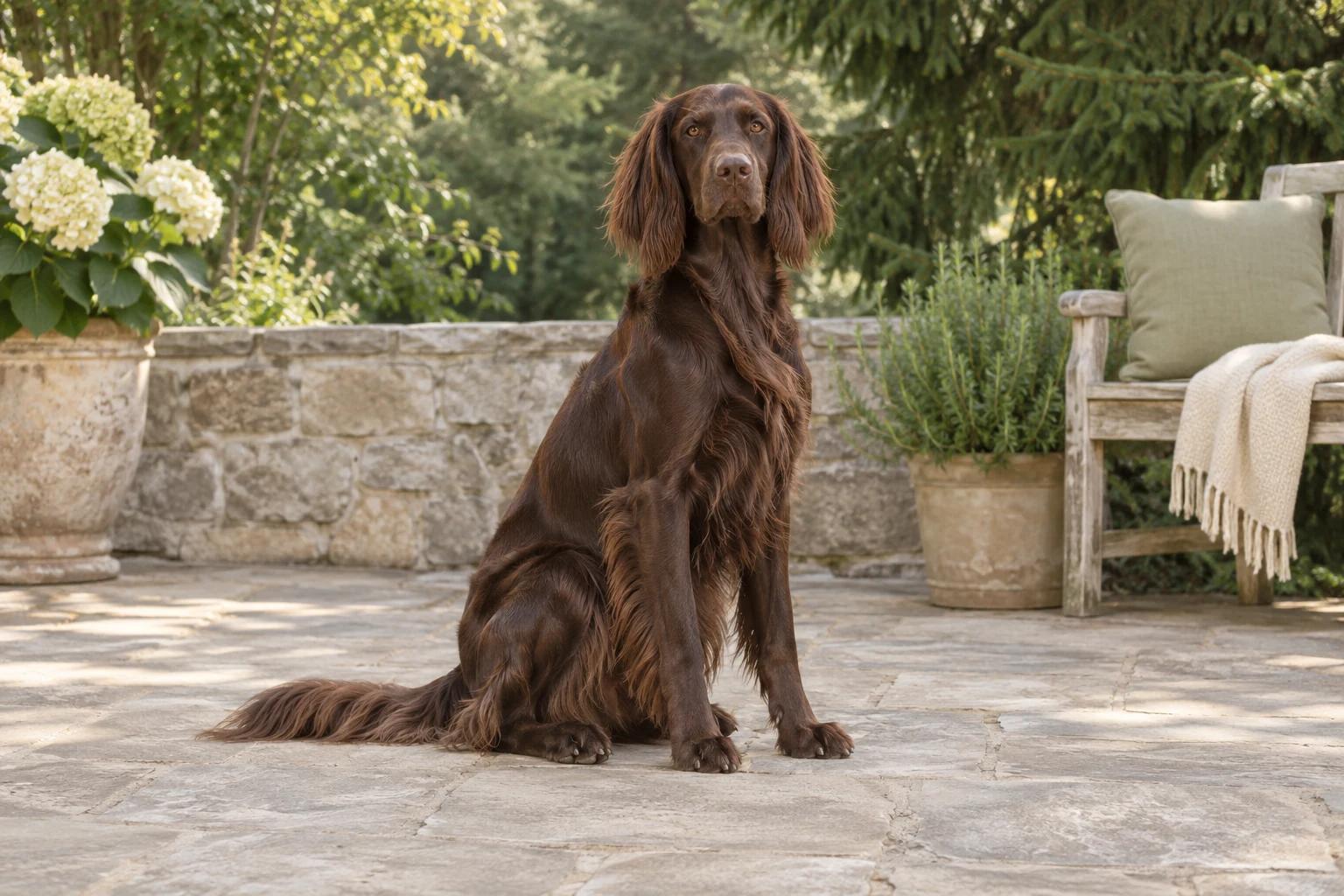
Explore the
German Longhaired Pointer
Background, care, and everyday considerations.
View breed profile →German longhaired pointer vs german shorthaired pointer is not simply a choice between two haircuts. Both names belong to working pointing breeds, and the useful comparison concerns the life you can share with a particular dog. Coat differences are visible immediately. Differences in an individual's experience, routine, and needs take more careful questions.
German longhaired pointer vs german shorthaired pointer
The FCI Longhaired Pointer standard describes work across field, forest, and water. The UKC Shorthaired Pointer standard likewise emphasizes versatility and retrieving on land and water. Neither is usefully understood as an ornamental alternative to the other.
That shared background changes the first question. Instead of asking which breed will require less of you, ask what your ordinary week can reliably provide. Where can you go outdoors? Who enjoys training? What happens when the person who normally handles outings is away? If these answers are vague, choosing a shorter coat does not fill the gap.
Read the German Longhaired Pointer profile and German Shorthaired Pointer profile alongside this comparison. Keep a separate page for the individual dogs you meet rather than combining every observation into a single breed stereotype.
The visible difference deserves a practical trial
The clearest difference between german longhaired pointer and german shorthaired pointer is coat presentation. UKC describes the Shorthaired Pointer's coat as short and dense. The Longhaired Pointer carries a longer coat with furnishings. That distinction helps you identify what to ask about, but it does not tell you exactly how long care will take in your home.
Ask an owner to show you the tools they actually use and the places where they keep them. Watch an ordinary post-walk cleanup rather than a presentation prepared for visitors. Can you comfortably make room for that routine near your entrance? Would your preferred walking routes produce mud, wet towels, or plant debris that you need to handle before the dog reaches the sofa?
The Longhaired Pointer coat-length article covers the distribution of hair in more detail. Do not assume “longhaired” means identical length everywhere, or “shorthaired” means household hair disappears. Choose based on a routine you are willing to perform, not an attractive photograph of a freshly prepared dog.
Compare the dogs at the same point in their day
For a useful german shorthaired pointer vs german longhaired pointer comparison, meet dogs in comparable circumstances rather than ranking two isolated greetings. An adult resting after an outing and a young dog waiting for one are not demonstrating a meaningful breed difference.
When arranging visits, explain what you want to understand: a normal departure, a walk with the usual handler, and the return home. Ask whether the day is typical. You are looking for a realistic picture, not a performance or a deliberate challenge.
Record concrete observations. “Waited while the lead was attached” is useful. “Perfectly behaved” hides what happened. Note the handler's preparation too. A dog that moves smoothly through a routine may have benefited from substantial teaching that you would need to continue.
Choose the activity you can repeat
Consider three versions of your week: an enjoyable weekend, a normal working week, and a disrupted week. A breed choice should survive all three. You might love the idea of long countryside outings but have only crowded pavements available before work. Identify the actual locations and arrangements that bridge that difference.
For either pointer, discuss suitable activities with the person placing the dog and with a veterinarian where individual exercise suitability is involved. A training professional can help you develop skills for your environment. Do not translate working heritage into a prescribed distance, running schedule, or permission to ignore the dog's condition.
Think in terms of shared tasks as well as movement. You could ask a trainer about teaching a reliable hand target, a controlled retrieve, or a calm start to a walk. Choose something you genuinely want to practice. An ambitious list of activities you never enjoy is less useful than a modest plan you will maintain.
Your home has more than one kind of space
If you are deciding between a german longhaired pointer or german shorthaired pointer, assess the car, entrance, resting area, and routes outside. Floor area alone misses important constraints. A generous living room does not solve awkward transport or a long gap in daytime care.
Measure equipment for the individual. Ask about the dog's current routine with visitors, other household animals, and time alone. Existing experience can be especially informative when considering an adult. Do not infer compatibility from a friendly greeting or from the fact that two dogs share a sporting background.
Try writing a handover note for a substitute carer before you choose. Include permitted walking locations, lead arrangements, food instructions supplied by the current carer, and useful cues. The gaps in that note reveal questions to ask. If no suitable substitute is available, solve that problem before assuming the breed choice will make it unnecessary.
Questions that can change your decision
Ask breeders or rescues what makes this particular placement appropriate. What does the dog enjoy? Which situations need more work? What routines are already established? What would a new owner find surprising after the first month?
If considering a puppy, ask about the adults and the support available as the youngster develops. If considering an adult, request practical demonstrations and current records. Be willing to prefer an individual whose known routine suits you over the breed you initially favored online.
Use the breed quiz to identify priorities, then test those priorities against real arrangements. The most useful result is not declaring one pointer universally better. It is being able to explain why your household can meet the needs of the dog you are considering.
FAQ
Is the Longhaired Pointer just a long-coated Shorthaired Pointer?
No. They are distinct breeds with their own standards and histories. Their shared pointing-dog background supports some common ownership questions, but coat length is not the only information needed to understand either dog.
Which breed is easier to groom?
Compare the actual care tasks rather than assuming a universal time saving. The coats differ, but outdoor conditions, individual coat, handling experience, and your household routine all affect the work involved. Ask to see ordinary maintenance demonstrated.
Which should a first-time owner choose?
Choose only after assessing the individual dog, available guidance, and the routine you can sustain. Prior ownership is not the only consideration. A clear support plan and realistic expectations are more useful than a blanket beginner label.
Sources behind this article
Article source checked: November 15, 2026. Source checked 2026-11-15
Keep reading

Affenpinscher vs Brussels Griffon: Everyday Differences
Read article →