Longhaired does not mean long hair everywhere on a German Longhaired Pointer
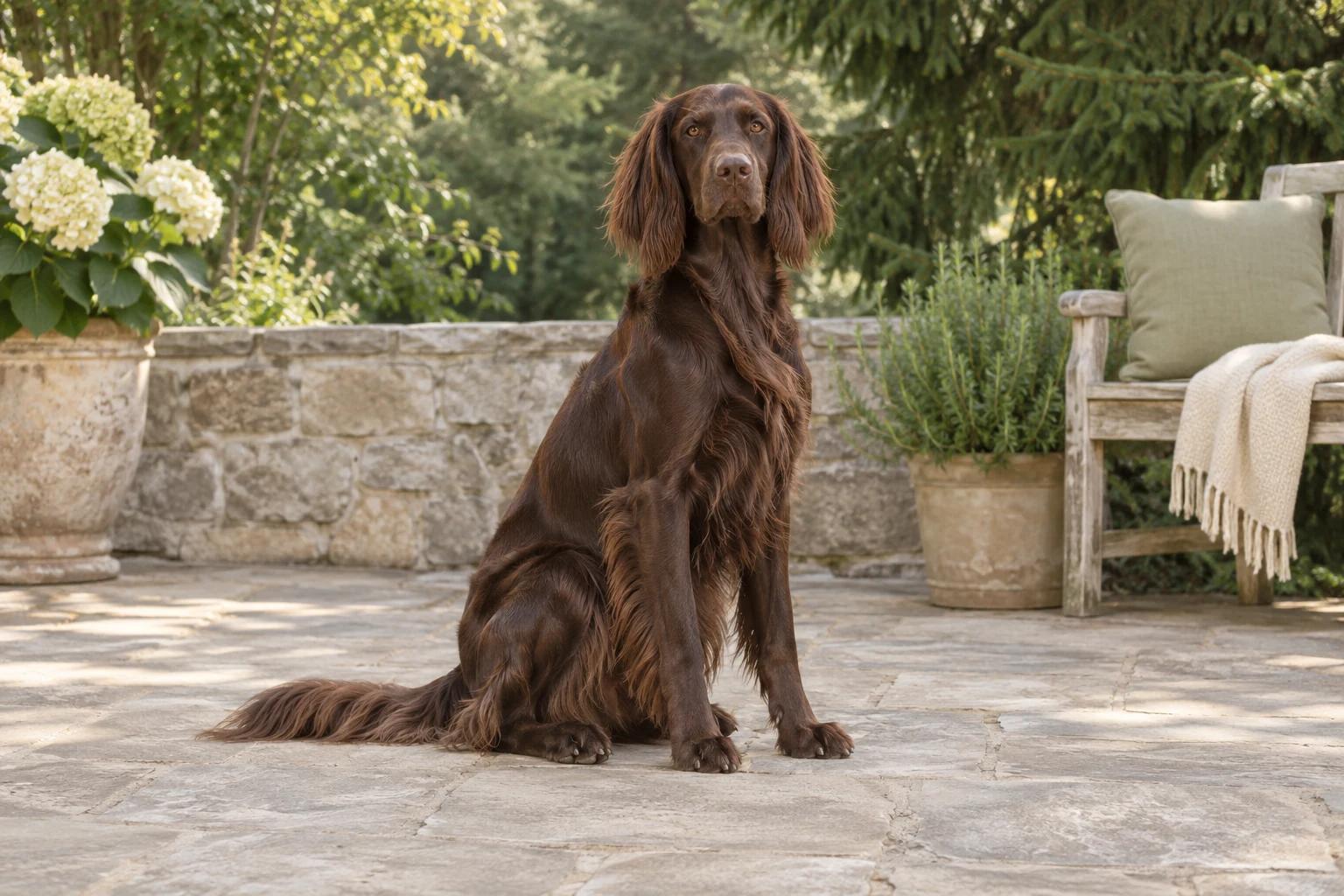
The German Longhaired Pointer’s standard describes different lengths across the body, with restrained feathering and no topknot. Its coat is a map, not one length.
Explore the
German Longhaired Pointer
Background, care, and everyday considerations.
View breed profile →Start with the body coat
The German Longhaired Pointer’s FCI standard specifies roughly 3–5 centimeters of close-fitting hair on the back and sides. It allows more length under the neck, on the chest and on the belly. The name Longhaired therefore does not describe a coat that should grow equally long everywhere.
The body hair may be smooth or slightly wavy; it is described as dense, with a good undercoat. Those details concern texture and layers as well as length; a silhouette alone cannot show the entire description.
Feathering has boundaries
The standard describes feathering on the ears and backs of the legs, plus a plume reaching the tail tip. Below the hocks, the hair becomes noticeably shorter. It also rejects excessive feathering and does not want a topknot.
This creates a specific outline: furnished ears, legs and tail alongside a closer body covering. More hair is not automatically a closer match to the description. A particularly lavish coat photograph can obscure that distinction.
Use the map in a grooming conversation
Ask a groomer familiar with the breed to identify the different coat areas and explain routine care for the individual dog. Bring the standard as a reference for the intended outline, not as a set of instructions for cutting to a measurement.
The useful takeaway is the distribution of coat. The breed name alone does not specify a grooming technique, maintenance interval or amount of shedding.
Sources behind this article
Article source checked: October 20, 2026. Source checked 2026-10-20
Keep reading
German longhaired pointer temperament: everyday life
Read article →