French spaniel size: plan for an adult dog
Use French Spaniel size references to plan beds, equipment, travel, and puppy purchases, then measure your individual dog.
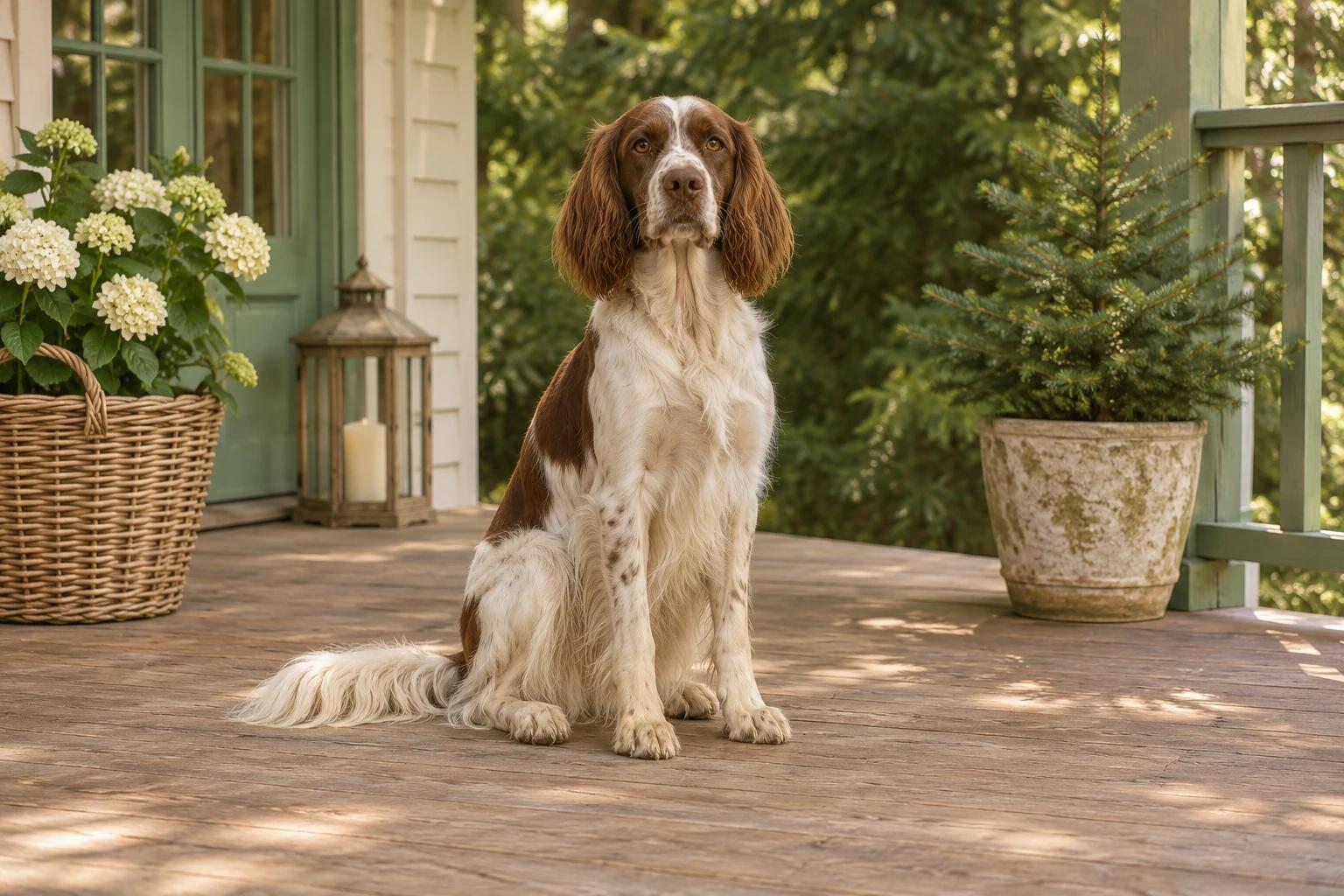
French spaniel size is best understood by looking at a standing adult, not by picturing a small lap spaniel. This is a substantial sporting dog, and its everyday footprint includes a bed, travel arrangement, equipment, and space to move comfortably. Breed measurements help you start planning, but the most useful numbers for purchases will be the measurements of your own dog.
French spaniel size: the practical reference
The My Breed Atlas French Spaniel profile lists an adult height of 21.5–24 inches and weight of 50–60 pounds. Treat these as planning references rather than exact predictions for a puppy or targets for an adult. Your veterinarian should assess the appropriate weight and body condition of the individual.
The FCI standard describes a medium-sized, muscular pointing dog with a body slightly longer than its height. The AKC introduction also emphasizes its pointing and retrieving work. That background helps explain why the word spaniel should not be your only guide to how much dog will share your home.
If you have met only small companion dogs, arrange to see an adult French Spaniel standing and moving. Watch the space it uses to turn beside furniture and lie down. This gives you a more practical sense of size than comparing two tightly cropped portraits online.
Know what each measurement is for
French spaniel height refers to the shoulder measurement at the withers, not the top of the head. It describes stature but does not tell you how long a bed should be or which harness setting will work. Equipment manufacturers may request several different dimensions, so follow the instructions for the actual item.
French spaniel weight is another useful reference, but pounds do not describe shape. A weight category on a package is a starting filter, not a complete fitting assessment. If the product requires chest circumference or body length, collect those measurements instead of estimating them from the breed range.
Ask a professional to demonstrate measuring if your dog is uneasy or the landmarks are unclear. Make the task brief and avoid forcing the dog into a pose for the sake of a number. Record the date and method, especially for a growing dog whose previous measurements may no longer be useful.
Walk the route from the door to the resting area
A French Spaniel returning from an outing needs more than an empty patch of floor for a bed. Map the route from your entrance to the place where the dog will rest. Where can it pause while you remove equipment? Can you reach both sides without blocking the doorway? The practical test is whether dog, handler, and supplies fit at the same time.
The breed's feathered legs and tail also belong in that layout. Leave space to inspect the longer hair rather than squeezing the dog between bags and furniture. You might keep a towel and coat-care kit beside a washable entrance mat, with enough room to turn around. This is a suggested household arrangement, not a fixed space requirement for every French Spaniel.
From there, check the resting spot with the dog lying in its usual position. Imagine another person entering with groceries while the dog stretches out. If everyone must step over the dog, move the resting area rather than choosing a smaller bed simply to preserve the furniture arrangement. Compare the bed's usable sleeping surface with its external dimensions, and leave the dog a clear route out. A sensible layout gives both people and dog room to move without making every return home a rearrangement exercise.
Check the whole travel setup
For a vehicle, the question is not simply whether a dog weighing around the breed range can get inside. Consider the fitted restraint or travel enclosure, the opening used to enter, the space needed to turn appropriately, and how you will reach the dog when parked. Get guidance on suitable equipment and follow its instructions.
Measure the actual vehicle space before ordering a large item. Account for sloping doors, wheel arches, and anything else that reduces usable room. A rectangular product's listed dimensions may not tell you whether its door opens fully once it is installed.
If travel involves a provider, verify its current requirements directly and ask your veterinarian about individual suitability. A general breed-size guide cannot promise eligibility for a carrier, route, or service. Make arrangements around the actual dog and journey rather than assuming that medium-sized is a universal travel category.
Think about handling on an inconvenient day
A French Spaniel's size also belongs in your backup plan. If the dog cannot manage its usual movement or you cannot manage the usual routine, who can help? Discuss appropriate handling and transport options with your veterinary team before an urgent situation forces you to improvise.
Look at your home's transitions: the route to the door, the vehicle access, and any narrow areas where assistance would be awkward. You do not need to predict every future problem. You do need to know whether the only plan is that one person will somehow carry the dog whenever necessary.
Make sure substitute carers understand the actual equipment and setup. A note saying medium dog is less useful than showing where the fitted travel equipment is stored and how it is used. Review those details when you replace equipment or change vehicles.
Ask about growth without demanding certainty
When asking how big do french spaniels get, distinguish an adult reference from a forecast about one puppy. Ask about the parents and other related adults, and request recorded measurements where available. A breeder can discuss family context, but a neat final number should not be treated as a guarantee.
Do not buy every fitted item in its final adult size before the puppy arrives. Ask which purchases can be adjusted or replaced as the dog grows and which need a good fit immediately. Keep enough flexibility in your budget to respond to the real dog instead of making a prediction work at all costs.
Appearance is a separate topic from measurement. Our French Spaniel markings article discusses the breed's coat pattern without making size or character claims from it. Use the breed quiz to consider whether the whole daily commitment fits your household, not just whether you have room for a bed.
FAQ
What size does My Breed Atlas list for an adult French Spaniel?
The profile lists 21.5–24 inches at the shoulder and 50–60 pounds. These are breed references, not exact adult predictions for puppies or personalized weight recommendations.
Is a French Spaniel small enough for any spaniel-sized product?
Product labels are not standardized fitting instructions. Measure the individual dog and follow the manufacturer's requirements, then check that the item works properly when the dog moves.
Can parents' sizes tell me exactly how large a puppy will be?
Parents and other relatives provide useful context, not certainty. Plan for adjustment and replacement of fitted equipment rather than relying on one predicted adult measurement.
Sources behind this article
Article source checked: November 15, 2026. Source checked 2026-11-15
Keep reading
French spaniel temperament: companion and working dog
Read article →