Finnish Spitz temperament: an independent companion
Understand Finnish Spitz temperament through companionship, independence, introductions, activity, and practical questions for meeting adults.
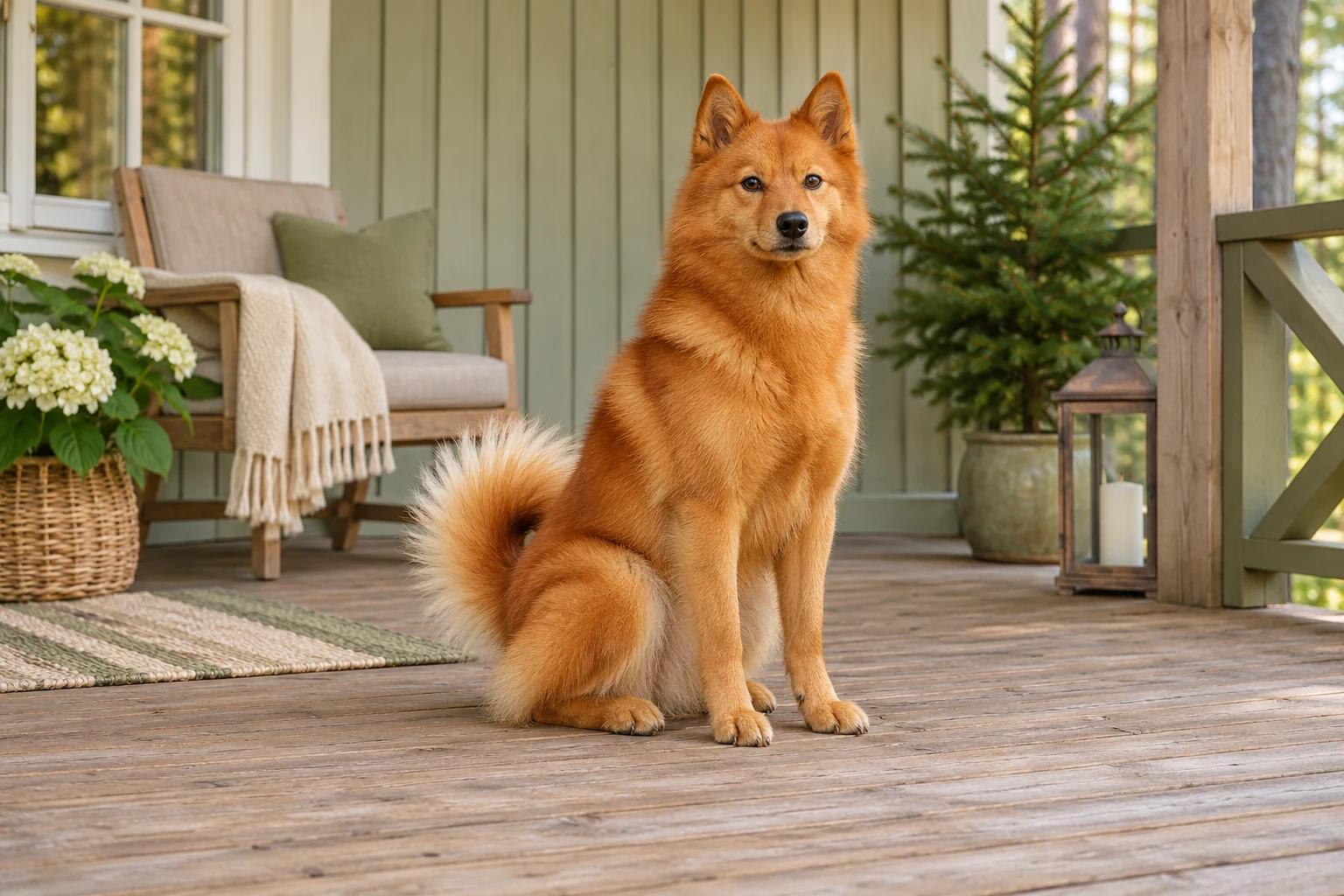
Finnish Spitz temperament is lively, observant, and often less immediately compliant than a prospective owner expects from such an inviting face. This is a dog to get to know through shared activity and clear communication, not a small ornament for a quiet corner. The best match is someone who enjoys an engaged companion without needing every interaction to unfold on command.
The Finnish Spitz profile places activity, mental engagement, and voice prominently in the ownership picture. Temperament adds another question: how will you respond when the dog's interests and your timetable are not aligned?
Finnish Spitz temperament beyond the fox-like face
The FCI standard describes a lively, vigorous, determined dog that may be reserved with strangers. The Finnish Spitz Club of America emphasizes intelligence and independence, recommending patient, interesting practice with praise and rewards rather than a heavy-handed approach.
For an owner, those descriptions point toward cooperation rather than constant repetition. If the dog is investigating something outdoors, repeating a cue louder does not make the surroundings less interesting. It is more useful to ask whether you have practiced the response in that setting and whether you can make the next attempt easier.
Independence is not the absence of a relationship. A dog can value its people while making its own choices about what deserves attention. Decide whether you enjoy working with that sort of partner. Wanting a dog that automatically shadows every movement is a different preference from wanting an attentive companion with opinions.
Meet the adult personality in several settings
A Finnish Spitz personality is easier to understand when you see the dog through a sequence of ordinary events. Ask to observe an arrival, a familiar walk, and time afterward. The change from excitement to rest may tell you more than the first enthusiastic minute.
During the walk, notice where the dog's attention goes and how the caregiver regains it. Ask what has been taught rather than assuming the behavior came with the breed. A polished response may reflect years of practice; an unfinished skill may reflect limited opportunity rather than an unchangeable trait.
At home, look for the practical arrangement around companionship. Does the dog choose a spot nearby, move between rooms, or regularly invite interaction? Ask how that differs when the caregiver is busy. You are trying to picture a weekday, not judge whether the dog performs affection in a way that flatters a visitor.
Write down what surprised you. If you expected a constantly cuddly dog and met one that preferred proximity without much touching, discuss that openly. It is better to clarify your expectations before choosing than to spend the first months trying to reshape a dog's preferred style of contact.
A visitor plan for a dog that may take its time
Reserve with unfamiliar people is among the Finnish Spitz characteristics described by the FCI. Give introductions enough space that the dog does not have to choose between immediate contact and retreat through a crowded doorway. Ask guests to let you manage the arrival.
For a first visit, a seated person and an available escape route can be easier to organize than several people leaning forward at once. Do not require the dog to accept touch just because someone says they are good with dogs. Ask the caregiver how the dog normally approaches new people and follow that information.
If you host frequently, discuss the exact format: quiet dinners, busy gatherings, overnight visitors, or people entering while you are absent. These are different demands. A broad description such as “friendly” cannot answer all of them, and a calm meeting in a familiar garden is not a test of every future situation.
Structure the interesting parts of the day
The breed's high activity tendency means your plans should include outdoor time and opportunities to use attention, not only a place to sleep. Choose activities you actually enjoy. A person who likes exploratory walks and short learning games has a different starting point from someone who sees every outing as an interruption.
Build predictable transitions around those activities. Decide where the lead is clipped, what happens when you return, and how play ends. These small agreements prevent the whole day from becoming a negotiation over the next exciting event. They also give a new dog repeated chances to learn how your home works.
Have a plan for days when work changes unexpectedly. A backup caregiver needs to know the dog's equipment, cues, and usual routes. “Just tire him out” is not a useful handover. Explain what the dog knows, what tends to capture its attention, and which situations the helper should avoid attempting alone.
Keep voice in proportion to the whole personality
Noise matters with a Finnish Spitz, especially around shared walls. It should be part of your decision, but it should not become the only thing you learn about the dog. Ask about resting, handling, food routines, and time apart as carefully as you ask about barking.
If you want the historical explanation, the separate article on barking in the breed's work covers it. For temperament assessment, concentrate on the present household: the actual triggers, the dog's response to familiar guidance, and the arrangements that help it move between activities.
Avoid promises in either direction. An individual dog is not guaranteed to be constantly noisy, nor can a caregiver promise that a different home will be silent. Your task is to understand the evidence and decide whether the remaining uncertainty fits your living situation.
Discuss difficulties in useful language
When asking about Finnish Spitz behavior, request examples rather than labels. “Needs space when someone reaches over the head” gives you something to plan around. “Typical spitz attitude” leaves too much unexplained. Ask when the behavior happens, what the person does, and whether it has changed.
For sudden changes, discomfort, or significant fear, involve a veterinarian and an appropriately qualified behavior professional. Do not dismiss everything as breed independence. Individual history and learning matter, and practical support should address the actual dog.
The breed match quiz can help organize your preferences before a visit. Put honesty ahead of enthusiasm: if you enjoy this dog's energy but need effortless compliance or very low noise, that is a meaningful mismatch to investigate, not a minor detail to ignore.
FAQ
Are Finnish Spitz dogs affectionate or independent?
Those qualities can coexist. The breed club describes an intelligent, independent dog involved with its household. Ask how an individual seeks company and handles everyday requests rather than assuming independence means indifference or affection means constant physical contact.
Is reserve with strangers the same as aggression?
No. Reserve can mean taking time before approaching. Assess observable behavior and allow space during introductions. Fear, threatening behavior, or significant difficulty should be discussed with a qualified professional rather than explained away by a breed label.
What owner temperament suits a Finnish Spitz?
Someone who enjoys an active, observant companion and can teach patiently may appreciate the breed. A realistic tolerance for vocal behavior and a consistent daily routine matter. Meet adults and discuss ordinary challenges before deciding the fit is right for you.
Sources behind this article
Article source checked: November 15, 2026. Source checked 2026-11-15
Keep reading
Finnish Spitz size: adult height, weight, and home fit
Read article →