Finnish Spitz size: adult height, weight, and home fit
Check Finnish Spitz height and weight ranges, understand coat-related scale, and measure for beds, harnesses, crates, and everyday transport.
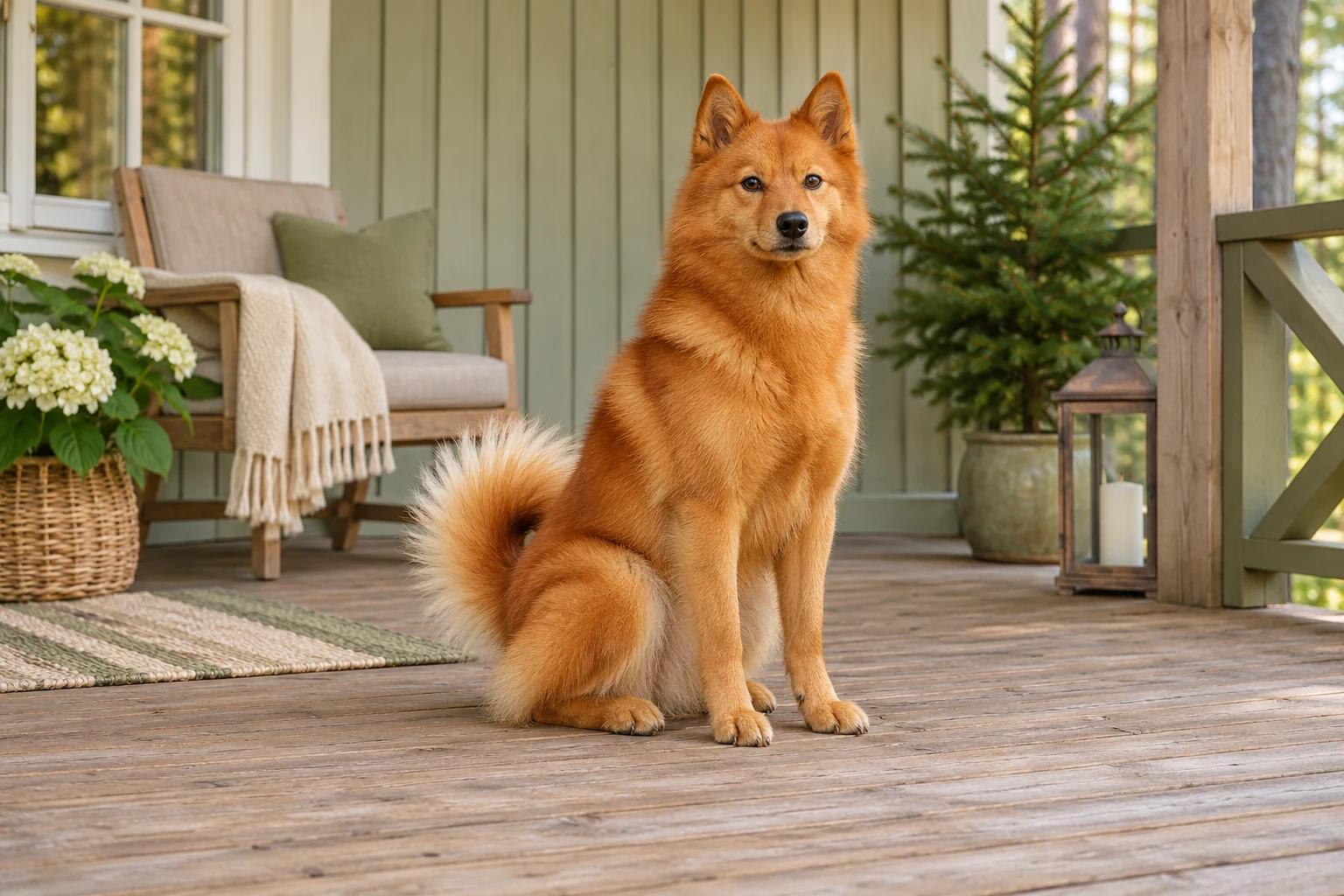
Finnish Spitz size usually places an adult in a manageable-looking package, but the coat, upright ears, and curled tail can make photographs misleading. The useful measurements are shoulder height, body dimensions, and actual weight, not the amount of space the outline seems to occupy. Those details help with equipment and transport; they do not tell you how much activity the dog will need.
The Finnish Spitz profile lists males at 17.5–20 inches and 33–37 pounds, with females at 15.5–18 inches and 22–26 pounds. These are adult reference ranges, not a forecast for every puppy.
Finnish Spitz size: height and weight answer different questions
Finnish Spitz height is measured at the withers, the shoulder region, rather than at the ear tips. The AKC official standard gives the same sex-specific height ranges as the profile. The UKC standard also uses those ranges and describes the breed's square proportions.
For a quick metric reference, the profile heights are approximately 44–51 centimetres for males and 39–46 centimetres for females. Its weight ranges convert to approximately 15–17 kilograms and 10–12 kilograms respectively. These are rounded conversions of the profile figures, not a separate set of breed limits.
Weight and height are not interchangeable. A dog near the upper end of the height range does not automatically belong at the upper end of the weight range. Body condition is an individual veterinary assessment, not an exercise in matching the two ends of a table.
What “square” means in an ordinary room
The AKC standard describes body length from forechest to buttocks as equal to height from withers to ground, while noting that coat can distort the appearance. This is a description of proportions, not an instruction to fit the dog into a square box.
A resting dog needs room to change position, and a moving dog needs room for its head and tail as well as its body. When planning a sleeping place, look at how the individual actually lies down. A tightly curled nap is not the only position the bed should accommodate.
For a new owner, a useful exercise is to mark the proposed bed footprint on the floor with removable tape. Walk around it during normal household activity. Check whether a door catches it or whether the only route through the room forces people to step over the dog. This gives the size figures a practical meaning without pretending to predict a dog's preferred sleeping spot.
Measure for equipment instead of ordering by breed label
Before buying a harness, follow that manufacturer's measurement instructions for the specific design. A label such as medium or suitable for spitz breeds is not a measurement system. The neck and chest may sit differently in two harness styles even when both packages display the same size word.
Measure calmly with a flexible tape and avoid compressing the coat so tightly that you lose track of the body beneath it. Ask a knowledgeable fitter to help if the dog is uncomfortable or you are uncertain where the tape belongs. Recheck fit during use, especially for a growing dog, rather than assuming the original purchase remains correct indefinitely.
For crates or travel equipment, consult the maker's sizing method and the relevant carrier's requirements. Shoulder height alone is insufficient because standing headroom and body length also matter. Do not infer that a Finnish Spitz will fit an airline cabin carrier from its breed weight range; the actual dog, equipment, and current carrier rules determine that question.
How big do Finnish Spitzes get as adults?
The published adult ranges are a useful starting point, but the most informative puppy discussion includes adult relatives and the dog's own growth record. Ask the breeder which measurements are recorded and whether you can see appropriately identified adult dogs from the family.
Avoid formulas that promise an exact adult weight from a single puppy weighing. Growth is not a booking confirmation for a particular size. If a housing rule or transport arrangement has a strict threshold, discuss that uncertainty before committing to a puppy. An adult dog with known measurements may answer a size-dependent question more directly.
Keep growth notes simple: date, weight, and the veterinary context in which it was measured. Do not try to make a young dog fit an online chart by changing food or exercise on your own. Ask your veterinarian about growth, nutrition, and body condition rather than using the breed range as a feeding target.
Coat makes visual comparisons unreliable
A Finnish Spitz weight estimate based on a photograph can be especially misleading when the coat is full. The UKC standard describes a double coat and a more pronounced ruff in males. That can change the apparent outline without giving you a reliable indication of the dog's body condition.
Compare photographs cautiously. Camera angle, distance, posture, and whether a familiar object is in the frame all affect what you think you see. A portrait of the face tells you almost nothing about the room required in a vehicle. Ask for measurements instead of trying to solve scale from a dramatic image.
The same principle applies when comparing males and females. Their height reference ranges overlap, though the listed weight ranges do not; individual build still matters. Choose based on the actual dog and the fit with your household rather than expecting sex alone to settle handling, temperament, or equipment requirements.
A smaller body does not mean a smaller daily commitment
It is possible to arrange enough floor space for a Finnish Spitz while still having an unsuitable daily schedule. The breed profile indicates substantial activity and vocal tendencies. Those responsibilities do not shrink simply because the dog weighs less than a larger working breed.
When assessing a home, separate physical fit from lifestyle fit. Physical fit covers equipment, resting space, doorways, and transport. Lifestyle fit covers outdoor access, time for activity, neighbors, and help during absences. Passing one list does not automatically mean passing the other.
The breed match quiz can help keep those questions together. For a distinct piece of breed context, the Finnish Spitz working-history article explains its vocal role without turning that history into a measurement of household noise.
Bring three measurements and three questions
When planning for an individual dog, obtain its actual shoulder height, body length, and current weight. Then ask how those were measured, whether the dog is still growing, and whether your veterinarian considers its present condition appropriate.
That short conversation is more useful than asking whether the breed is small or medium. Category words vary between products and sources; measurements can be checked. Use them to prepare the home and transport, while leaving personality and activity questions to their own evidence.
FAQ
What is the usual adult Finnish Spitz weight?
The site's adult reference range is 33–37 pounds for males and 22–26 pounds for females. These figures describe the reference population, not a target for every dog. Ask a veterinarian to assess an individual's body condition and any concerning weight change.
Do the pointed ears count toward breed height?
No. Standard height is measured at the withers, near the shoulders, not at the ear tips. Equipment may require other measurements, including overall standing height, so follow the relevant manufacturer's instructions rather than using shoulder height for every purpose.
Can I predict exact adult size from a puppy photo?
No. A photograph does not provide dependable scale or a growth forecast. Discuss adult relatives and recorded growth with the breeder, and ask your veterinarian about development. If an exact size limit is essential, acknowledge the uncertainty before choosing a puppy.
Sources behind this article
Article source checked: November 15, 2026. Source checked 2026-11-15
Keep reading
Finnish Spitz temperament: an independent companion
Read article →