Exotic Shorthair vs Persian: coat care and companionship
Compare Exotic Shorthair and Persian adult weights, combing commitments and everyday companionship without assuming every cat behaves alike.
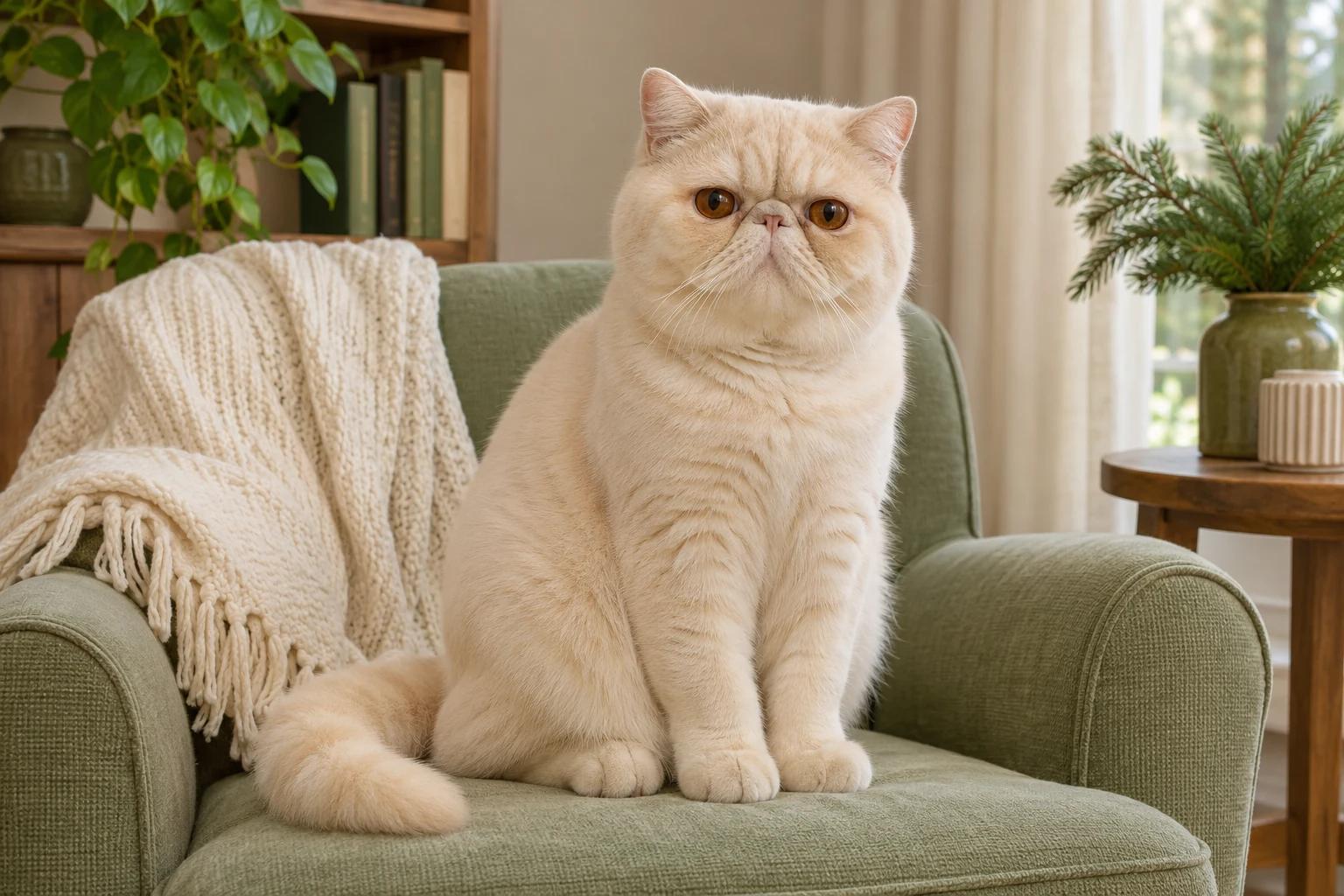
Exotic Shorthair vs Persian is not a straightforward choice between a smaller and a larger cat. Their current adult weight references overlap extensively. A useful comparison looks at what living with each individual would involve, rather than treating the names as opposite ends of a size scale.
Exotic Shorthair vs Persian: the weight difference is limited
The current Exotic Shorthair profile lists adult females at 6–10 pounds and males at 7–14 pounds. The Persian profile lists females at 7–11 pounds and males at 9–14 pounds.
The female intervals overlap at 7–10 pounds. The listed male intervals differ at the lower endpoint, not the upper one: every weight in the Persian male interval also falls inside the Exotic male interval. A twelve-pound male is therefore not unusual within either reference, and the figures do not establish a reliable larger-breed winner.
When comparing Persian vs Exotic Shorthair, keep the sex and age of the actual candidates in view. A female adult and a male kitten do not provide a clean comparison of finished adult size. Nor is the midpoint of a published range a required weight for every cat.
The combined Exotic reference is 6–14 pounds and the Persian reference is 7–14 pounds, but the separate female and male entries give a more informative picture. For a particular adult, use its actual measurements rather than imagining that the breed label supplies them. These figures describe scale; they are not individual feeding targets.
Two different combing commitments
Exotic: shorter does not mean no coat work
CFA's Exotic account describes a dense, plush coat that stands away from the body because of its undercoat. It recommends weekly combing for much of the year, with extra work during seasonal shedding. A steel or Teflon-coated comb is among the tools it identifies.
The practical difference is the type of routine you are taking on, not the disappearance of grooming. The shorter coat still needs attention throughout its depth. Seeing a caregiver work through it is more informative than only stroking the surface and deciding that it feels tidy.
Ask how the routine changes when more loose hair is coming away. The usual weekly session and a seasonal adjustment are not contradictory instructions; they describe different circumstances. An owner choosing the Exotic should be comfortable with both, without assuming that every week of the year will involve identical work.
This coat description neither makes maintenance optional nor guarantees acceptance of handling.
Persian: long hair is an ongoing commitment
CFA's Persian guidance emphasizes regular combing and describes a metal comb with both coarse and fine teeth. The coat itself is long and abundant, with a substantial ruff and a fully furnished tail. Many owners use a professional groomer as part of maintaining it.
For someone drawn to that appearance, the useful question is whether the work appeals as much as the finished result. The comb needs to address the coat, not merely arrange the visible outer hairs for a photograph. Ask to see the ordinary routine on the individual cat rather than only an unusually polished presentation.
Professional help can be part of the plan, but it does not remove the need to understand what happens between appointments. Make that distinction before deciding that a Persian fits your daily life.
The difference between Exotic Shorthair and Persian is especially tangible here: the Persian's long coat asks you to commit to its continuing maintenance, not just to enjoy its appearance after someone else has completed the work.
Company: compare the individual, not a stereotype
What an Exotic's quiet attention can look like
VCA describes the Exotic Shorthair as mellow, inclined to seek familiar people's attention politely and capable of enjoying a lap. It mentions occasional quiet, squeaky vocalizations and continued playfulness in adulthood.
Those descriptions can coexist. An adult that settles with you can still be interested in a game, and an animal that rarely makes a conspicuous sound can still initiate contact. Quietness should not be mistaken for a complete absence of requests.
When meeting an Exotic, look at what the individual chooses rather than trying to demonstrate a predicted lap-cat performance. The useful distinction is between a cat moving into contact and a person arranging the cat there. A reputation for enjoying laps does not tell you what the particular animal wants at that moment.
For someone choosing an Exotic Shorthair or Persian, this gives one concrete ownership question: do you enjoy noticing and responding to understated invitations? Neither a breed name nor a vocal description tells you exactly how that individual will ask.
A Persian's calm routine still includes play
The GCCF Persian account describes a preference for a calm atmosphere and familiar habits, together with gentle handling. It also describes enthusiasm for a toy or teaser and an appreciation of attention without a demand for continuous involvement.
That is not a reason to design an entirely inactive life. It is a reason to offer interaction without making the room permanently hectic. A quiet setting and an available game are compatible choices, rather than competing descriptions of the same breed.
Ask about the actual Persian's favorite activities and what its familiar household sounds like. A caregiver's example of a usual interaction is more useful than simply repeating “placid.” The description should help you imagine daily life, not excuse ignoring the individual.
Avoid turning this account into a claim that every Persian is calmer than every Exotic. Both are being described in broad terms. For two cats you can meet, compare their own responses in comparable circumstances rather than assigning one the role its breed name suggests.
Our cat breed quiz can help frame the wider choice. Appearance also cannot answer medical questions: discuss individual care with a veterinarian. The separate Exotic Shorthair breathing article addresses that topic rather than treating it as a personality trait.
FAQ
Are female Exotic Shorthairs smaller than female Persians?
The current female references overlap at 7–10 pounds: Exotic Shorthair 6–10 and Persian 7–11 pounds.
Does an Exotic's shorter coat remove the combing commitment?
Exotic Shorthairs need regular combing, including attention to seasonal shedding.
Is a fourteen-pound male outside either listed range?
Fourteen pounds is the listed upper endpoint for adult male Exotic Shorthairs and Persians, not an individual target.
Sources behind this article
- CFA Exotic ↗
- CFA Persian ↗
- VCA Exotic Shorthair ↗
- GCCF Persian ↗
- Purina US adult reference — adult-weight reference ↗
- Persian adult-weight reference ↗
Article source checked: November 16, 2026. Source checked 2026-11-16Article source checked: November 18, 2026. Source checked 2026-11-18
Keep reading

Abyssinian vs Somali: Coat, Size and Everyday Company
Read article →