European Shorthair vs American Shorthair: size and daily life
Compare European and American Shorthairs using current adult weights, breed background, physical features and individual preferences for company.
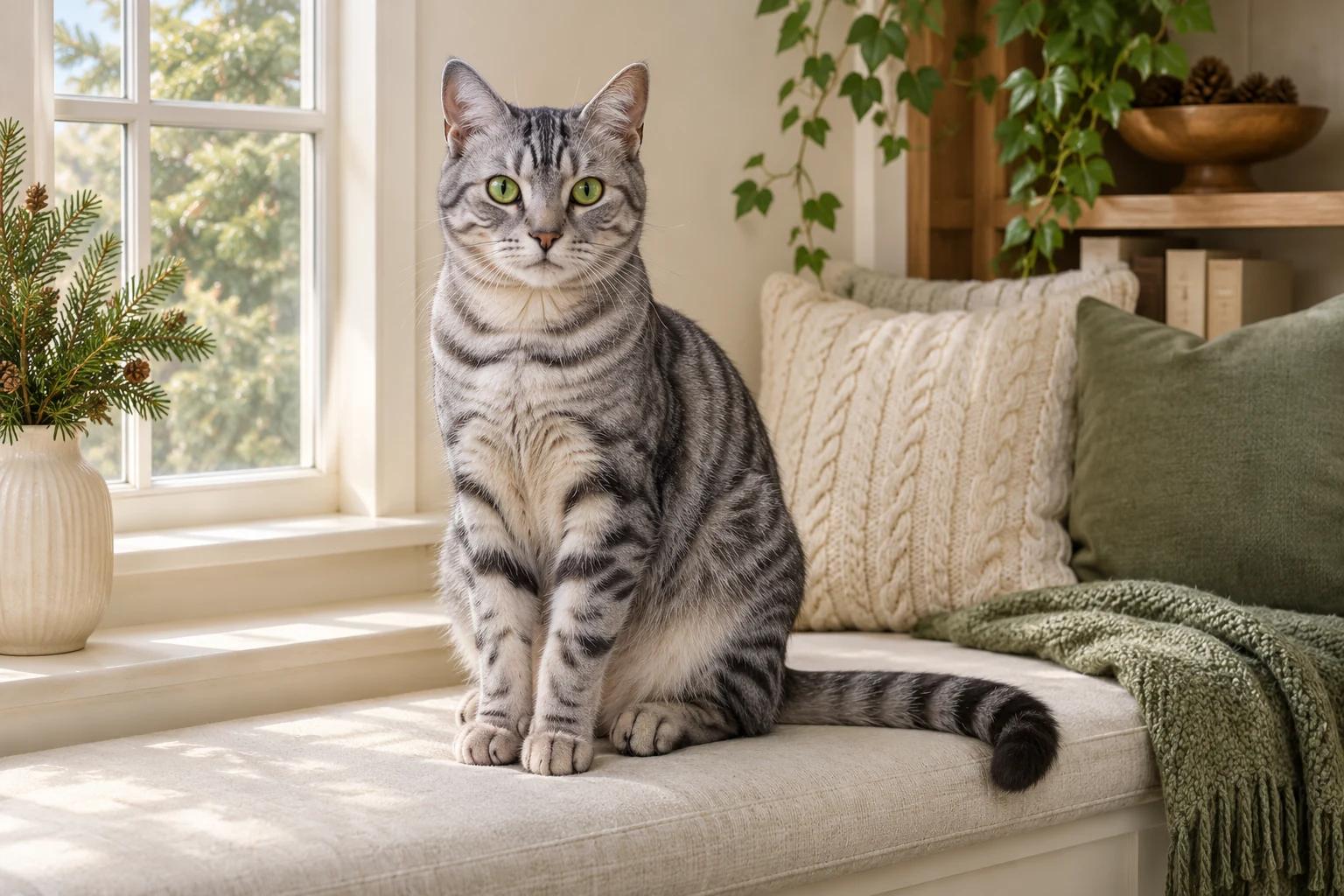
European Shorthair vs American Shorthair is a comparison between two named breeds, not a way to identify every shorthaired cat by continent. For a prospective owner, the useful questions are concrete: how much does the adult weigh, what does its build look like, and what sort of everyday interaction suits the individual? An appealing photograph can begin your interest, but it cannot answer all three.
Start with the current reference figures, then use the breed descriptions below to understand what you are comparing. Neither name is a substitute for meeting the cat.
European Shorthair vs American Shorthair: adult weight overlaps
The current European Shorthair profile lists females at 11–13 pounds and males at 13–15 pounds. The American Shorthair profile lists females at 8–12 pounds and males at 11–15 pounds.
Those figures do not produce two neatly separated size groups. Female ranges overlap at 11–12 pounds, and the entire European male range sits within the American male range. A fourteen-pound male could fall inside either reference. The European female range extends a little higher, but that does not establish that every European female outweighs every American female.
When comparing American Shorthair vs European Shorthair, avoid choosing opposite endpoints to manufacture a dramatic difference. Comparing an eight-pound female with a fifteen-pound male changes both breed and sex at once. It does not isolate a breed difference.
For two adults you can actually meet, their individual measurements matter more than the broadest possible contrast between profiles. For kittens, these are adult references rather than a schedule they must follow. A kitten that is larger today has not thereby supplied a reliable forecast of how the two adults will compare.
The overall ranges are 11–15 pounds for European Shorthair and 8–15 pounds for American Shorthair. Keep the more informative sex-qualified figures alongside those summaries. The identical upper endpoint is a useful reminder that a breed's listed maximum does not describe its entire population or the particular cat you are considering.
A European breed shaped by preservation
The Finnish European Shorthair club's introduction describes systematic breeding beginning in Sweden in the 1940s and the later separation of European, British and Chartreux standards. Its account places much of the European breed's continuing development in the Nordic countries.
The club describes a sturdy, well-proportioned cat and a curious, playful individual that can participate in family activities. These points give the name a more specific meaning than simply “a cat from Europe.” They also explain why an apparently familiar outline can belong to a documented breed with its own history.
For an owner, the interesting question is not whether the cat looks sufficiently unusual. A breed need not have a dramatic feature to be recognizable to its enthusiasts. Look at the individual and what you enjoy about it rather than expecting the name to supply an exotic appearance.
Ask which activities the individual joins rather than expecting identical behavior from every cat.
The American outline and its short coat
The CFA American Shorthair standard describes a powerful, muscular body that is slightly longer than tall, with developed shoulders, chest and hindquarters. Its head is a little longer than wide, with a squared muzzle. The coat is short and thick, with a comparatively firm texture.
This is a useful combination to look for as a whole. The word “short” describes the hair's length, not a fine or insubstantial body. Likewise, the muzzle is only one part of the outline; it should not replace a view of the torso and legs when you are thinking about build.
CFA recommends brushing daily to control shedding; its breed guide describes spring undercoat shedding followed by a lighter fall shed. That is a concrete routine to discuss before choosing one. Ask which brush or mitt is familiar to the individual and how the caregiver carries out the session. Do not assume that a shorthaired breed means no regular coat work, or that the same tool and duration will suit every cat simply because its hair looks similar.
Company does not always mean being carried
VCA's American Shorthair account describes a cat that may follow familiar people but prefer walking independently to being picked up and cradled. It also mentions chirps and squeaking sounds rather than a constantly vocal presence.
For someone choosing a European Shorthair or American Shorthair, this distinction is useful: joining you in another room and wanting to be held are not the same request. When meeting an American Shorthair, notice the interaction that is actually offered. An animal can choose your company without choosing the form of contact you had imagined.
The description is not a comparative claim that a European Shorthair must be more comfortable being carried. Ask about that individual separately. A fair comparison uses the same question for both cats rather than treating one breed account as evidence about the other.
VCA's examples also help distinguish a quiet interaction from an absent one. A short sound, a movement toward you or following along can be part of the cat's usual pattern. Learn that pattern instead of deciding in advance how conspicuous companionship ought to be.
Choose from the real pair, not a ranking
The difference between European Shorthair and American Shorthair becomes more useful when you connect it to actual candidates. If one is an adult you have met and the other is a kitten you have only seen in photographs, recognize that you do not yet have equivalent information. That is a reason to ask better questions, not to fill the gaps with a stronger breed stereotype.
Our cat breed quiz can help you organize preferences. If an adult European Shorthair arrives with gaps in its background, the separate guide to adoption with an incomplete history addresses that situation without guessing missing details.
Frequently asked questions
Is the European Shorthair always heavier?
No. The current adult ranges overlap, including the full European male range.
Does short hair eliminate regular coat care?
No. CFA recommends brushing daily to control shedding; its breed guide describes spring undercoat shedding followed by a lighter fall shed.
Should I compare an adult with a kitten as though both are finished growing?
No. Keep current measurements and adult reference ranges separate.
Sources behind this article
- Finnish European Shorthair club: English introduction ↗
- CFA American Shorthair ↗
- VCA American Shorthair ↗
Article source checked: November 16, 2026. Source checked 2026-11-16
Keep reading

Abyssinian vs Somali: Coat, Size and Everyday Company
Read article →