Eurasier vs Samoyed: Which Routine Fits You?
Compare Eurasier vs Samoyed through sociability, activity, voice, adult size and coat care, then test each choice against your real household routine.
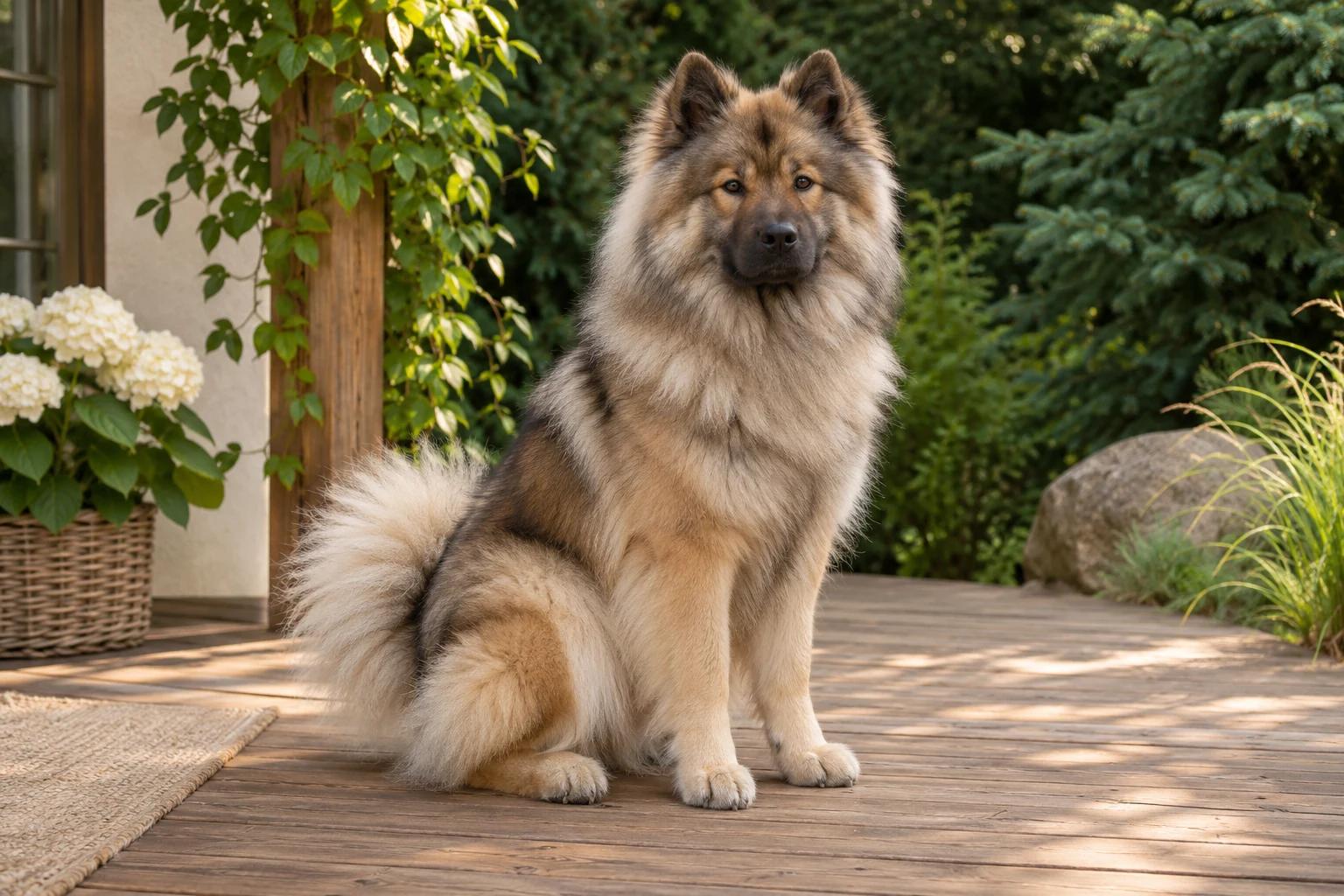
Eurasier vs Samoyed can look like a choice between two variations on a fluffy, upright-eared companion. For daily life, the more useful comparison is between the social and activity patterns your household enjoys. Do you want frequent engagement with unfamiliar people, or are you comfortable giving a dog space during introductions? How much active time can you repeat on a workday? Start there before coat color becomes the deciding factor.
Read the Eurasier profile and Samoyed profile together. Their reference tendencies help organize questions, but choosing a particular dog still requires evidence about that animal's experience and routine.
Eurasier vs Samoyed: a practical first distinction
The FCI Eurasier standard describes a companion with a strong family connection and emphasizes consistent training. The AKC Samoyed standard presents an active working dog with a friendly disposition. These concise descriptions suggest different questions to investigate, not two personalities that every puppy will reproduce exactly.
The site's profiles also distinguish their tendency toward unfamiliar people: the Eurasier is presented as more reserved, while the Samoyed is rated as more outwardly sociable. Think about whether your preferred outings depend on a dog enjoying attention. A busy gathering is optional entertainment, not a test that a reserved dog needs to pass.
For either candidate, ask the caregiver about familiar visitors, new visitors and people encountered outdoors. Those are separate contexts. A greeting at a breeder's home does not establish how a dog will behave in a crowded corridor, at a friend's house or during a long social event.
Test the choice against a Tuesday
Describe an ordinary workday from breakfast to bedtime. Include the morning outing, hours when people are unavailable, afternoon activity and evening downtime. Then write the version of that day when it rains or work finishes late. The second schedule often reveals more than the ideal one.
The profiles place Samoyed activity above Eurasier activity, while both call for mental engagement. If you are considering the Samoyed, identify where the additional active participation fits consistently. If you are leaning toward the Eurasier, do not turn a relative difference into a plan for minimal outings or no training.
Neither choice should depend on an ambitious weekend compensating for an empty weekday. Consider who covers the routine when your normal plan changes. Ask the current caregiver what a typical day actually involves, and distinguish established observations from what they hope a puppy may enjoy later.
Company is a scheduling issue too
Being in the same building is not always the same as being available. If you work at home, plan realistic breaks and a resting area that does not require continuous supervision. Ask about the candidate dog's experience of time apart and alternative caregivers, rather than assuming either breed is automatically comfortable with your absences.
Voice and your tolerance for interruption
The Samoyed profile records a higher vocal tendency than the Eurasier profile. That is a useful prompt to assess your housing and personal preferences, not a guarantee that one dog will be noisy and another silent. Shared walls, video calls and a busy entrance can make sound a practical issue.
Ask what prompts the individual dog to vocalize. Is it arrival, play, anticipation or something outside? What does the caregiver do, and does the dog return to another activity? Specific examples are more informative than asking whether the breed barks a lot and receiving a yes-or-no answer.
Avoid selecting a Eurasier on the assumption that no sound management will be needed. Equally, do not treat the Samoyed's more vocal reference as something you can ignore because you like the breed. Consider whether the household would remain comfortable with that tendency after the novelty of puppyhood has passed.
Adult size overlaps more than the coats suggest
The Eurasier profile lists 19–24 inches and 40–66 pounds. The Samoyed profile lists males at 21–23.5 inches and 45–65 pounds, and females at 19–21 inches and 35–50 pounds. There is considerable overlap. A full coat can alter visual impressions without telling you which dog needs more travel space.
Measure the resting and transport areas you intend to use. Ask about the individual adult's size, or discuss a realistic planning range for a puppy. Do not buy equipment solely from the breed name or assume the lighter end of a reference range describes the puppy you are considering.
When comparing a male of one breed with a female of the other, say so explicitly in your notes. Otherwise, sex-specific ranges can disappear into a misleading claim that one breed is universally bigger. Actual fit matters more than declaring a winner in a size comparison.
Coat appearance and the work behind it
The Samoyed standard describes a stand-off double coat with a neck ruff and white, cream or biscuit coloring. The Eurasier standard describes medium-long guard hair over an undercoat, with a wider range of colors. Those structural differences explain some of the visual contrast without making either coat a shortcut to easy ownership.
Ask to observe a normal care session rather than relying on a freshly groomed photograph. What equipment is used? Where does the dog stand or lie? How is care divided across the week? You need a manageable handling arrangement as well as storage for brushes and towels.
For both breeds, discuss technique with an experienced groomer and learn what the individual dog already accepts. A care demonstration gives you information that an attractive coat photograph cannot provide. Choose based on a routine you can carry out, including the time needed to keep handling comfortable and familiar.
Compare the dogs, not just the labels
A Samoyed vs Eurasier shortlist becomes more useful when you write down unanswered questions. For each dog, record walking habits, visitor experience, care handling, time with other animals and the support available after placement. Ask the same questions so the more familiar breed does not escape careful consideration.
The main difference between Eurasier and Samoyed for your household may be the social pace you enjoy, or it may be one candidate dog's established routine. If you are choosing a Eurasier or Samoyed puppy, ask how the breeder helps match prospective homes and what information will be available as the litter develops.
Use the breed quiz to organize your priorities before making that conversation emotional. For separate background on the Eurasier's name, read what Wolf-Chow means in its history. A historical relationship does not remove the need to assess today's breeds, households and individual dogs separately.
FAQ
Is a Eurasier a smaller Samoyed?
No. Eurasier and Samoyed are distinct breeds, and their listed adult sizes overlap. Compare actual measurements and individual needs rather than treating the Eurasier as a reduced-size version of the Samoyed.
Which breed is more sociable with new people?
The site's references present the Samoyed as more outwardly sociable and the Eurasier as more reserved. These are tendencies, not promises. Ask about the individual dog's experience in the kinds of social settings you use.
Which breed better suits a quieter routine?
A Eurasier may be worth investigating if you prefer a less outwardly social pace, but it still needs company, engagement and outings. Compare actual routines and responses rather than choosing either breed from the word quiet alone.
Sources behind this article
Article source checked: November 15, 2026. Source checked 2026-11-15
Keep reading

Affenpinscher vs Brussels Griffon: Everyday Differences
Read article →