Entlebucher Mountain Dog size: height, weight and fit
Understand Entlebucher Mountain Dog size, official height ranges, weight references and how to choose equipment for a compact, muscular adult.
Explore the
Entlebucher Mountain Dog
Background, care, and everyday considerations.
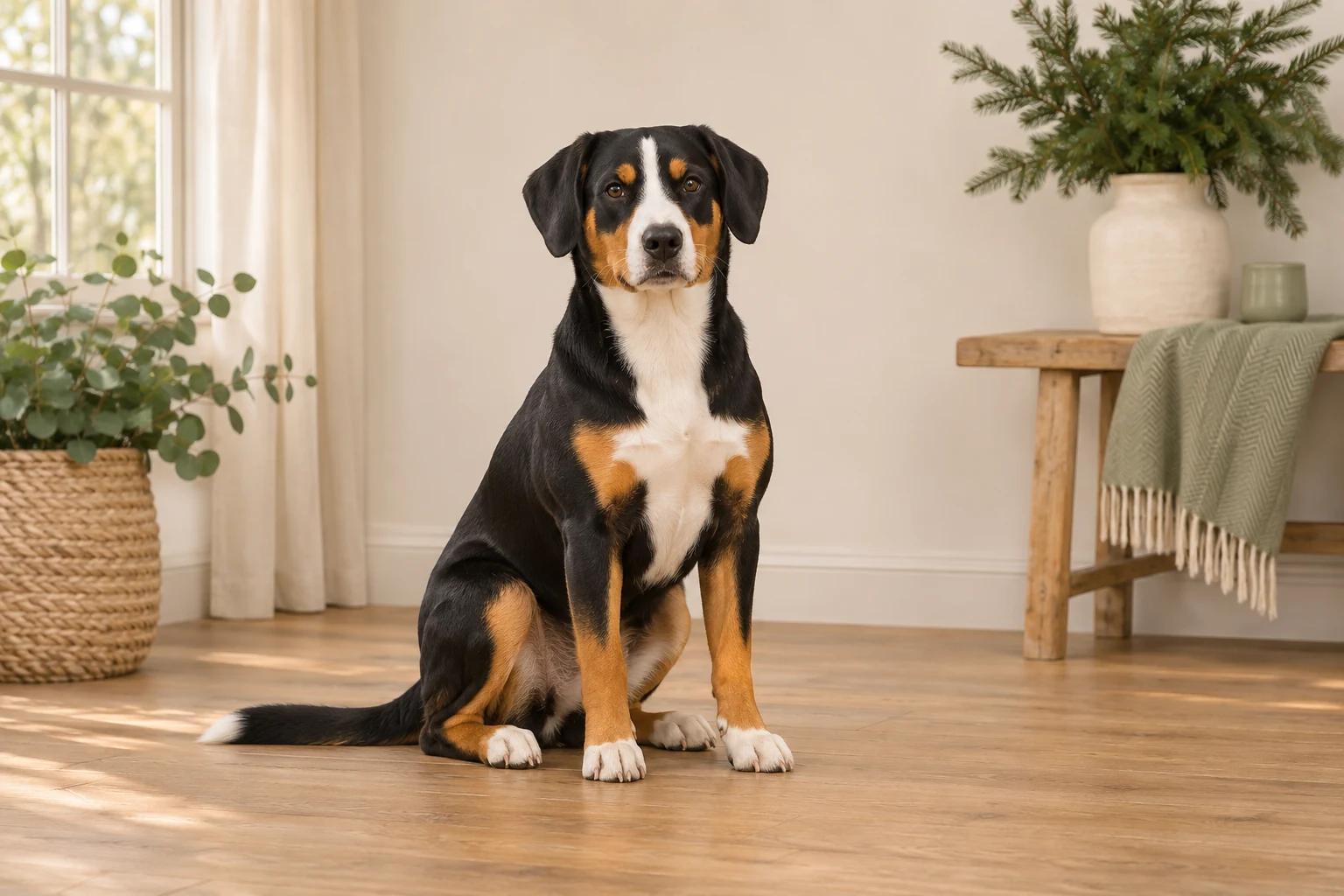
View breed profile →Entlebucher Mountain Dog size can be deceptive in a photograph. The breed is not especially tall, yet its compact, muscular build deserves more practical planning than a small-looking silhouette suggests. Shoulder height helps describe the outline; weight, body length and the individual dog's measurements determine how equipment and everyday arrangements will work.
For an adult, the AKC standard gives males a height range of 17.5–20.5 inches and females 16.5–19.5 inches at the shoulder. Use those figures to understand the breed reference, not to promise a puppy's eventual size or to choose a crate without measuring.
Entlebucher Mountain Dog size: read the different numbers correctly
Entlebucher Mountain Dog height is measured at the withers, the area over the shoulders, rather than to the top of the head. A photograph taken while the dog looks upward can therefore make comparison misleading. So can a sloping surface or a camera placed very close to the dog.
The standard describes a longer-than-tall outline with a 10:8 length-to-height ratio. This is a description of proportions, not a ready-made equipment chart. It explains why a height-only comparison may overlook how much room the dog uses when lying down or turning.
The My Breed Atlas profile lists reference adult weights of 50–65 pounds for males and 40–55 pounds for females. Those are profile reference ranges, not weights specified by the AKC standard. Keep that distinction clear when discussing Entlebucher Mountain Dog weight: an individual target belongs in a conversation with your veterinarian.
“How big” has more than one practical meaning
When someone asks how big do Entlebucher Mountain Dogs get, they may be trying to answer several different questions. Will the dog fit comfortably in the car? Can a particular caregiver manage the equipment? How much floor space should be kept clear? A single weight range cannot answer all of them.
Start with the actual problem. For transport, measure the available space and the dog. For a harness, follow that manufacturer's measuring instructions and check the fit on the individual. For a bed, observe how the dog likes to rest rather than choosing the smallest size that matches a retailer's breed list.
Do not assume the lower end of a range will apply because that would suit your arrangements. If your housing or equipment has a strict limit, discuss the uncertainty before committing to a puppy. An adult with known measurements may be easier to plan around, though still needs an individual assessment.
Measure calmly and record what you measured
Ask an experienced breeder, groomer or veterinary professional to demonstrate height measurement if you need an accurate figure. The dog should be standing naturally on a level surface. Do not force an uncomfortable stance just to match a diagram.
For equipment, record the measurement name as well as the number. “Chest” is ambiguous if one person measured circumference and another measured width. Keep the manufacturer's diagram with your notes so you can repeat the same method later.
A short record might include the date, weight from a suitable scale, relevant body measurements and the item being fitted. This is especially helpful for a growing dog whose harness was comfortable a few weeks earlier. Check fit regularly instead of relying on the date you purchased it.
Measurements should support care, not become a project of making the dog conform to an expected number. If growth or body condition worries you, bring the record to your veterinarian.
Plan the vehicle before buying the equipment
A crate that fits in an empty cargo area may not fit when luggage is loaded. Measure the usable space with the rest of your usual travel equipment in place. Check the opening as well as the interior: an item can fit inside in theory but be awkward to put through the door.
Then follow the carrier or restraint manufacturer's instructions for the dog's dimensions and weight. Allow for the dog's natural posture and the product's intended use. Do not invent a universal crate size from the breed name.
Think about loading and unloading. Is there a secure place to attach the lead before opening the vehicle fully? Can the dog exit without stepping directly into traffic? The useful size question includes the transition into and out of the car, not just the space occupied during the journey.
If assistance with access may be needed, discuss appropriate arrangements with your veterinary team. It is better to plan than to discover during an unexpected appointment that your normal transport method is impractical.
Weight ranges are not feeding instructions
A breed reference does not tell you how much food to put in a bowl. Two dogs within the same range can differ in body condition, age, activity and individual needs. Do not aim for the top of the range because the breed is described as muscular, or the bottom because you prefer a smaller dog.
NEMDA's healthy-weight resource emphasizes body condition as well as weight. For an owner, the practical next step is to ask the veterinarian to explain the assessment for this dog and what changes, if any, are appropriate. Avoid adjusting food or exercise solely to make a scale reading match a breed chart.
Keep weight observations dated and use comparable measurements where possible. A single reading without context is less useful than a record the veterinary team can interpret. Bring questions about unexpected gain, loss or growth to them rather than relying on internet comparisons with unrelated dogs.
Fit the home to a compact working dog
The Entlebucher standard describes a muscular drover, not a lightly built ornament. When organizing a room, consider turning space near furniture, a clear route to the door and a resting place outside the busiest walkway. Shoulder height alone understates those practical needs.
Match equipment to its intended load and use. Check gates, harness fastenings and transport products for suitability rather than assuming a medium-height dog needs only lightweight accessories. Training and secure handling remain important regardless of the size label printed on the packaging.
For a puppy, ask about the parents' measurements and the breeder's experience with related dogs. Treat the answer as context, not a guarantee. Be prepared to replace equipment as fit changes and to revise the home setup as the dog matures.
Our natural-tail article explains another visible feature that should not be used as a shortcut to judging the whole dog. The breed quiz helps put size alongside activity and daily involvement rather than making it your only selection criterion.
Sources checked November 15, 2026: AKC Entlebucher standard and NEMDA Healthy Weight. Weight reference ranges are attributed separately to the linked My Breed Atlas profile; equipment-planning examples are original.
FAQ
Are male Entlebuchers always larger than females?
The male reference ranges are higher, but the ranges overlap. Do not assume the sex of an individual dog tells you its exact measurements or equipment size.
Does the AKC standard specify an adult weight?
The Entlebucher AKC standard specifies height and proportions, not an adult weight range. Use weight references as background and ask your veterinarian about the appropriate condition for your particular dog.
Can I choose a crate from shoulder height alone?
No. Equipment fit also depends on the dog's other dimensions, posture, weight and the manufacturer's instructions. Measure the individual and the available space before choosing transport or resting equipment.
Sources behind this article
- AKC: Entlebucher Mountain Dog standard ↗
- National Entlebucher Mountain Dog Association: Healthy Weight ↗
Article source checked: November 15, 2026. Source checked 2026-11-15
Keep reading
Entlebucher Mountain Dog temperament: life with purpose
Read article →