English Foxhound Temperament: Life Beyond the Walk
Understand English Foxhound temperament through company, scent interest, voice and the everyday routine your home can provide.
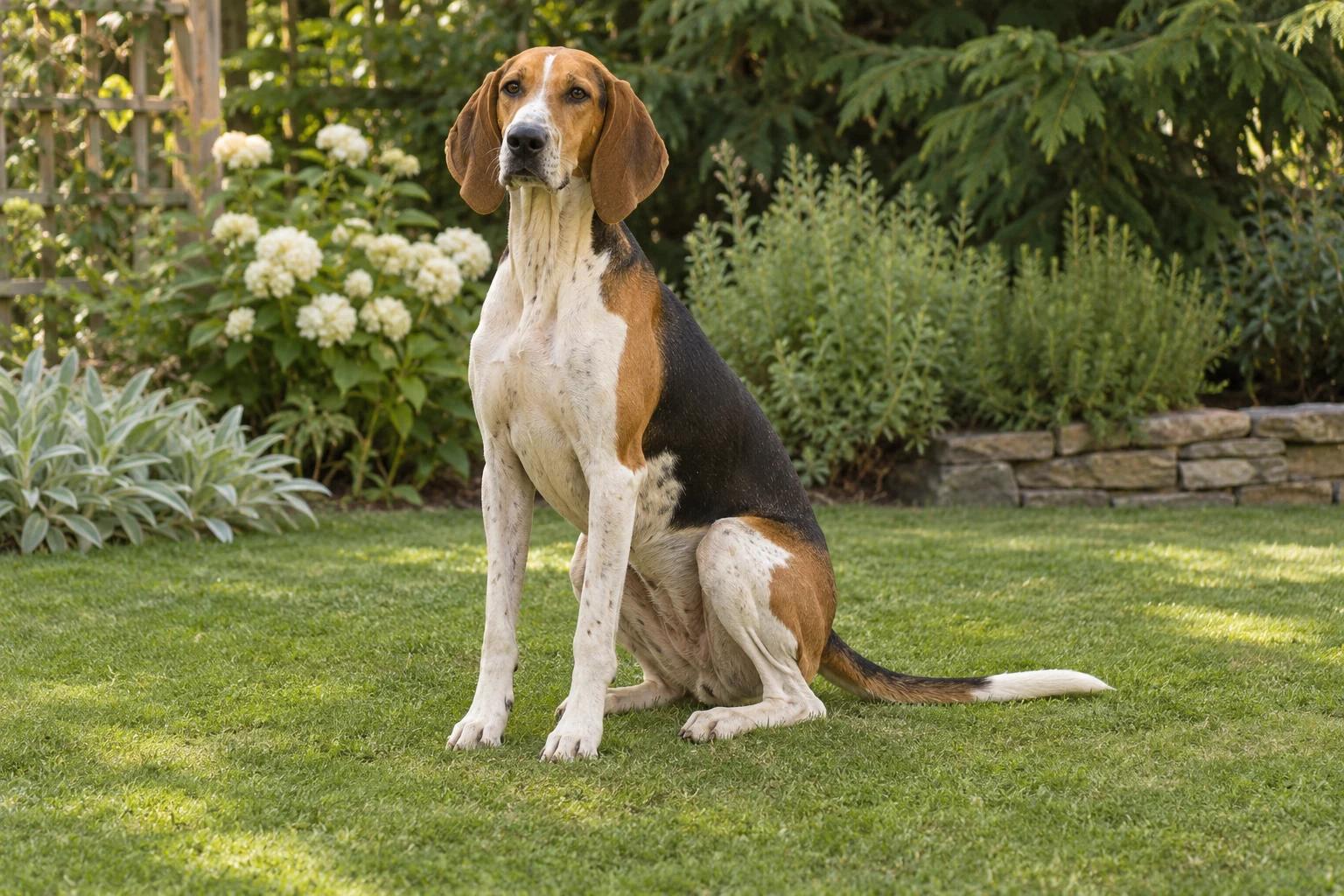
English Foxhound temperament combines the background of a pack hound with the practical demands of a substantial, active companion. The appealing part is easy to picture: a sociable dog sharing outings and household life. The harder question is whether your home can accommodate the voice, outdoor interests and daily arrangements of the particular hound you meet. Affection does not cancel those commitments.
The FCI standard describes a friendly hunting hound with stamina. That is a breed ideal, not a household suitability certificate. Use the English Foxhound profile to frame your research, then ask for observations from the dog's actual living circumstances.
English Foxhound temperament is more than friendliness
A friendly greeting answers one narrow question: how the dog responded to you in that setting. It does not show how the hound handles a closed door, a quiet afternoon, unfamiliar traffic or another animal approaching a valued item. Before making a decision, ask about several ordinary situations rather than asking only, “Is this a nice dog?”
English Foxhound personality descriptions often emphasize sociability. Turn that into a conversation about company: who is normally present, whether the dog rests in the same room, and what happens when the household separates. Do not infer an ability to stay alone from a relaxed group meeting. A dog can be comfortable with people while still needing help with a different routine.
For an adult moving from a kennel or group environment, request a detailed account of home experience. Has the dog lived around household appliances, used stairs, travelled in an ordinary car and slept indoors? These are information gaps to plan for, not faults. Ask which things are known and which have simply not been tried.
Outdoor interest needs an actual place in the week
The hunting background is relevant to everyday management even when you have no intention of hunting. Plan secure exercise arrangements, appropriate lead use and opportunities to investigate the environment without accessing roads or wildlife. A large open area is not automatically a suitable free-running area just because it looks inviting.
Think through your nearest routes. Is there a quieter option when the usual path is crowded? Can the person walking the dog manage its size? What happens during bad weather or when the main carer is unavailable? The answer should not depend on an imaginary future garden or a fitness routine nobody in the household has started.
Avoid treating exhaustion as the only route to peace at home. Include opportunities for learning and for resting after activity. A practical daily plan might separate an exploratory outing, a short household skill rehearsal and a quiet period. Adjust the content to the dog with professional guidance where needed, rather than imposing a fixed exercise quota from a breed article.
Voice deserves attention before the neighbors hear it
My Breed Atlas records a high vocal tendency for the English Foxhound. That does not mean every individual sounds continuously, but noise should be a serious part of your housing assessment. A detached home, shared corridor and thin-walled flat create different consequences for exactly the same sound.
Ask when the dog vocalizes, what appears to start it and how long it continues. Is it associated with arrivals, outdoor activity, separation or excitement around other dogs? A recording made during an ordinary day, where available and appropriately shared, can be more useful than a promise that the dog is “usually quiet.” Do not deliberately provoke the dog to collect evidence.
Make a management plan for predictable triggers. For example, choose a resting place away from a busy shared doorway if passing activity is a problem. Training may help with particular situations, but no honest assessment can promise a silent hound. If noise would put your housing at risk, address that constraint before committing.
Company and compatibility are different questions
The pack-hound background is a reason to ask about dog company, not permission to put unfamiliar animals together without preparation. Find out which dogs this individual has lived with and under what supervision. Shared walks and shared feeding areas ask different things of the participants.
Prepare separate resting spaces and a way to manage introductions calmly. Let a rescue or qualified professional guide the process when there are uncertainties. Do not use a resident pet as a test of a new dog's reactions. Small-animal compatibility needs specific history and careful management rather than an assumption based on the hound's friendly approach to people.
In family life, supervise interactions and give the dog an undisturbed retreat. English Foxhound characteristics such as sociability and substantial size can coexist: a welcoming dog can still be physically difficult in a narrow room. Teach and manage greetings instead of expecting visitors to absorb the impact of an excited arrival.
Read behavior in context
English Foxhound behavior becomes easier to discuss when descriptions are concrete. “Pulls toward the gate when the other dogs leave” contains more useful information than “dominant.” “Settles on a bed after the morning outing when someone is home” is more helpful than “lazy indoors.” Ask for examples, including what the person did before and afterward.
During a meeting, watch the transition after the initial excitement. Can the dog explore, reconnect with a familiar person and pause? You are not looking for a flawless performance. You are looking for an understandable pattern and for carers who can explain it honestly. Ask how typical the observed day was.
The breed match quiz can help identify practical constraints before you meet candidates. If the dog's paperwork includes unfamiliar naming details, our article on English Foxhound hunt prefixes and entry years explains that separate records question. A working name is not a substitute for household history.
The strongest ownership decision may be a simple one: you can provide the particular hound's routine, or you cannot. There is no need to turn that conclusion into a verdict on the entire breed. A sociable hound deserves a realistic arrangement more than an admirer with an unworkable plan.
Sources and further reading
- AKC English Foxhound, checked 2026-11-15.
- FCI English Foxhound standard, checked 2026-11-15.
FAQ
Is an English Foxhound affectionate?
The English Foxhound profile describes a strong tendency toward family affection, and the FCI standard calls for a friendly temperament. Ask how the particular dog seeks company and rests at home. An affectionate tendency does not establish its response to every person or situation.
Can an English Foxhound live with other dogs?
A pack background makes previous dog experience relevant, but it does not guarantee compatibility with a particular household dog. Review the individual's history, arrange supervised introductions and provide separate resources and resting places when needed.
Is an English Foxhound quiet enough for shared housing?
Noise needs careful assessment because the breed has a high vocal tendency in our profile. Ask about the individual dog's triggers and ordinary behavior, then consider building rules and neighboring homes. Do not choose the breed on an expectation that training will guarantee silence.
Sources behind this article
Article source checked: November 15, 2026. Source checked 2026-11-15
Keep reading
English Foxhound Size: Planning for the Adult Hound
Read article →