English Foxhound Size: Planning for the Adult Hound
Understand English Foxhound size and plan adult equipment, transport, home space and handling without relying on puppy guesses.
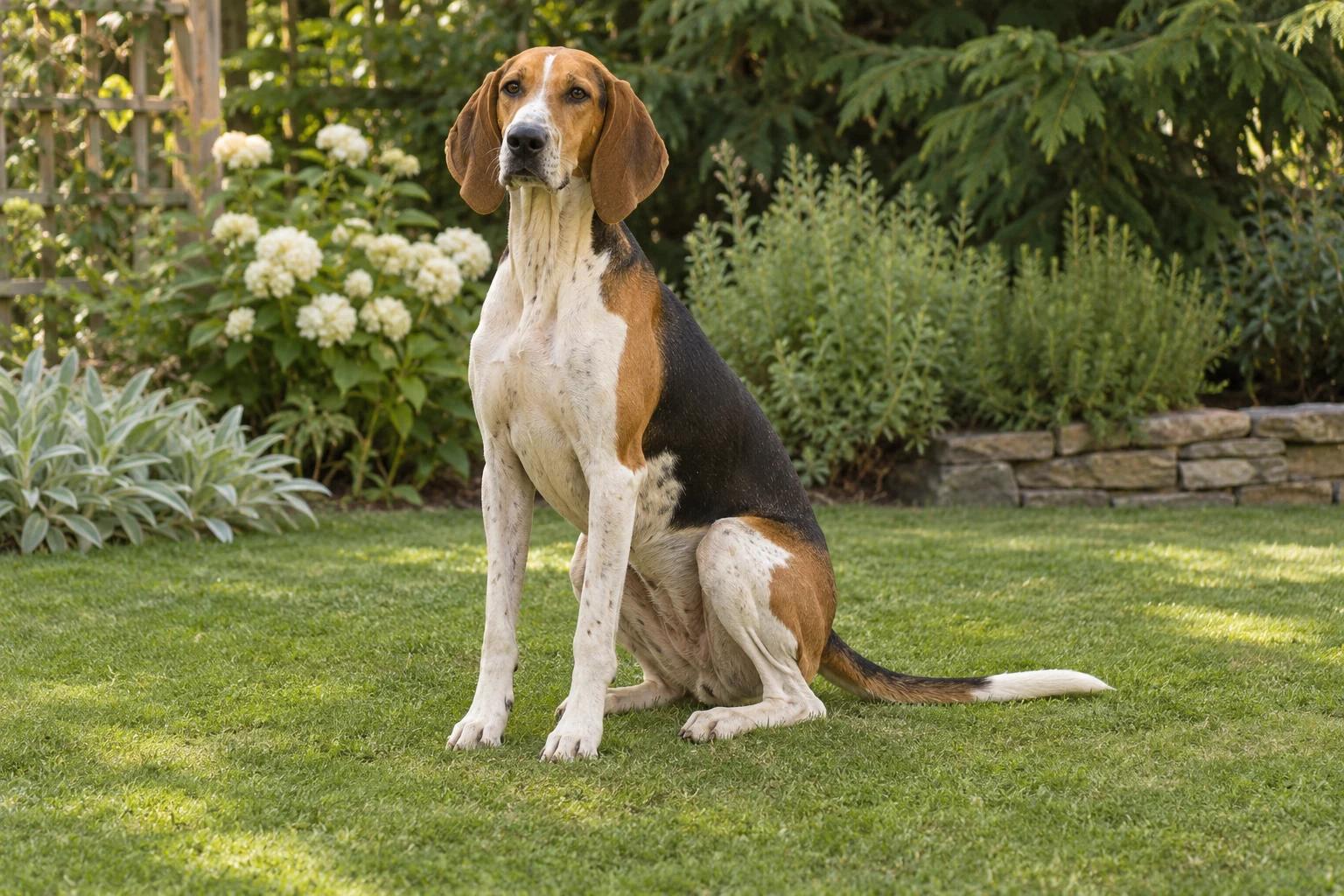
English Foxhound size matters most when you turn a breed description into everyday arrangements. This is a substantial hound, not simply a small dog with longer legs. Before choosing equipment or bringing one home, think about the adult in your vehicle, the space beside your table and the person who will hold the lead. Those practical checks tell you more than choosing a generic “large dog” category online.
The English Foxhound profile lists an adult reference height of 24 inches and weight of 55–75 pounds. Use those figures for initial planning, then measure and assess the individual rather than treating a reference range as a growth guarantee.
English Foxhound size is a build as well as a number
AKC describes a substantial galloping hound with stamina. Its standard emphasizes a muscular back and loin, deep chest and strong legs. For household planning, that means looking at the whole outline rather than expecting shoulder height alone to predict the space the dog occupies.
A dog standing comfortably takes up a different shape from one turning around or lying on its side. When assessing a resting area, allow for those ordinary movements. A bed wedged into a narrow gap may technically fit the product dimensions while leaving the dog in everyone's path whenever it stretches.
English Foxhound height is measured at the shoulder, not the top of the head. That distinction matters when comparing the breed reference with a doorway or transport opening. Do not assume a 24-inch shoulder reference means that a 24-inch-high space is suitable for travel. Follow the equipment provider's measuring and fitting instructions for the actual dog.
Treat weight as information, not an achievement
English Foxhound weight on a breed profile is not a target to pursue through feeding. A dog should not be pushed toward the top of a range because a heavier adult sounds more impressive. Ask a veterinarian to assess body condition and individual needs rather than using the breed average as a diet instruction.
Keep weights recorded with dates and life stage. A puppy's current weight, an adult's usual weight and a recent change in weight answer different questions. If a breeder or previous owner supplies figures, ask when and how they were measured. A remembered estimate is less useful than a recent recorded measurement.
For a puppy, adult relatives can provide context, but they cannot promise a particular final measurement. Buy adjustable equipment where appropriate and expect to check fit as the dog grows. Avoid selecting a candidate on an exact adult size prediction that nobody can verify in advance.
Start equipment shopping with measurements
For a harness, use the manufacturer's instructions and check the fit on the dog. A deep-chested shape can make a generic size label unhelpful. Look at how the equipment sits during ordinary movement, not just in a posed photograph. Ask an experienced professional for help if you are unsure about fit or control.
For a bed, mark out the proposed footprint on the floor before ordering. Leave access to the resting space and enough room for household traffic. Decide whether visitors, chairs or an opening cupboard will repeatedly disturb the dog there. It is better to discover a poor location with masking tape than with a large parcel blocking the hallway.
For a crate or travel carrier, follow the relevant provider's fit requirements and any transport rules that apply. Measure the individual rather than borrowing a product choice from an owner whose hound looks similar. A useful setup must suit the dog and fit safely within the available vehicle arrangement.
Test the car before the long journey
Consider the route from the house to the vehicle, the opening through which the dog enters and the area where it will travel. Can the dog turn and settle in the intended restraint arrangement? Can you secure the lead before opening a door? Is there room to manage the dog without stepping directly into traffic?
Make first rehearsals short and uneventful. Practice with the parked vehicle in a suitable place before combining the arrangement with a long outing. Have another capable adult help if needed, and get guidance on appropriate travel restraint. Do not rely on the hound balancing in a gap between luggage.
Plan for circumstances in which the dog cannot manage its normal movements. Who could help, and how would you contact the veterinary practice or arrange suitable transport? This is not a prediction that something will go wrong. It is ordinary preparation for living with an animal that may be difficult for one person to lift.
Home space includes circulation and control
The question “how big do English Foxhounds get” often hides a second question: will this dog fit my home? Floor area alone cannot answer it. Look at narrow passages, stair access, the route outdoors and the location of a quiet retreat. Check building rules before assuming that a physically adequate room resolves housing suitability.
A substantial hound also needs a handler who can manage the real walking conditions. Test neither your strength nor a child's ability by handing over a lead in a difficult setting. Discuss the individual dog's manners and arrange suitable help where necessary. Training and careful route choices belong in the size plan, not in a separate optional category.
Do not confuse an extensive garden with a complete activity plan. Secure boundaries, supervised outings, learning and companionship still need attention. The breed match quiz can help you consider these commitments alongside physical space, rather than letting a single measurement decide the match.
Ask for the records that answer your question
Request current measurements and an explanation of the dog's normal routine from its carer. Ask separately about age and background. If unfamiliar naming conventions appear in the paperwork, our guide to English Foxhound hunt prefixes and entry years explains why a recorded working detail should not be treated as a simple age calculation.
The most useful size decision is concrete: this adult can travel appropriately, rest without obstruction and be handled by the people responsible for it. If one of those arrangements remains uncertain, resolve that particular problem before purchasing more equipment. A reassuring breed average cannot make an unsuitable setup work.
Sources and further reading
- AKC English Foxhound, checked 2026-11-15.
- AKC English Foxhound standard, checked 2026-11-15.
- FCI English Foxhound standard, checked 2026-11-15.
FAQ
How large is an adult English Foxhound?
My Breed Atlas lists reference figures of 24 inches at the shoulder and 55–75 pounds for an adult English Foxhound. These figures support initial planning, not a guarantee for every individual. Check the actual dog's measurements before choosing equipment.
Can I predict an English Foxhound puppy's final weight?
A puppy's background and adult relatives can provide context, but they cannot establish an exact final weight. Record growth with your veterinarian and choose equipment whose fit can be checked as the dog develops. Do not feed toward a particular breed-profile number.
What crate size should I buy for an English Foxhound?
Measure the individual dog and follow the crate maker's fit instructions and applicable transport requirements. A breed height or generic large-dog label is not enough to choose a suitable crate. Check both the dog's usable space and the vehicle or room where the crate must fit.
Sources behind this article
Article source checked: November 15, 2026. Source checked 2026-11-15
Keep reading
English Foxhound Temperament: Life Beyond the Walk
Read article →